
AI輸出規制で学ぶビジネス英語|米国のAI規制と国家安全保障を読む
米国のAI輸出規制とAnthropicのモデル提供停止を題材にしたビジネス英語学習教材。輸出規制・国家安全保障の英語表現を、社内メモの読解や30秒説明の練習を通じて実践的に習得できます。


AIエンジニア / IT歴36年以上・海外在住13年以上のCEFR B1英語学習者
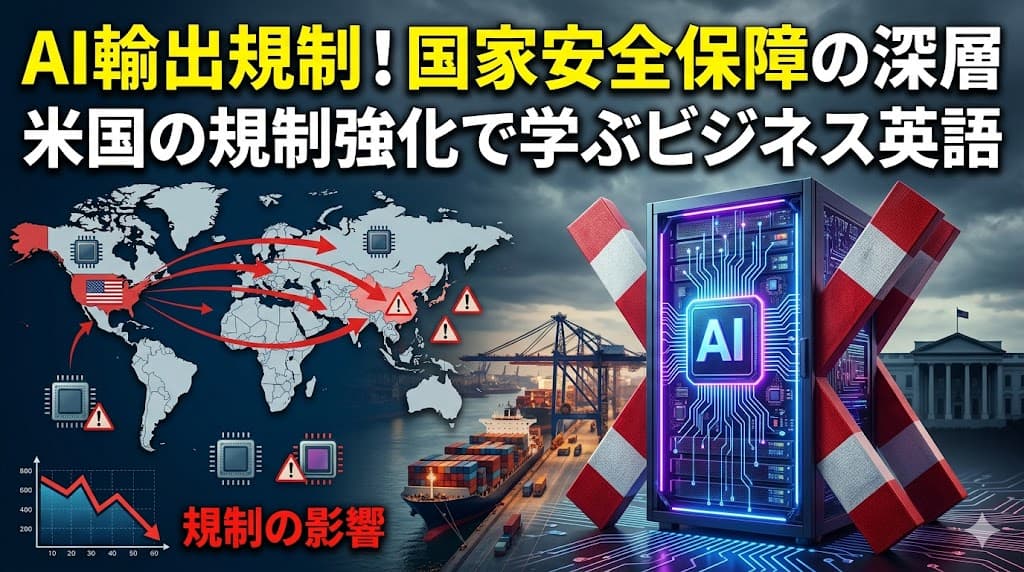
US Export Controls Cut G7 Allies Off from Anthropic's Top AI Models
米国のAI輸出規制でG7諸国が最先端モデルを使えなくなった実例を題材に、ビジネス英語の読解力と説明力を磨きます。社内メモ形式で実践的に学べる教材です。
Part 1: 読む → 要約する
Step 1: Pre-Reading — ビジネスの文脈で考える (3 min)
あなたは外資系企業のテクノロジー戦略チームに所属しています。火曜朝のチームミーティングで、リーダーが「先週のAI輸出規制のニュース、見た人いる?うちのツール利用にも関係しそうなんだけど」と切り出しました。あなたは英語で意見を共有する準備をしています。
Q1: Why might a government restrict the export of advanced technology to other countries? (政府が先端技術の輸出を制限する理由を、安全保障やビジネスの観点から考えてみましょう)
Q2: If your company suddenly lost access to a key software tool, what would be your first three actions? (重要なツールが突然使えなくなったら、最初に何をしますか。優先順位をつけて考えてみましょう)
Q3: How can a company balance "innovation" and "national security" when it operates globally? (グローバル企業が「技術革新」と「国家安全保障」のバランスをどう取るべきか、自分の言葉で考えてみましょう)
Step 2: First Reading — 全体を把握する (10 min)
以下の英文は、ニュース記事の事実をもとに作成したビジネスシナリオ文書です。実際の職場でこのような文書を読む場面を想像しながら、英文を読み進めましょう。
INTERNAL BRIEFING MEMO
To: Regional Leadership Team, APAC Operations From: Head of Technology Strategy Date: June 17, 2026 Subject: Update on Access to Anthropic AI Models — Action Required
Purpose This memo explains a recent change in U.S. policy that affects our ability to use certain advanced AI tools. Please review the action items below and reply by Friday.
Background Last Friday, the U.S. Commerce Department announced new export controls on Anthropic's most powerful models, known as "Mythos" and "Fable." The rules block access for anyone outside the United States, as well as for foreign nationals. Because Anthropic said it could not limit the tools to U.S. users only, the company disabled Fable 5 and Mythos 5 worldwide. Fable 5, its newest high-capability model, had been released only days earlier.
Why This Happened The U.S. government pointed to a possible "jailbreak" that might let the models find software weaknesses. Anthropic called this risk "narrow" and disagreed with pulling back a product used by hundreds of millions of people. The two sides are still in talks, and the company's CEO, Dario Amodei, is reportedly leading discussions with the White House.
Impact on Our Operations Our teams in Tokyo, Singapore, and London currently rely on these models for drafting, research, and code review. As foreign nationals working outside the U.S., we have lost access. Note that the U.K. asked for a special exemption at the G7 Summit in Évian-les-Bains, France, but a U.S. official described any carve-out as "completely illogical." We should not expect quick relief.
Action Items
- Team leads: list every workflow that depends on Mythos or Fable by June 20.
- IT: confirm which other Anthropic models remain available and test them as backups.
- Procurement: review alternative providers in case the restriction continues.
Next Steps I will share a fuller risk assessment next week. Please send questions to the strategy mailbox. A quick response will help us limit disruption.
Data sourced from: New York Post — "Trump officials won't allow G7 countries to access Anthropic's most advanced AI models: 'Completely illogical'" (June 16, 2026)
Note: The above is an original business scenario created for learning purposes using publicly available facts. Please read the original article at the link above for the full report.
関連: AI時代のビジネス英語実践|日本人ビジネスパーソンはAIと英語をどう使うべきか で詳しく解説しています。
Step 3: Comprehension Check — 内容確認 (5 min)
Q1: Which U.S. government department announced the new export controls? (どの政府機関が規制を発表したか、本文から探しましょう)
Q2: Why did Anthropic disable the models worldwide instead of only outside the U.S.? (なぜ全世界で停止せざるを得なかったのか、理由を確認しましょう)
Q3: What request did the U.K. make at the G7 Summit, and how did the U.S. respond? (英国の要望と、それに対する米国側の反応を整理しましょう)
Q4: What technical concern did the U.S. government cite as the reason for the restriction? (規制の根拠とされた技術的な懸念を説明しましょう)
Q5: According to the memo, what three action items were assigned to the teams? (メモで割り当てられた3つのアクションを挙げましょう)
Step 4: 30-Second Briefing — 上司に30秒で説明する (10 min)
エレベーターで上司にばったり会いました。「さっきのメモ読んだ?要するにどういうこと?30秒で教えて」と聞かれました。事実を簡潔に、結論から伝えましょう。
| 要素 | 英語テンプレート | 記入欄 |
|---|---|---|
| 結論(一言で) | "In short, we've lost access to ___ because of ___." | |
| 背景 | "The U.S. announced ___ on ___, which blocks ___." | |
| 影響 | "This affects our teams in ___ who use these tools for ___." | |
| 現状 | "The company and the government are still ___." | |
| 次の一手 | "Our next step is to ___ by ___." |
Tip: 元の文をそのまま暗記せず、自分の言葉で「言い換える(paraphrase)」練習をしましょう。例えば "export controls" を "rules that limit who can use the technology" と説明できれば、語彙力に頼らず内容を伝えられます。相手や状況に合わせて表現を選ぶ力こそ、外資系で評価される説明力です。
Part 2: 語彙・表現・発音
1. export controls (n.) — 輸出規制
- Example: The new export controls prevent the company from selling its software abroad.
- 訳: 新しい輸出規制により、その企業はソフトウェアを海外で販売できなくなりました。
- 外資系シーン: 半導体・AI・暗号技術など、規制対象の製品を扱う部署では "Are we compliant with the latest export controls?"(最新の輸出規制を守れていますか)という確認が頻繁に交わされます。
2. carve-out (n.) — 適用除外・例外措置
- Example: The U.K. requested a carve-out so its companies could keep using the models.
- 訳: 英国は自国企業が引き続きモデルを使えるよう、適用除外を求めました。
- 外資系シーン: 契約交渉や規制対応の場面で "Can we negotiate a carve-out for our division?"(うちの部門だけ例外を交渉できますか)のように使われます。
3. national security (n.) — 国家安全保障
- Example: The government justified the ban on national security grounds.
- 訳: 政府はその禁止措置を国家安全保障上の理由で正当化しました。
- 外資系シーン: 政府案件やインフラ関連のビジネスでは "This deal may raise national security concerns."(この取引は安全保障上の懸念を生むかもしれません)といった検討が必要になります。
4. negotiate (v.) — 交渉する
- Example: Both sides are negotiating a solution that protects users and security.
- 訳: 双方は、利用者と安全の両方を守る解決策を交渉しています。
- 外資系シーン: 価格・契約・納期など、あらゆる場面で "We're still negotiating the terms."(条件はまだ交渉中です)が基本表現として使われます。
5. deploy (v.) — 展開する・実用化する
- Example: The company had deployed the model to hundreds of millions of users.
- 訳: その企業はモデルを数億人の利用者に展開していました。
- 外資系シーン: IT・製品チームでは "When can we deploy this feature to production?"(この機能をいつ本番環境に展開できますか)のように頻出します。
Fill-in-the-blank(空欄補充)
次の文の空欄に、上の語彙から最も適切なものを入れましょう。
Q1: The startup wants to ___ its new app in twenty countries by the end of the year.
Q2: Lawmakers argued that the technology posed a risk to ___.
Q3: Our legal team is trying to secure a ___ from the new regulation for research use.
Q4: The two companies will ___ the final price during next week's meeting.
(解答例: Q1 deploy / Q2 national security / Q3 carve-out / Q4 negotiate)
Part 3: 自分の意見を述べる
Discussion Topic A
Q: Should governments be able to restrict private companies from offering AI tools to people in other countries? Why or why not? (政府が民間企業のAIツール提供を国境で制限することの是非を、メリット・デメリットの両面から述べましょう)
Discussion Topic B
Q: Anthropic argued that recalling a tool used by hundreds of millions of people was too extreme for a "narrow" risk. Do you agree with the company or the government? (「限定的なリスク」を理由に大規模なツールを停止することについて、企業側・政府側どちらの立場を支持しますか。理由を添えて)
Discussion Topic C
Q: If your company depended on a tool that suddenly became unavailable, how would you reduce that kind of risk in the future? (特定ツールへの依存リスクをどう下げるか。代替策やリスク分散の具体案を考えて述べましょう)
Useful phrases(意見を述べるための表現)
| English | Japanese |
|---|---|
| In my view, the key issue here is ... | 私の見方では、ここでの核心は…です |
| I can see both sides, but I tend to think ... | 両方の立場は理解できますが、私はどちらかというと…と考えます |
| One major risk of this approach is ... | このやり方の大きなリスクの一つは…です |
| To put it simply, ... | 簡単に言えば、…です |
| That's a fair point, however ... | それはもっともな指摘ですが、一方で… |
Part 4: 面接対策 — 外資系で差をつける
Mock Interview Scenario A
Interviewer: "Tell me about a time you had to respond quickly to an external change you could not control. What did you do?" (自分でコントロールできない外部変化に素早く対応した経験を、状況・行動・結果の順で話しましょう)
Mock Interview Scenario B
Interviewer: "How would you explain a complex regulatory issue, like this AI export ban, to a non-technical executive in under a minute?" (複雑な規制問題を、専門外の役員に1分以内で説明する力を見せましょう。結論ファーストで)
Mock Interview Scenario C
Interviewer: "Our team relies on several third-party tools. How do you assess and manage the risk of depending on outside vendors?" (外部ベンダー依存のリスク評価・管理の考え方を、具体例を交えて述べましょう)
よくあるNGパターン(4つ)
NG 1: 結論を後回しにする
- ✗ Bad: "Well, there were many factors, and first the government did this, and then the company..."
- ○ Good: "In short, we lost access to a key tool. Here's how I'd respond."
- 外資系の面接では結論から話すのが基本です。背景説明を先に長く続けると、要点が伝わりません。
NG 2: 専門用語に頼りすぎる
- ✗ Bad: "It was due to export controls and a narrow jailbreak vulnerability."
- ○ Good: "New rules limited who could use the tool, based on a security concern."
- 相手のレベルに合わせて言い換える力が評価されます。難しい言葉を並べるだけでは理解力を示せません。
NG 3: 主語と立場が曖昧
- ✗ Bad: "It was handled and then things got better somehow."
- ○ Good: "I led the review, and as a result we cut our risk by adding a backup tool."
- 「自分が何をしたか」を主語を明確にして語りましょう。受け身の表現ばかりだと貢献が伝わりません。
NG 4: 一般論で終わり、具体性がない
- ✗ Bad: "Risk management is very important for every company."
- ○ Good: "We listed every workflow using that tool and tested two alternatives within a week."
- 抽象的なコメントではなく、数字・期限・行動を含む具体例が説得力を生みます。
活用のコツ(3 Tips)
ニュースの「事実」と「意見」を分けて読む習慣をつけましょう。 記事内の数字・日付・固有名詞(事実)と、関係者のコメント(意見)を色分けして整理すると、英文の構造が見え、要約と意思決定の精度が上がります。
自分の業務に置き換えて「もし自社なら」と考えてみましょう。 今回のツール停止のように、外部要因で業務が止まる状況を想定し、代替案を一つ用意しておくだけで、実際の会議で具体的な提案ができるようになります。
重要な英語表現は「言い換えセット」で覚えましょう。 "export controls" を "rules that limit exports" と説明できるよう、難語と平易な言い換えをペアで蓄えておくと、相手のレベルに合わせて瞬時に説明を切り替えられます。
Bonus: プロナビレッスンでの活用法
レッスン前(20min) Step 1のPre-Reading問題に目を通し、Step 2のビジネスメモを音読しながら通読します。意味の取れない語彙には印をつけ、Part 2の語彙リストで確認しておきましょう。Step 4の30秒ブリーフィングのテンプレートに、自分なりの言葉を一度書き込んでおくと、レッスン当日にスムーズに話せます。
レッスン中(25min) コーチと一緒にStep 3の内容確認を口頭で行い、その後Step 4の30秒ブリーフィングを実演します。Part 3のディスカッショントピックでは、Useful phrasesを実際に使いながら意見を述べ、コーチから言い換えや発音のフィードバックを受け取ります。Part 4の模擬面接は、本番さながらに声に出して練習しましょう。
レッスン後(15min) フィードバックで指摘された表現を、自分の業務メールや会議の場面に当てはめて再構成します。活用のコツで紹介した「言い換えセット」を3つ作り、次回までに実際の業務で一度使ってみることを目標にしましょう。
PronuNaviでは、こうしたニュース教材を使った実践的なコーチングを体験できます。学習方法に迷ったら、まずは無料相談でお気軽にご相談ください。
参考・出典
この記事を書いた人
サイト運営・日本語サポート担当 / AIエンジニア
- ●東京都出身・海外在住13年以上
- ●IT歴36年以上(開発・SEO・AI)
- ●IBM認定 生成AIエンジニア
- ●CEFR B1の英語学習者(今も学習中)
外資系の現場で「英語が話せず評価が伸びない」苦しさを経験し、海外移住後も印刷所で「copy」が通じないような発音の壁に何度もぶつかってきました。今もプロ講師の指導を受けながら学習を続ける一人として、AI時代でも英語で悩む日本人ビジネスパーソンに向けて、現場目線で記事を書いています。日本語でのご相談やお問い合わせも私が担当します。
関連記事

「値上げ」を英語で伝える技術|食品2,311品目値上げのニュースで学ぶ raise・hike・pass on・absorb の使い分け
2026年8月の食品値上げは2,311品目で前年の8割増。値上げラッシュのニュースを素材に、raise と hike の違い、コスト転嫁の pass on と据え置きの absorb、幅・時期・理由を明示する通知文の型を、ビジネス英語コーチングの視点で解説します。
2026/8/11

「景気」を英語で伝える技術|景気DI 3か月連続改善のニュースで学ぶ sentiment・confidence・outlook の使い分け
日本語の「景気」は、英語では sentiment・confidence・outlook・conditions に分かれます。景気DIが43.6へ改善したニュースを素材に、気分と実態の言い分け、「先行き不透明」の正しい訳し方、指数の伝え方まで練習するビジネス英語の無料教材です。
2026/8/11

「増えた」を英語で伝える技術|受注60.5%増のニュースで学ぶ rose・jumped・consecutive の使い分け
前年同月比60.5%増・3か月連続という日本語を英語にすると、比較対象・勢い・継続の3つが必要になります。by と to、percent と percentage points の違いまで、ビジネス英語の無料教材として解説します。
2026/8/10

「下がる」を英語で伝える技術|電気料金の値下がりニュースで学ぶ cut・lower・downward adjustment の使い分け
値下げや引き下げを英語で伝えるとき、cut・lower・reduce・downward adjustment は響きが違います。電気料金が補助金の再開で下がったニュースを題材に、4語の使い分けと「補助」と「値下げ」の言い分けを、ビジネス英語の実践として解説する無料教材です。
2026/8/7

「中止」「延期」「見合わせ」「再開」を英語で伝える技術|業務停止のニュースで学ぶ4つの動詞の使い分け
suspend・cancel・postpone・call offは、日本語ではどれも「止める」ですが、英語では再開の見込みが違います。台風による業務停止のニュースを題材に、4つの動詞の使い分けと再開を伝える表現を、ビジネス英語の実務目線で解説する無料教材です。
2026/8/6

「上がり方が緩んだ」を英語で伝える技術|インフレ率の発表で学ぶ、鈍化・据え置き・目標超えのビジネス英語
値上がりが止まったのか、ペースが緩んだだけなのか。この違いを英語で言い分けられないと、本社への報告が誤って伝わります。インフレ率の発表を題材に、ease・slow・core・above target の使い分けと報告の型を学ぶ無料教材です。
2026/8/5