
円の実質実効為替レート56年ぶり最低水準|為替・購買力で学ぶビジネス英語
円の実質実効為替レートが56年ぶりの最低水準に。為替変動の影響を題材に、社内ブリーフィングや面接で使える表現を学ぶビジネス英語学習教材です。


AIエンジニア / IT歴36年以上・海外在住13年以上のCEFR B1英語学習者
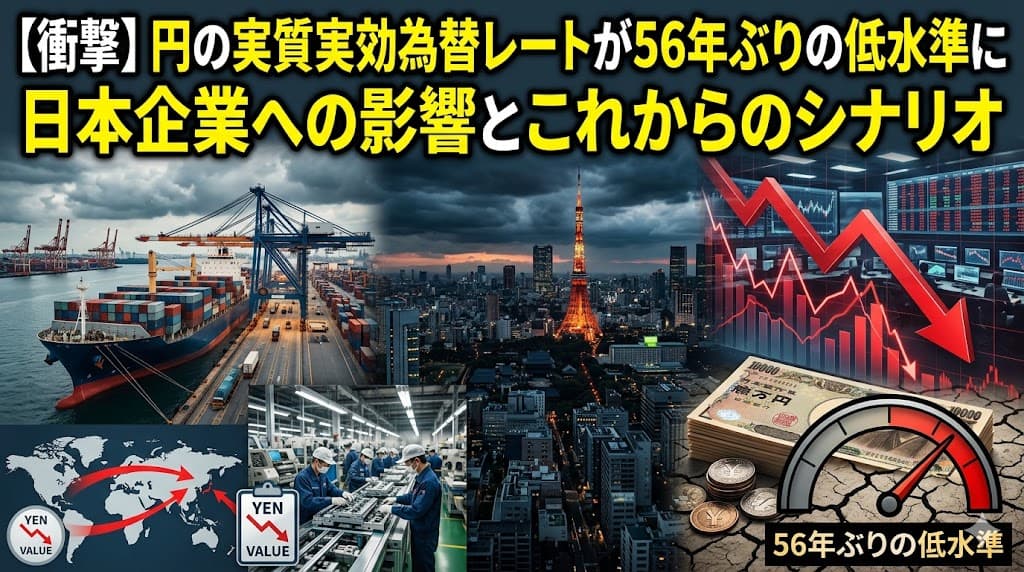
The Yen's Real Effective Exchange Rate Hits a 56-Year Low: What It Means for Japanese Business
円の購買力が56年前を下回る歴史的水準に。為替・FXリスク・経営戦略をテーマに、外資系で通用するビジネス英語を実践形式で学べる教材です。
Part 1: 読む → 要約する
Step 1: Pre-Reading — ビジネスの文脈で考える (3 min)
シーン設定: あなたは外資系メーカーの東京支社で経営企画を担当しています。月曜朝のチームミーティングで、ロンドン本社から来日したばかりの上司が「I read something about the Japanese yen hitting a record low. Can someone explain what's happening?」と話を振ってきました。あなたは記事の内容をもとに、状況をチームに共有することになりました。
Q1: What is the difference between the "nominal exchange rate" (e.g., USD/JPY) and the "real effective exchange rate"? Why might these two measures tell different stories? ヒント: ニュースで「1ドル=160円」と言うときの数字と、通貨の「総合的な購買力」を測る指標は別物です。なぜ両方の指標が必要なのでしょうか。
Q2: When a country's currency loses purchasing power against many other currencies, who benefits and who suffers within that country? ヒント: 輸入企業、輸出企業、家計、訪日観光業など、それぞれの立場で考えてみましょう。
Q3: In your industry or company, how would a sustained weak yen affect strategy decisions over the next 12 months? ヒント: 仕入れコスト、海外展開、価格設定、賃金交渉など、自分の業務に引きつけて考えてみましょう。
Step 2: First Reading — 全体を把握する (10 min)
以下の英文は、ニュース記事の事実をもとに作成したビジネスシナリオ文書です。実際の職場でこのような文書を読む場面を想像しながら、英文を読み進めましょう。
INTERNAL BRIEFING MEMO
To: Japan Leadership Team, APAC Strategy Group From: Corporate Treasury & FX Risk Desk, Tokyo Date: April 28, 2026 Subject: Yen Purchasing Power at 56-Year Low — Action Required for Q2 Procurement Review
Summary
The Bank for International Settlements (BIS) has reported that the yen's real effective exchange rate (REER) stood at 66.33 in March 2026 (2020 = 100). This figure is below the level recorded in 1970, when statistical tracking began, and confirms that the yen's overall purchasing power against a basket of trading-partner currencies has reached a historic low. The Treasury team requests your input on hedging and pricing actions by Friday, May 8.
Key Data Points
- The REER peaked in 1995 at roughly three times the current level. The decline since then reflects prolonged stagnation in domestic prices and persistent low interest rates relative to the US and the euro area.
- At the launch of the Takaichi administration in October 2025, the REER stood at 70.81. Over the following six months, it fell by approximately 6 percent, partly due to market concerns about expansionary fiscal policy.
- The nominal USD/JPY rate briefly touched the mid-160 range in March 2026. Yen weakness is also visible against the euro and the Chinese yuan.
- Daisaku Ueno, Chief FX Strategist at Mitsubishi UFJ Morgan Stanley Securities, attributes the long-term decline primarily to a weakening national economic base driven by demographic aging.
Business Implications
A weaker REER raises the landed cost of imported food, energy, and raw materials, putting margin pressure on our domestic operations. At the same time, it improves the price competitiveness of our export division and lowers the relative cost of services consumed by inbound visitors to Japan.
Requested Actions
- Procurement leads should submit a revised cost forecast for FY2026 H2, assuming the USD/JPY rate remains above 155.
- The pricing committee should review whether selective price increases are needed in the domestic consumer segment.
- The export division should prepare a memo on whether current FX levels justify capacity expansion at the Nagoya plant.
Please direct questions to the Treasury team. A follow-up call is scheduled for May 11.
Data sourced from: Jiji Press — "円の実力、凋落止まらず 56年前下回る、購買力減退" (April 26, 2026)
Note: The above is an original business scenario created for learning purposes using publicly available facts. Please read the original article at the link above for the full report.
関連: 英語力はキャリアの保険|外資系転職・昇進で差がつくビジネス英語コーチング活用法 で詳しく解説しています。
Step 3: Comprehension Check — 内容確認 (5 min)
Q1: What does the figure 66.33 represent in the memo, and what is the base year used for comparison? ヒント: メモの冒頭にある数字の意味と、比較の基準となっている年を確認しましょう。
Q2: Why does the memo state that the current REER is historically significant? ヒント: 1970年と1995年の両方の数値と比べて、現在の水準がどう位置づけられているかを読み取ります。
Q3: According to the strategist quoted in the memo, what is the most likely structural cause of the long-term decline? ヒント: 短期的な金融政策の話ではなく、より根本的な要因が指摘されています。
Q4: What three specific actions does the Treasury team request from other departments? ヒント: メモの最後にある番号付きの依頼事項を整理しましょう。
Q5: According to the memo, who benefits from a weaker REER, and who is negatively affected? ヒント: "Business Implications" のセクションに、プラス面とマイナス面の両方が書かれています。
関連: AI時代のビジネス英語実践|日本人ビジネスパーソンはAIと英語をどう使うべきか で詳しく解説しています。
Step 4: 30-Second Briefing — 上司に30秒で説明する (10 min)
シーン設定: ミーティング後、エレベーターで本社の上司と二人きりになりました。上司が「So, what's the bottom line on the yen story?」と聞いてきました。30秒以内で、要点と自社への示唆を伝える必要があります。
| 要素 | 英語テンプレート | あなたの記入例 |
|---|---|---|
| The headline (1文) | The yen's real effective exchange rate has fallen to ___, the lowest level since ___. | |
| Why it matters (1文) | This means our purchasing power for imports is now weaker than it was during the ___ era. | |
| Key driver (1文) | Analysts point to ___ as the main structural cause, on top of low interest rates. | |
| So what for us (1文) | For our business, this puts pressure on ___ but creates an opportunity in ___. | |
| Next step (1文) | I'm preparing a ___ for the leadership team by ___. |
💡 Tip — パラフレーズの技術: 記事の表現をそのままコピーするのではなく、自分の言葉に置き換えて伝える練習をしましょう。例えば "purchasing power has been lost" は "our money buys less abroad" のように、よりシンプルで会話的な表現に言い換えると、エレベーターでの即興スピーチで詰まりにくくなります。数字は丸めて (66.33 → "around 66") 伝えるのも、口頭ブリーフィングのコツです。
Part 2: 語彙・表現・発音
1. erode (v.) — 徐々に弱める、損なう
- Example: Persistent inflation has eroded the real value of household savings over the past three years.
- 訳: 持続的なインフレが過去3年間で家計貯蓄の実質的な価値を徐々に損なってきました。
- 外資系シーン: 業績会議で「収益基盤が時間とともに弱くなっている」状況を説明するときに使います。"Margin erosion" という名詞句もよく登場します。
2. attribute (v.) — 〜に起因するとみなす、〜のせいにする
- Example: The CFO attributed the quarterly loss to unfavorable currency movements rather than weaker demand.
- 訳: CFOは四半期の損失の原因を、需要の弱さではなく不利な為替変動によるものだと説明しました。
- 外資系シーン: 投資家向け説明や経営報告で、結果の「原因をどこに置くか」を表明する重要な動詞です。"attribute A to B" の形で使います。
3. headwind (n.) — 逆風、向かい風となる要因
- Example: Rising raw material costs remain a significant headwind for our manufacturing division this fiscal year.
- 訳: 原材料コストの上昇は、今年度も当社の製造部門にとって大きな逆風となっています。
- 外資系シーン: 決算説明会や戦略レビューで、ビジネスにとってマイナスに働く外部要因を表現する定番表現。反対語は "tailwind" (追い風)。
4. mitigate (v.) — 緩和する、軽減する
- Example: We are exploring forward contracts to mitigate the impact of further yen depreciation on our import costs.
- 訳: さらなる円安が輸入コストに与える影響を緩和するため、為替予約の活用を検討しています。
- 外資系シーン: リスク管理やコンプライアンスの議論で頻出。"mitigate the risk" "mitigate the impact" の形で覚えましょう。
5. structural (adj.) — 構造的な、根本的な
- Example: Demographic decline is a structural challenge that cannot be solved by short-term fiscal stimulus alone.
- 訳: 人口減少は構造的な課題であり、短期的な財政刺激策だけでは解決できません。
- 外資系シーン: "cyclical" (循環的な) と対比されることが多く、長期戦略を議論する場面で頻繁に登場します。
穴埋め演習
次の文の空欄に、上で学んだ語彙から適切なものを選んで入れてみましょう (必要に応じて活用形を変えてください)。
Q1: Several years of weak nominal wage growth have ____________ workers' confidence in the recovery.
Q2: The supply chain disruption is a ____________ that we expect to persist into the next quarter.
Q3: Senior management ____________ the unexpected gain to favorable timing in the FX market.
Q4: We have introduced a hedging policy specifically designed to ____________ exposure to commodity price swings.
Part 3: 自分の意見を述べる
Discussion Topic A
Question: Some economists argue that a weak currency is good for an export-driven economy like Japan. Do you agree, or do you think the disadvantages now outweigh the benefits? Why? ヒント: 自社や自分の業界が輸出側か輸入側かによって立場が変わります。具体例を出しながら答えましょう。
Discussion Topic B
Question: If you were on the executive committee of a Japanese company that imports 70% of its raw materials, what would be your top three priorities for the next six months under current FX conditions? ヒント: 仕入先の見直し、価格転嫁、為替ヘッジ、現地生産への切り替えなど、複数の選択肢から優先順位を付けて説明します。
Discussion Topic C
Question: The article suggests that demographic aging is a key structural driver of yen weakness. What policy or business response do you find most realistic for Japan over the next decade? ヒント: 移民政策、女性・シニアの労働参加、生産性向上、海外投資の拡大など、賛否を含めて自分の意見を述べましょう。
Useful Phrases
| English | 日本語 |
|---|---|
| From my perspective as someone working in [industry], ... | [業界]で働く立場から申し上げますと、... |
| I see both sides of the argument, but on balance I think ... | 両方の見方が成り立ちますが、総合的にはこう考えます ... |
| The most realistic short-term option would be to ... | 最も現実的な短期的選択肢は ... です |
| What concerns me most about this situation is ... | この状況で私が最も懸念しているのは ... です |
| It really depends on how long this trend continues, but ... | この傾向がどれだけ続くかにもよりますが、... |
Part 4: 面接対策 — 外資系で差をつける
Mock Interview A — 戦略コンサルティング会社のケース面接導入
Interviewer: "Japan's yen has just hit a 56-year low in real effective terms. If you were advising a Japanese consumer goods manufacturer that sources 60% of its inputs overseas, what's the first question you would ask the client, and why?"
ヒント: いきなり解決策を提示するのではなく、状況把握のための質問を1つに絞って答えるのがポイントです。例えば "What percentage of your costs can be passed on to customers?" など、構造化された問いを返しましょう。
Mock Interview B — 外資系金融機関のFXセールス職
Interviewer: "Walk me through how you would explain the difference between the nominal USD/JPY rate and the real effective exchange rate to a corporate client who is not familiar with FX."
ヒント: 専門用語を避け、相手の立場に立って具体例で説明する力が問われます。「単一の通貨ペア vs. 多通貨バスケット」「物価変動の調整あり/なし」を、シンプルな日常の例えに置き換えてみましょう。
Mock Interview C — 外資系メーカー経営企画ポジション
Interviewer: "Tell me about a time when you had to respond to a sudden change in external market conditions. What did you do, and what would you do differently now?"
ヒント: STAR法 (Situation / Task / Action / Result) で構成し、為替・原材料・規制変更など実務に近い経験を選ぶと説得力が増します。
よくあるNGパターン
❌ NG 1: 数字を並べるだけで意味付けがない
- Bad: "The REER is 66.33, which is below 1970."
- Good: "The REER has fallen to 66.33, lower than even the fixed-rate era of 1970, which signals that our import-side margin pressure is no longer a temporary issue."
- 解説: 数字を引用するだけでは情報の羅列に終わります。「だから何が言えるのか」を必ずセットで伝えましょう。
❌ NG 2: "I think" を多用しすぎる
- Bad: "I think the yen is weak. I think it's a problem. I think we need to do something."
- Good: "The yen's weakness is structural rather than cyclical, which suggests that short-term hedging alone won't be enough."
- 解説: 連発すると「自信のない人」に聞こえます。事実ベースの言い切りと "I would argue that ..." のような表現を混ぜましょう。
❌ NG 3: 質問への回答が長すぎる
- Bad: 面接官の1つの質問に対して、5分以上話し続けてしまう
- Good: 30〜60秒で結論 → 根拠 → 具体例の順にまとめ、相手のフォローアップ質問を引き出す
- 解説: 外資系面接は「対話のキャッチボール」が重視されます。簡潔に答え、相手に深掘りしてもらう余白を残しましょう。
❌ NG 4: 自分の意見を持たずに「両論併記」で逃げる
- Bad: "Some say a weak yen is good, others say it's bad. Both have a point."
- Good: "Both views have merit, but in our specific situation — heavy reliance on imported inputs — I would lean toward saying the costs now outweigh the benefits."
- 解説: 公平に見せようとして立場を取らないと、判断力がないと評価されます。条件付きでも構わないので、自分の結論を出しましょう。
活用のコツ(3 Tips)
1. 為替ニュースを「自社のP/L」に翻訳する習慣をつけましょう。 記事を読んだら、「この為替水準が3ヶ月続いたら、自分の部署のコストや売上はどう変わるか」を1分でメモする訓練をすると、英語のニュースが単なる勉強教材ではなく、ビジネス判断の材料に変わります。
2. REERのような専門指標は、必ず1つの「身近な比喩」とセットで覚えましょう。 例えば「REERは通貨の購買力を測る体重計のようなもの」と説明できれば、社内外の英語ミーティングで非専門家にも瞬時に伝わります。専門用語をそのまま訳すよりも、相手に届く言い換え力が外資系では評価されます。
3. 1日1本、英語記事の要点を「3文ピッチ」にまとめてみましょう。 「事実 (1文) → 影響 (1文) → 自社への示唆 (1文)」のフォーマットで毎日アウトプットすると、エレベータートークや会議冒頭の状況共有で詰まらなくなります。今回のメモを使って、まずは音読しながら録音してみてください。
Bonus: プロナビレッスンでの活用法
レッスン前 (20 min)
教材のPart 1 Step 1〜2を自宅で予習しておきましょう。Pre-Readingの3つの質問に対する自分の意見を、英語で2〜3文ずつメモにまとめてください。Step 2のビジネスメモは音読で2回通し、つまずいた単語や表現に印をつけておきます。Part 2の語彙5つは、例文ごと声に出して練習し、自分の業務に置き換えた例文を1つずつ作ってみるとレッスン中の議論が深まります。
レッスン中 (25 min)
最初の5分でPart 1 Step 4の30-Second Briefingをコーチの前で実演し、フィードバックを受けましょう。次の10分でPart 3のディスカッショントピックから1〜2問を選び、自分の意見を英語で展開します。コーチが面接官役になり、Part 4のMock Interview A〜Cのいずれかを実施するのがおすすめです。残りの時間で、発音や文法の誤り、論理の飛躍についてピンポイントの指導を受けます。
レッスン後 (15 min)
レッスンで指摘された表現や言い回しを、自分の業務に関連する例文に書き換えて3つ作成してください。Part 4のNGパターンのうち、自分が特に当てはまったものを1つ選び、改善版のスピーチを録音して聞き直すと定着率が高まります。最後に、Step 4のテンプレートを使って今週読んだ別の英語記事を要約し、次回のレッスン冒頭で発表する準備をしておきましょう。
PronuNaviでは、こうしたビジネスニュースを使った実践的な英語コーチングを提供しています。自分の業務に直結した英語力を伸ばしたい方は、ぜひ無料相談にお気軽にお問い合わせください。
参考・出典
この記事を書いた人
サイト運営・日本語サポート担当 / AIエンジニア
- ●東京都出身・海外在住13年以上
- ●IT歴36年以上(開発・SEO・AI)
- ●IBM認定 生成AIエンジニア
- ●CEFR B1の英語学習者(今も学習中)
外資系の現場で「英語が話せず評価が伸びない」苦しさを経験し、海外移住後も印刷所で「copy」が通じないような発音の壁に何度もぶつかってきました。今もプロ講師の指導を受けながら学習を続ける一人として、AI時代でも英語で悩む日本人ビジネスパーソンに向けて、現場目線で記事を書いています。日本語でのご相談やお問い合わせも私が担当します。
関連記事

GMO在宅勤務「完全廃止」を英語で説明する|ニュースで学ぶビジネス英語教材
GMOの在宅勤務「完全廃止」ニュースを教材化。英文社内メモの読解、上司への30秒説明、頻出語彙、面接想定問答まで収録し、働き方トレンドを語れるビジネス英語力を鍛えます。無料の英語学習教材です。
2026/7/14

三菱UFJが時価総額首位に|40年ぶりの「金融復権」を英語で語るビジネス英語教材
三菱UFJが時価総額首位、1986年以来40年ぶりの金融復権。このニュースを教材に、市場・金利・株主還元を語るビジネス英語を学習。社内メモ読解、30秒要約、ディスカッション、外資系面接対策まで実践形式で身につく無料教材です。
2026/7/13

Apple対OpenAI訴訟で学ぶビジネス英語|営業秘密と情報管理を英語で語る実践教材
AppleによるOpenAI提訴のニュースを教材化。営業秘密・情報管理をテーマに、社内メモの読解、上司への30秒説明、重要単語、ディスカッション、面接対策まで実践的に学べるビジネス英語学習コンテンツ。外資系で働く日本人ビジネスパーソンの英語力を鍛えます。
2026/7/12
三菱自動車×東大発Highlandersのヒト型ロボット量産提携で学ぶビジネス英語教材
三菱自動車と東大発Highlandersのヒト型ロボット量産提携ニュースで学ぶビジネス英語教材。mass productionなど頻出語彙、30秒ブリーフィング、外資系面接対策まで実践的に学べる英語学習コンテンツです。
2026/7/11

OpenAI「ChatGPT Work」で学ぶビジネス英語|AIエージェント最新ニュース教材
OpenAIの「ChatGPT Work」とGPT-5.6を題材にしたビジネス英語学習教材。社内メモ読解や30秒ブリーフィング、面接対策を通じて、AI時代の職場で使える実践英語を身につけます。
2026/7/10

Grok 4.5で学ぶビジネス英語|AI最新ニュースで鍛える読解と要約力
話題のAIモデル「Grok 4.5」の英語ニュースを教材化。社内ブリーフィングメモの読解、要約、面接対策まで。最新テックニュースで実践的なビジネス英語を学びたい方へ。
2026/7/9