
スターバックスがAI在庫管理ツールを9ヶ月で廃止|失敗事例から学ぶビジネス英語
スターバックスがAI在庫管理ツールを9ヶ月で廃止した事例を題材に、ビジネス英語を学習。AI導入の判断やリスク管理を語る語彙・表現・面接対策まで網羅した教材です。


AIエンジニア / IT歴36年以上・海外在住13年以上のCEFR B1英語学習者
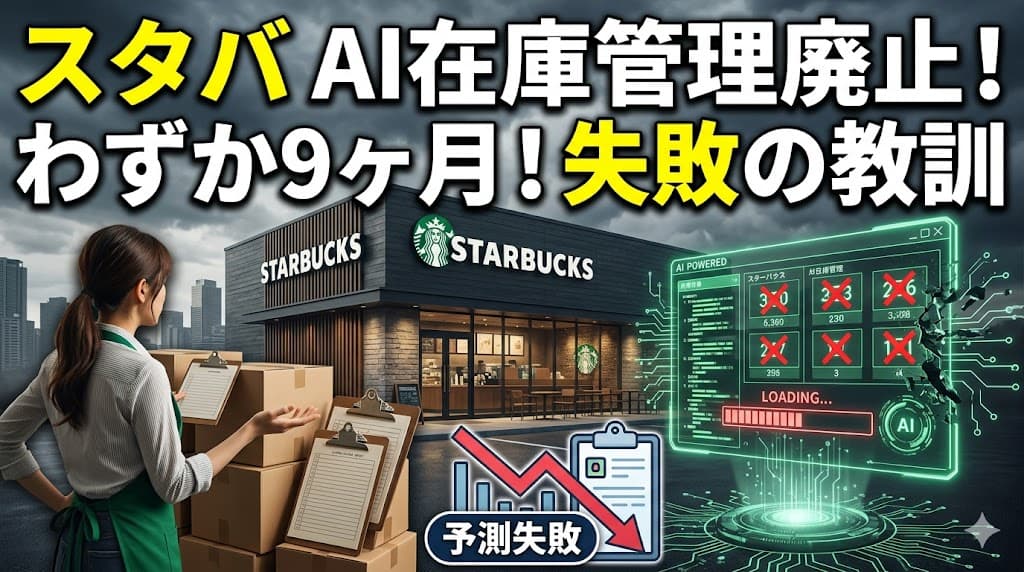
Starbucks Scraps AI Inventory Tool After Just 9 Months — Lessons in Tech Adoption
スターバックスがAI在庫管理ツールを導入わずか9ヶ月で廃止した事例を題材に、AI導入・撤退の意思決定を語るビジネス英語を学びます。
Part 1: 読む → 要約する
Step 1: Pre-Reading — ビジネスの文脈で考える (3 min)
あなたは外資系企業のオペレーション部門で働いています。月曜日の朝、北米本社とのチームミーティングで「AIツールの導入と廃止に関する事例」が議題に上がりました。マネージャーから「スターバックスのケースについて何か知っている?」と振られた場面を想像してください。
Q1: What kinds of tasks in your workplace could potentially be automated by AI? 職場で「AIに任せられそうな業務」を3つ考えてみましょう。
Q2: Have you ever seen a new system or tool fail shortly after introduction? What happened? 過去に「導入されたけれどすぐに使われなくなった」システムやツールの経験を思い出してみましょう。
Q3: When a company invests in new technology and it doesn't work, who should take responsibility — the vendor, the leadership, or the frontline staff? 技術導入の失敗の責任は誰にあるか、自分の意見を考えてみましょう。
Step 2: First Reading — 全体を把握する (10 min)
以下の英文は、ニュース記事の事実をもとに作成したビジネスシナリオ文書です。実際の職場でこのような文書を読む場面を想像しながら、英文を読み進めましょう。
INTERNAL BRIEFING MEMO
To: Asia-Pacific Operations Leadership Team From: Hiroshi Tanaka, Director of Digital Transformation Strategy Date: May 24, 2026 Subject: Lessons from Starbucks' AI Inventory Tool Discontinuation — Implications for Our Q3 Automation Roadmap
Purpose
This memo provides a summary of a recent case involving Starbucks Corporation and outlines three action items for our team ahead of the June 15 steering committee meeting. As we finalize our own store-level automation pilot, we believe this case offers valuable lessons that should inform our investment decisions.
Background
In the summer of 2025, Starbucks rolled out an AI-powered inventory management tool across its North American locations. The tool was co-developed with NomadGo, a technology partner specializing in spatial intelligence. By combining LiDAR sensors and camera systems, the solution was designed to automatically scan stock levels of milk, syrups, and other key supplies — tasks previously handled manually by store staff. Leadership expected the technology to free up labor hours and improve operational efficiency across thousands of stores.
However, just nine months after deployment, Starbucks officially decided to abandon the tool. According to reports, the system suffered from frequent errors, including misreading product labels and miscounting inventory items. Frontline staff reportedly had to spend additional time correcting the tool's outputs, which undermined the original business case for adoption.
Key Takeaways for Our Team
Pilot scope matters. A nine-month full rollout left limited room for iteration. We should consider a six-month controlled pilot in five stores before any broader deployment.
Hardware-dependent AI carries real-world risks. LiDAR and camera-based recognition can struggle with varied store environments — lighting, packaging changes, and shelf arrangements all affect accuracy.
Frontline feedback is critical. Any productivity gains must be measured net of correction time. We need a clear metric framework before the pilot begins.
Action Items
- Operations Planning Team: Draft pilot KPIs by June 5
- Procurement: Review vendor accuracy benchmarks by June 10
- All recipients: Prepare a 5-minute summary for the June 15 meeting
Please direct any questions to my office before Friday.
Data sourced from: GIGAZINE — "スターバックスがAI在庫管理ツールを導入から9カ月で廃止、ミス多発のため" (May 22, 2026)
Note: The above is an original business scenario created for learning purposes using publicly available facts. Please read the original article at the link above for the full report.
Step 3: Comprehension Check — 内容確認 (5 min)
Q1: When did Starbucks begin rolling out the AI inventory management tool, and when was it discontinued? 導入時期と廃止までの期間を確認しましょう。
Q2: Which company partnered with Starbucks to develop the tool? 共同開発したパートナー企業名を答えましょう。
Q3: What two types of technology did the tool combine to scan inventory? 在庫スキャンに使われた2つの技術を答えましょう。
Q4: What were the main types of errors that the tool produced? どのようなミスが多発したかを説明しましょう。
Q5: According to the memo, what three lessons does the author draw from the Starbucks case? メモの著者が挙げた3つの教訓をまとめましょう。
Step 4: 30-Second Briefing — 上司に30秒で説明する (10 min)
月曜日の朝、エレベーターで上司にばったり会いました。「あのスターバックスのAIツールの話、簡単に教えてくれる?」と聞かれた場面を想像してください。30秒で要点を伝えましょう。
| 構成要素 | 英語テンプレート |
|---|---|
| 1. 結論から (Bottom line) | "Starbucks has decided to their AI inventory tool after only months." |
| 2. 背景 (Context) | "It was launched in and co-developed with ." |
| 3. 問題点 (The issue) | "The system frequently labels and inventory items." |
| 4. 示唆 (Implication) | "This shows that AI rollouts need __________ before full deployment." |
| 5. 締めくくり (Wrap-up) | "I think it's a useful case study for our own __________ project." |
💡 Tip: 上司への要約では、記事の表現をそのまま使わず、自分の言葉で言い換える (paraphrase) ことが重要です。例えば "abandon" は "drop", "scrap", "discontinue" などに置き換えられます。語彙の引き出しが多いほど、自然で説得力のある説明になります。
Part 2: 語彙・表現・発音
1. abandon (v.) — 廃止する、断念する
Example: Starbucks decided to abandon the AI inventory tool after frequent errors. スターバックスは頻発するミスを受けてAI在庫管理ツールの廃止を決定した。
外資系シーン: プロジェクト中止や戦略転換を説明する場面で頻出。"abandon a project / strategy / initiative" のコロケーションで覚えておくと便利です。
2. roll out (phrasal v.) — 展開する、本格導入する
Example: The company plans to roll out the new system across all branches by Q4. 当社は第4四半期までに新システムを全支店に展開する予定です。
外資系シーン: "rollout" は名詞としても使われ、製品・サービス・システムの段階的導入を意味します。"phased rollout" (段階的展開) はビジネス英語の定番表現です。
3. frontline (adj./n.) — 現場の、最前線の
Example: Frontline staff often see operational problems before management does. 現場のスタッフは、経営層よりも先に業務上の問題に気づくことが多い。
外資系シーン: "frontline employees", "frontline operations" のように使い、顧客や業務に直接関わる現場を指します。経営報告書でよく登場します。
4. undermine (v.) — 弱める、損なう
Example: Frequent system errors undermined trust in the new tool. 頻発するシステムエラーが新ツールへの信頼を損なった。
外資系シーン: "undermine confidence / trust / credibility" など、信頼や効果を「じわじわと損なう」ニュアンス。批判や懸念を表明する場面で使われます。
5. business case (n.) — 導入根拠、投資判断材料
Example: The original business case for the tool was to free up staff hours for customer service. ツール導入の当初の根拠は、スタッフの時間を顧客対応に充てることでした。
外資系シーン: 投資判断や稟議の場面で必須の表現。"build a business case for ~" (~の導入根拠を組み立てる) という形でよく使われます。
Fill-in-the-blank exercise
Q1: After repeated failures, the team had no choice but to __________ the project. (ヒント: 廃止する)
Q2: Our company will __________ the new HR system in three phases starting next month. (ヒント: 展開する)
Q3: __________ employees provided valuable feedback that shaped the final design. (ヒント: 現場の)
Q4: Before approving the budget, the CFO asked for a clearer __________ __________. (ヒント: 導入根拠)
Part 3: 自分の意見を述べる
Topic A: Should companies prioritize speed of AI deployment, or thorough testing before rollout? スピード優先か、慎重なテスト優先か。自社のビジネス環境を踏まえて意見を述べましょう。
Topic B: When AI tools fail, who should bear the cost — the vendor, the buyer, or both? Why? 失敗時のコスト負担について、契約・責任の観点から考えましょう。
Topic C: In your industry, which tasks do you think are still best handled by humans rather than AI? Why? 自分の業界で「人間が担うべき業務」を具体例とともに挙げてみましょう。
| English | 日本語 |
|---|---|
| In my view, the key issue is... | 私の見方では、重要な論点は... |
| One concern I have is that... | 一つ懸念しているのは... |
| That said, there are also benefits, such as... | とはいえ、~のような利点もあります |
| From a frontline perspective,... | 現場の視点から見ると... |
| It comes down to a trade-off between... and... | 結局は |
Part 4: 面接対策 — 外資系で差をつける
Scenario A: "Tell me about a time when a project you were involved in didn't go as planned. What did you learn?" 失敗経験とその教訓を尋ねる定番質問です。スターバックスの事例を参考に、自分のプロジェクト経験を STAR形式 (Situation / Task / Action / Result) で語る練習をしましょう。
Scenario B: "How would you decide whether to adopt a new technology in your team's workflow?" 意思決定プロセスを問う質問です。"pilot", "KPI", "ROI", "frontline feedback" などのキーワードを使って説明できると評価が上がります。
Scenario C: "If you were leading the Starbucks project, what would you have done differently?" リーダーシップ視点での仮定質問です。批判ではなく「自分ならどう改善するか」を建設的に語る練習をしましょう。
Common Mistakes (NG patterns)
NG 1:
- ❌ "The tool was bad."
- ⭕ "The tool struggled with accuracy in real-world store conditions."
- 解説: "bad" のような曖昧な形容詞は避け、具体的な原因を述べることでビジネス英語として通用します。
NG 2:
- ❌ "I think they should not use AI."
- ⭕ "I would recommend a more controlled pilot before scaling up."
- 解説: 否定形より建設的な代替案を提示しましょう。"I would recommend ~" は提案の定型表現です。
NG 3:
- ❌ "Starbucks failed."
- ⭕ "Starbucks faced challenges that led them to discontinue the tool."
- 解説: 強い断定は印象を悪くします。"face challenges", "encounter difficulties" など、客観的な表現を選びましょう。
NG 4:
- ❌ "AI is not useful."
- ⭕ "This case shows that AI deployment requires careful scoping and frontline involvement."
- 解説: 一般化を避け、ケースから引き出した示唆を述べることで論理性が伝わります。
活用のコツ(3 Tips)
Tip 1: 失敗事例こそ会議で使えるネタにする 新技術の成功事例より、失敗事例の方が示唆に富み、自社の意思決定に活かしやすいものです。週次ミーティングで「他社の失敗から学べること」を1つ共有する習慣をつけると、戦略的思考のアウトプット力が鍛えられます。
Tip 2: 「9ヶ月で廃止」というタイムラインの感覚を持つ 大企業でも導入から1年以内に撤退する判断は珍しくありません。自分の関わるプロジェクトでも「いつまでに成果が出なければ撤退するか」という出口戦略を最初に設計しておくことで、サンクコストに引きずられない意思決定ができます。
Tip 3: 現場の声を英語で聞ける・伝えられる準備をする "frontline feedback" は外資系の意思決定における重要なキーワードです。日々の業務で気づいた現場の課題を、英語で簡潔に説明できるよう日頃から準備しておくと、グローバル会議での発言機会が増えます。
Bonus: プロナビレッスンでの活用法
【レッスン前(20min)】 Step 1〜2を自習で進め、シナリオ文書を音読しながら自分の意見をメモに書き出しておきましょう。Part 2の語彙は声に出して例文ごと暗記し、Part 3のディスカッショントピックについて、英語で30秒スピーチを録音してみることをおすすめします。
【レッスン中(25min)】 コーチと一緒にStep 4の30秒ブリーフィングを実践練習しましょう。Part 3のディスカッショントピックを使い、コーチとの即興ディスカッションで「自分の意見を構造的に伝える」訓練を行います。Part 4の面接シナリオはロールプレイで実施し、NGパターンを避ける言い換え練習を集中的に行いましょう。
【レッスン後(15min)】 レッスンで指摘された語彙・表現の言い換えをノートにまとめ、翌週までに自分の業務メールや会議発言で実際に使ってみましょう。Part 4のScenario Cについて、自分なりの回答を200語程度で英作文し、次回レッスンに持参すると継続的な改善につながります。
参考・出典
この記事を書いた人
サイト運営・日本語サポート担当 / AIエンジニア
- ●東京都出身・海外在住13年以上
- ●IT歴36年以上(開発・SEO・AI)
- ●IBM認定 生成AIエンジニア
- ●CEFR B1の英語学習者(今も学習中)
外資系の現場で「英語が話せず評価が伸びない」苦しさを経験し、海外移住後も印刷所で「copy」が通じないような発音の壁に何度もぶつかってきました。今もプロ講師の指導を受けながら学習を続ける一人として、AI時代でも英語で悩む日本人ビジネスパーソンに向けて、現場目線で記事を書いています。日本語でのご相談やお問い合わせも私が担当します。
関連記事
GMO在宅勤務「完全廃止」を英語で説明する|ニュースで学ぶビジネス英語教材
GMOの在宅勤務「完全廃止」ニュースを教材化。英文社内メモの読解、上司への30秒説明、頻出語彙、面接想定問答まで収録し、働き方トレンドを語れるビジネス英語力を鍛えます。無料の英語学習教材です。
2026/7/14

三菱UFJが時価総額首位に|40年ぶりの「金融復権」を英語で語るビジネス英語教材
三菱UFJが時価総額首位、1986年以来40年ぶりの金融復権。このニュースを教材に、市場・金利・株主還元を語るビジネス英語を学習。社内メモ読解、30秒要約、ディスカッション、外資系面接対策まで実践形式で身につく無料教材です。
2026/7/13
Apple対OpenAI訴訟で学ぶビジネス英語|営業秘密と情報管理を英語で語る実践教材
AppleによるOpenAI提訴のニュースを教材化。営業秘密・情報管理をテーマに、社内メモの読解、上司への30秒説明、重要単語、ディスカッション、面接対策まで実践的に学べるビジネス英語学習コンテンツ。外資系で働く日本人ビジネスパーソンの英語力を鍛えます。
2026/7/12
三菱自動車×東大発Highlandersのヒト型ロボット量産提携で学ぶビジネス英語教材
三菱自動車と東大発Highlandersのヒト型ロボット量産提携ニュースで学ぶビジネス英語教材。mass productionなど頻出語彙、30秒ブリーフィング、外資系面接対策まで実践的に学べる英語学習コンテンツです。
2026/7/11
OpenAI「ChatGPT Work」で学ぶビジネス英語|AIエージェント最新ニュース教材
OpenAIの「ChatGPT Work」とGPT-5.6を題材にしたビジネス英語学習教材。社内メモ読解や30秒ブリーフィング、面接対策を通じて、AI時代の職場で使える実践英語を身につけます。
2026/7/10
Grok 4.5で学ぶビジネス英語|AI最新ニュースで鍛える読解と要約力
話題のAIモデル「Grok 4.5」の英語ニュースを教材化。社内ブリーフィングメモの読解、要約、面接対策まで。最新テックニュースで実践的なビジネス英語を学びたい方へ。
2026/7/9