
【ビジネス英語教材】地方出張の疲労問題を外資系メモで学ぶ実践レッスン
地方から都市部への出張疲労をテーマにした実践ビジネス英語教材。外資系企業の社内メモ形式で、英語学習に役立つ語彙・表現・面接対策まで網羅。リモートワークや人事課題を英語で議論する力を養います。


AIエンジニア / IT歴36年以上・海外在住13年以上のCEFR B1英語学習者
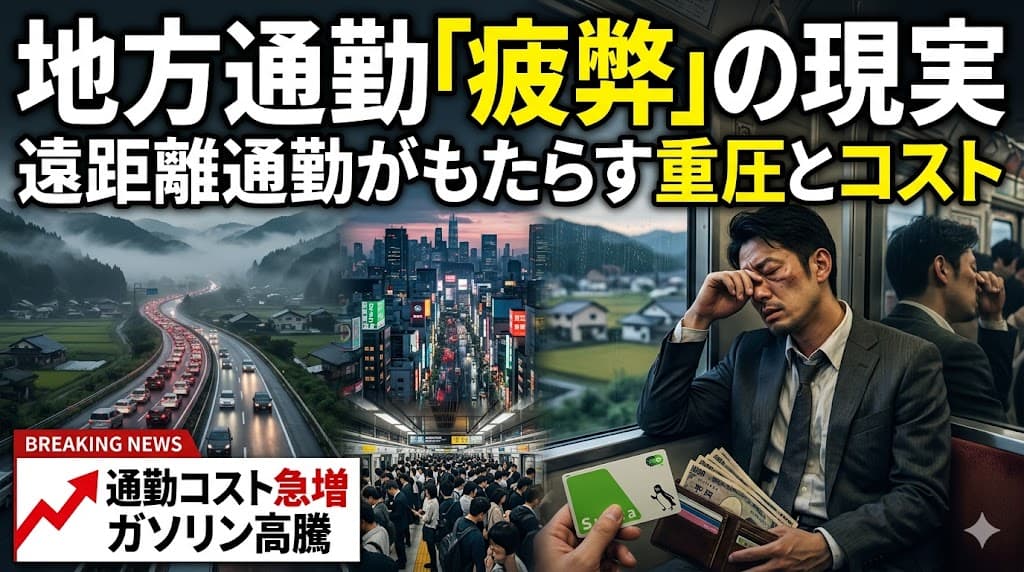
Rural-to-Urban Travel Fatigue: Commuting Costs and Regional Workforce Mobility
地方から都市部への長距離出張がもたらす従業員の負担を題材に、外資系企業の社内メモ英語を実践的に学べる教材です。
Part 1: 読む → 要約する
Step 1: Pre-Reading — ビジネスの文脈で考える (3 min)
シーン設定 あなたは外資系企業の日本支社に勤務しています。人事部が「地方在住社員の出張負担」について議論するため、週次チームミーティングで地方からの長距離移動がもたらす従業員の疲労と業務効率への影響について情報共有を求められました。関連する英語の記事を読む前に、以下の問いについて考えてみましょう。
Q1: How does long-distance travel affect an employee's productivity when they arrive at a client site or headquarters? 長距離移動が目的地到着後の社員のパフォーマンスにどのような影響を与えるか、具体例を考えてみましょう。
Q2: What are the hidden costs (time, energy, morale) of requiring regional employees to travel to urban offices for meetings? 地方在住の社員を都市部のオフィスに呼び寄せる際に、目に見えないコストとして何が発生するでしょうか。
Q3: In your company, what support would you propose for employees who live far from major transportation hubs? 主要な交通拠点から離れて暮らす社員に対して、どのような支援制度を提案できますか。
Step 2: First Reading — 全体を把握する (10 min)
以下の英文は、ニュース記事の事実をもとに作成したビジネスシナリオ文書です。実際の職場でこのような文書を読む場面を想像しながら、英文を読み進めましょう。
INTERNAL BRIEFING MEMO
To: Regional Operations Committee From: Human Resources Strategy Team Date: April 22, 2026 Subject: Update on Regional Employee Travel Burden — Action Required Before Golden Week
1. Purpose
This memo summarizes emerging concerns regarding the physical and mental burden placed on our regionally based employees who must travel to the Tokyo metropolitan area for business purposes. With the upcoming Golden Week period (May 7–10, 2026) approaching, several team leaders have flagged travel fatigue as a factor affecting post-trip performance. The Committee is asked to review the proposed mitigation steps below.
2. Background
A recent opinion piece published by Career Connection News on April 19, 2026, highlighted a nationwide conversation about what commentators call "urban travel fatigue." The article describes how residents of rural prefectures routinely spend approximately two hours simply reaching the nearest Shinkansen station or airport before their actual journey to Tokyo begins. Once at major transit hubs, additional waiting time pushes total pre-departure time to around two hours from leaving home. Upon arrival in Tokyo, crowd density and unfamiliar environments further deplete energy reserves.
3. Observed Impact on Our Organization
Internal exit interview data from the last two quarters indicates that 34% of regionally assigned staff cited "travel-related exhaustion" as a secondary factor in their decision to relocate or resign. Employees from Tohoku, Kyushu, and Shikoku regions report that a one-day Tokyo meeting typically requires a full two-day commitment when travel time is included. Several department heads have noted reduced meeting engagement during the afternoon sessions of same-day travel participants.
4. Proposed Actions
(a) Default to hybrid meeting formats for any session including three or more regional attendees. (b) Introduce a "travel recovery day" policy allowing remote work on the day following business trips exceeding four hours of one-way travel. (c) Expand the travel stipend to cover overnight accommodation when total one-way transit exceeds three hours.
5. Deadline
Please submit written feedback to the HR Strategy Team by May 15, 2026. A follow-up decision meeting is scheduled for May 22.
Data sourced from: Career Connection News — "『新幹線に乗るまでで2時間』東京に着く前にHPが尽きる田舎者の絶望" (April 19, 2026)
Note: The above is an original business scenario created for learning purposes using publicly available facts. Please read the original article at the link above for the full report.
Step 3: Comprehension Check — 内容確認 (5 min)
Q1: Who is the intended recipient of this memo, and what department issued it? このメモの受取人と発行部署を確認しましょう。
Q2: According to the memo, approximately how long does it take rural residents to reach a major transit hub before their actual journey begins? 地方在住者が主要交通拠点に到着するまでにかかる時間を答えましょう。
Q3: What percentage of regionally assigned staff cited travel-related exhaustion in exit interviews? 退職面談で移動関連の疲労を挙げた社員の割合はどのくらいでしたか。
Q4: Name two of the three proposed actions outlined in the memo. メモに記載された3つの提案アクションのうち、2つを挙げてください。
Q5: By what date must written feedback be submitted to the HR Strategy Team? 書面でのフィードバック提出期限はいつですか。
Step 4: 30-Second Briefing — 上司に30秒で説明する (10 min)
シーン設定 オフィスのエレベーターで、外資系マネージャーの上司から "Did you see that HR memo about regional travel? What's it about?" と聞かれました。30秒で要点を伝えましょう。
| Framework | Template |
|---|---|
| ① Topic(何について) | "The memo is about ___________ and its impact on ___________." |
| ② Key Fact(数字・事実) | "It reports that around ___________ % of regional staff mentioned ___________ in exit interviews." |
| ③ Proposed Action(提案) | "HR is proposing ___________, ___________, and ___________." |
| ④ Deadline(期限) | "Feedback is due by ___________, with a decision meeting on ___________." |
| ⑤ Your Take(自分の意見) | "Personally, I think ___________ because ___________." |
Tip: メモの文をそのまま読み上げるのではなく、自分の言葉に言い換える(paraphrase)ことを意識しましょう。例えば "travel-related exhaustion" は "feeling drained from long trips" のように、より平易な表現に置き換えると、自然な会話になります。
Part 2: 語彙・表現・発音
1. burden (n.) — 負担、重荷
Example: The long commute has become a significant burden for our regional staff. 長時間の通勤は、地方在住スタッフにとって大きな負担となっています。
外資系シーン: プロジェクトの作業負担やコスト負担を議論する会議で頻出する語です。"financial burden", "workload burden" のような複合表現でも使われます。
2. mitigation (n.) — 軽減、緩和(策)
Example: The committee reviewed several mitigation steps to reduce employee travel fatigue. 委員会は、社員の移動疲労を軽減するためのいくつかの緩和策を検討しました。
外資系シーン: リスクマネジメントや問題解決の場面で "risk mitigation" として使われます。プロジェクト提案書の定番表現です。
3. deplete (v.) — 使い果たす、消耗させる
Example: Crowded environments can deplete energy reserves faster than expected. 混雑した環境は、予想以上に早くエネルギーを消耗させることがあります。
外資系シーン: 予算や在庫、人的リソースの減少を表す際によく使われます。"deplete resources" は経営会議での頻出フレーズです。
4. stipend (n.) — 手当、支給金
Example: The company plans to expand the travel stipend for long-distance assignments. 会社は長距離出張向けの手当を拡充する予定です。
外資系シーン: 外資系では福利厚生やベネフィットを説明する際に頻繁に登場します。"housing stipend", "meal stipend" など派生表現も多数あります。
5. flag (v.) — 注意喚起する、問題として指摘する
Example: Several team leaders have flagged travel fatigue as a productivity issue. 複数のチームリーダーが、移動疲労を生産性の問題として指摘しています。
外資系シーン: Slack やメールで "I want to flag this..." と切り出すのは、外資系の定番表現です。問題を丁寧に提起するニュアンスで使われます。
Fill-in-the-Blank Exercise
空欄に上記の語彙から最適なものを選んで入れましょう。
1. The finance team will ___________ any unusual spending patterns during the quarterly review.
2. Working overtime for weeks can ___________ even the most motivated employees.
3. We need to propose a ___________ plan before the budget meeting.
4. The new remote work policy significantly reduced the daily commute ___________ for our staff.
Part 3: 自分の意見を述べる
Discussion Topic A
Do you think companies should offer additional support (such as overnight stays or recovery days) for employees who travel long distances for work? Why or why not? 長距離出張する社員に対して、企業は追加支援(宿泊や休息日)を提供すべきだと思いますか?その理由も考えましょう。
Discussion Topic B
How can hybrid meeting formats balance the needs of both urban and regional employees? What are the potential downsides? ハイブリッド会議形式は、都市部と地方在住社員双方のニーズをどう両立できますか?デメリットも考えましょう。
Discussion Topic C
In your opinion, is "travel fatigue" a legitimate HR concern, or should it be treated as part of the job? Share your perspective. 「移動疲労」は正当な人事課題だと思いますか、それとも業務の一部として扱うべきですか?あなたの意見を述べましょう。
| English | Japanese |
|---|---|
| From my perspective, ... | 私の視点では、... |
| I can see both sides, but ... | 両方の立場が理解できますが、... |
| That's a valid point, however ... | それは一理ありますが、... |
| Based on my experience, ... | 私の経験に基づくと、... |
| I'd like to push back on that because ... | それについては反論させてください。なぜなら... |
Part 4: 面接対策 — 外資系で差をつける
Mock Interview Scenario A
Interviewer: "Tell me about a time when you identified an inefficiency in your workplace and proposed a solution. What was the outcome?" 職場の非効率を見つけて解決策を提案した経験を、結果とともに語る想定。
Mock Interview Scenario B
Interviewer: "Our company has employees distributed across multiple regions in Japan. How would you approach team collaboration and engagement in such a setup?" 地方分散型の組織でのチーム運営・エンゲージメント向上のアプローチを問う質問。
Mock Interview Scenario C
Interviewer: "How do you balance employee well-being with business productivity when making policy recommendations?" 社員のウェルビーイングと事業生産性のバランスを、方針提案時にどう取るか問う質問。
Common Mistakes (NG Patterns)
NG 1: 抽象的すぎる回答
- ❌ Bad: "I think travel is important for business."
- ✅ Good: "Based on my experience, reducing unnecessary travel by 30% improved team focus and saved roughly two days per month per employee." 抽象的な意見ではなく、具体的な数字やエピソードを添えることで説得力が増します。
NG 2: 日本語直訳の不自然な表現
- ❌ Bad: "I think it is a problem that must be considered."
- ✅ Good: "I'd flag this as a priority issue worth addressing." 日本語の「検討すべき課題」を直訳せず、"flag" や "priority issue" といったビジネス英語の定型表現を使いましょう。
NG 3: 謙遜しすぎて貢献が伝わらない
- ❌ Bad: "I just helped a little with the project."
- ✅ Good: "I led the analysis phase, which reduced the proposal turnaround by two weeks." 外資系面接では、チーム貢献を明確に伝えることが期待されます。謙遜は評価を下げる原因になります。
NG 4: 結論が最後に来る(英語では最初に)
- ❌ Bad: "Well, the project had many issues, budget was tight, the team was small, and finally... we succeeded."
- ✅ Good: "We successfully launched on time. The main challenges were budget and team size, but we overcame them by..." 英語では結論を最初に述べ、その後で背景を説明する「PREP法」が基本です。
活用のコツ(3 Tips)
Tip 1: 記事から得た語彙を、自分の部署の課題で使う文章に作り変えましょう。 "burden", "mitigation", "flag" などの語彙は、そのまま暗記するよりも、自社の実際の課題(例えば、会議時間の長さや、書類処理の遅さなど)について英語で説明する文章を作ることで、実務で使える形で定着します。
Tip 2: メモ形式の英文構造をテンプレートとして保存しましょう。 Step 2 で読んだ Purpose → Background → Impact → Proposed Actions → Deadline の流れは、外資系で提案メールや社内メモを書くときの黄金パターンです。自分用のテンプレートとして保存し、次の英文メール作成時に参照すると、構成を考える時間が大幅に短縮できます。
Tip 3: 「自社の地方拠点」に置き換えて、30秒ブリーフィングを声に出して練習しましょう。 記事のテーマを自分の会社の実情に置き換えて話す練習をすることで、面接や会議の場面で即座に引き出せる「ストック回答」が作れます。通勤時間や在宅勤務時に音読するだけでも、スピーキングの瞬発力が鍛えられます。
Bonus: プロナビレッスンでの活用法
レッスン前 (20 min)
記事を1回通読し、Part 1 の Step 1(Pre-Reading)と Step 3(Comprehension Check)の質問に自分なりの答えをメモしておきましょう。Part 2 の語彙は、例文を音読して発音のリズムに慣れておくと、レッスン中の会話で自然に使えるようになります。Step 4 の 30秒ブリーフィングは、実際に時計を見ながら声に出して一度練習してみてください。
レッスン中 (25 min)
コーチと一緒に Part 3 のディスカッショントピックに取り組みます。自分の意見を述べる際には、事前に用意した答えに頼りすぎず、コーチからのフォローアップ質問にも柔軟に応答する練習を重ねましょう。Part 4 の面接シナリオは、コーチを面接官役に見立て、NG パターンを意識しながらロールプレイを行います。発音の微調整やイントネーションのフィードバックを受けることで、伝わりやすさが格段に向上します。
レッスン後 (15 min)
レッスン中にコーチから指摘された表現や発音のポイントを、Part 2 の語彙ノートに追記しましょう。また、30秒ブリーフィングをスマートフォンで録音し、自分で聞き返すことで客観的な改善点が見えてきます。1週間以内に、同じトピックについて同僚や家族に英語で説明してみると、知識が実践力に変わります。
PronuNavi(プロナビ)では、このような実践的な英語学習をプロのコーチがサポートします。ご興味のある方は、ぜひ free consultation をご利用ください。
参考・出典
この記事を書いた人
サイト運営・日本語サポート担当 / AIエンジニア
- ●東京都出身・海外在住13年以上
- ●IT歴36年以上(開発・SEO・AI)
- ●IBM認定 生成AIエンジニア
- ●CEFR B1の英語学習者(今も学習中)
外資系の現場で「英語が話せず評価が伸びない」苦しさを経験し、海外移住後も印刷所で「copy」が通じないような発音の壁に何度もぶつかってきました。今もプロ講師の指導を受けながら学習を続ける一人として、AI時代でも英語で悩む日本人ビジネスパーソンに向けて、現場目線で記事を書いています。日本語でのご相談やお問い合わせも私が担当します。
関連記事
GMO在宅勤務「完全廃止」を英語で説明する|ニュースで学ぶビジネス英語教材
GMOの在宅勤務「完全廃止」ニュースを教材化。英文社内メモの読解、上司への30秒説明、頻出語彙、面接想定問答まで収録し、働き方トレンドを語れるビジネス英語力を鍛えます。無料の英語学習教材です。
2026/7/14
三菱UFJが時価総額首位に|40年ぶりの「金融復権」を英語で語るビジネス英語教材
三菱UFJが時価総額首位、1986年以来40年ぶりの金融復権。このニュースを教材に、市場・金利・株主還元を語るビジネス英語を学習。社内メモ読解、30秒要約、ディスカッション、外資系面接対策まで実践形式で身につく無料教材です。
2026/7/13

Apple対OpenAI訴訟で学ぶビジネス英語|営業秘密と情報管理を英語で語る実践教材
AppleによるOpenAI提訴のニュースを教材化。営業秘密・情報管理をテーマに、社内メモの読解、上司への30秒説明、重要単語、ディスカッション、面接対策まで実践的に学べるビジネス英語学習コンテンツ。外資系で働く日本人ビジネスパーソンの英語力を鍛えます。
2026/7/12
三菱自動車×東大発Highlandersのヒト型ロボット量産提携で学ぶビジネス英語教材
三菱自動車と東大発Highlandersのヒト型ロボット量産提携ニュースで学ぶビジネス英語教材。mass productionなど頻出語彙、30秒ブリーフィング、外資系面接対策まで実践的に学べる英語学習コンテンツです。
2026/7/11

OpenAI「ChatGPT Work」で学ぶビジネス英語|AIエージェント最新ニュース教材
OpenAIの「ChatGPT Work」とGPT-5.6を題材にしたビジネス英語学習教材。社内メモ読解や30秒ブリーフィング、面接対策を通じて、AI時代の職場で使える実践英語を身につけます。
2026/7/10

Grok 4.5で学ぶビジネス英語|AI最新ニュースで鍛える読解と要約力
話題のAIモデル「Grok 4.5」の英語ニュースを教材化。社内ブリーフィングメモの読解、要約、面接対策まで。最新テックニュースで実践的なビジネス英語を学びたい方へ。
2026/7/9