
NVIDIAを救ったセガの英断|ファンCEOスピーチで学ぶビジネス英語
NVIDIAのファンCEOが語ったセガとの逸話を題材に、ビジネス英語の語彙・要約・面接対策まで一気に学習。外資系で使える表現と思考法を身につける英語学習教材。


AIエンジニア / IT歴36年以上・海外在住13年以上のCEFR B1英語学習者
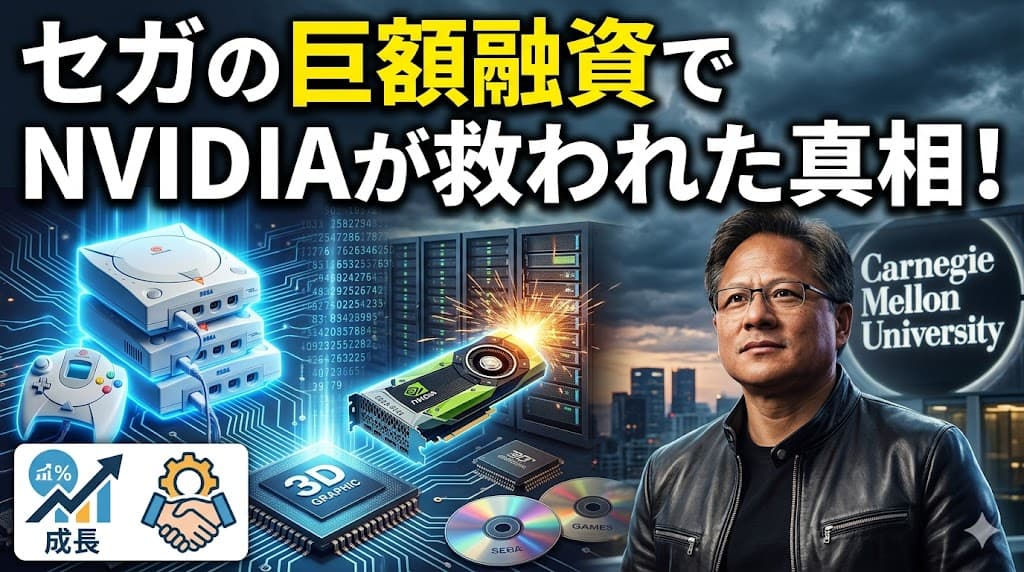
How Sega's Rescue Funding Saved NVIDIA — Lessons from Jensen Huang's CMU Speech
倒産危機のNVIDIAをセガが救った実話から、パートナーシップ・戦略転換・失敗の伝え方を英語で学ぶ実践型教材です。
Part 1: 読む → 要約する
Step 1: Pre-Reading — ビジネスの文脈で考える (3 min)
Scene: 月曜朝、外資系テクノロジー企業のチームミーティング。マネージャーが「週末に話題になったNVIDIAのCEOのスピーチについて、みんなはどう思った?」とチームメンバーに意見を求めています。あなたは、自社の経営戦略やパートナーシップの考え方と関連付けて発言する必要があります。
Q1: Have you ever heard about a company that survived a crisis thanks to a partner's support? What happened? 過去にパートナー企業の支援で危機を乗り越えた会社の事例を思い出してみましょう。
Q2: Why might a large company decide to financially support a small partner that has failed to deliver on a contract? 契約を履行できなかった小さなパートナーを、なぜ大企業があえて支援するのでしょうか。
Q3: In your industry, how is "admitting a mistake early" usually perceived — as weakness or as professionalism? あなたの業界では「早期にミスを認めること」はどのように受け止められていますか。
Step 2: First Reading — 全体を把握する (10 min)
以下の英文は、ニュース記事の事実をもとに作成したビジネスシナリオ文書です。実際の職場でこのような文書を読む場面を想像しながら、英文を読み進めましょう。
INTERNAL STRATEGY MEMO
To: Partnership Development Team, APAC Region From: Director of Strategic Alliances Date: May 26, 2026 Subject: Lessons from the NVIDIA–Sega Case — Action Items for Our Q3 Partner Review
Background
Last week, NVIDIA CEO Jensen Huang delivered the commencement speech at Carnegie Mellon University. In his address, he shared a story from the late 1990s that I believe is highly relevant to how our team should evaluate early-stage partners going forward.
In the late 1990s, NVIDIA had been contracted to co-develop a graphics chip (GPU) for Sega's next-generation console, the Dreamcast. However, NVIDIA's proprietary image-processing approach diverged significantly from the emerging industry standard, and the project hit a technical dead end. Huang flew to Sega's headquarters in Japan, met with then-president Shoichiro Irimajiri, and openly admitted that his team's technical direction had been wrong. He requested the cancellation of the development contract.
What happened next is the key insight for us. Despite the failure to deliver, Huang asked Sega to honor the original funding commitment, explaining that NVIDIA would otherwise go bankrupt. Irimajiri, a former Honda engineer who understood the inherent risk of R&D, agreed. Sega injected several million dollars into NVIDIA, partly by purchasing pre-IPO shares.
Why this matters to us
This rescue gave NVIDIA roughly six months of runway. During that window, the company abandoned its proprietary technology and pivoted to the industry standard — a move Huang later called a "miracle pivot." That pivot eventually led to the AI-focused GPU business that defines NVIDIA today.
Action items for our team
- By June 15, please review our top ten early-stage partners and flag any whose technical roadmap may be diverging from industry standards.
- For each flagged partner, prepare a short note on whether short-term financial support could enable a productive pivot.
- We will discuss findings at the Q3 Partner Review on July 8.
Please reach out if you have questions. Honest assessments — including admitting where our own judgment has been off — are encouraged.
Best regards, Director of Strategic Alliances
Data sourced from: ビジネス+IT — "NVIDIA ジェンスン・ファンCEO「日本のセガがエヌビディアの危機を救った」" (May 2026)
Note: The above is an original business scenario created for learning purposes using publicly available facts. Please read the original article at the link above for the full report.
関連: 英語力はキャリアの保険|外資系転職・昇進で差がつくビジネス英語コーチング活用法 で詳しく解説しています。
Step 3: Comprehension Check — 内容確認 (5 min)
Q1: What event prompted the memo, and where did Jensen Huang give the speech referenced in it? メモが書かれたきっかけと、ファンCEOがスピーチを行った場所を答えましょう。
Q2: What was the original purpose of the contract between NVIDIA and Sega? 両社の当初の契約内容を整理しましょう。
Q3: Why did Huang travel to Sega's headquarters, and what two things did he request? ファン氏がセガ本社を訪れた理由と、彼が依頼した2つの内容を確認しましょう。
Q4: How did Sega provide the rescue funding, and how long of a runway did it give NVIDIA? 資金提供の方法と、それが何ヶ月分の運転資金になったかを答えましょう。
Q5: What three action items does the memo ask the team to complete? メモに記された3つのアクションアイテムを書き出してみましょう。
関連: AI時代のビジネス英語実践|日本人ビジネスパーソンはAIと英語をどう使うべきか で詳しく解説しています。
Step 4: 30-Second Briefing — 上司に30秒で説明する (10 min)
Scene: エレベーターで上司に「あのメモ、読んだ? ざっくり要点だけ教えて」と聞かれました。30秒で構造的に答える必要があります。
| 構成要素 | フレーズテンプレート |
|---|---|
| 1. トピック提示 | "The memo was about lessons from the NVIDIA–Sega case, shared by ___." |
| 2. 背景 | "In the late 1990s, NVIDIA failed to deliver a GPU for Sega's Dreamcast because ___." |
| 3. 中心的な出来事 | "Despite the failure, Sega decided to ___ , which gave NVIDIA ___ months of runway." |
| 4. ビジネス上の示唆 | "The takeaway for our team is that ___, especially when ___." |
| 5. 次のアクション | "We're being asked to review ___ by ___ and discuss findings at ___." |
Tip: 原文の表現をそのまま使わず、自分の言葉で言い換える(paraphrase する)ことが重要です。例えば "miracle pivot" をそのまま使うのではなく、"a major change in strategy that ended up saving the company" のように説明的に言い換えると、理解度がより伝わります。
Part 2: 語彙・表現・発音
1. commitment (n.) — 約束、責任、コミットメント
Example: Sega honored its original funding commitment even though NVIDIA could not deliver the chip. セガはNVIDIAがチップを納品できなかったにもかかわらず、当初の資金拠出の約束を守りました。
外資系シーン: 契約や予算、KPI に関する会議で頻出する語です。"Can we get a clear commitment on the delivery date?" のように、相手の約束を引き出す場面で使われます。
2. pivot (v./n.) — 戦略を大きく転換する
Example: The company pivoted from its proprietary technology to the industry standard, and that move ultimately saved the business. 同社は独自技術から業界標準へと方針を転換し、その判断が最終的に事業を救いました。
外資系シーン: スタートアップ文化が浸透している外資系では、戦略変更を "pivot" と表現するのが一般的です。"We need to pivot our go-to-market approach" のように使います。
3. honor (v.) — (約束・契約を)守る、履行する
Example: We need to honor the agreement we signed last quarter, even if market conditions have changed. 市場環境が変わっていても、前四半期に締結した合意は守る必要があります。
外資系シーン: 法務・調達・パートナーシップ関連の会話で多用されます。"pay" よりもフォーマルで、契約上の責任を強調するニュアンスがあります。
4. runway (n.) — (資金面での)残り体力、運転資金がもつ期間
Example: The funding gave the startup roughly six months of runway to redesign its product. その資金調達により、スタートアップは製品を再設計するために約6ヶ月の運転資金を確保できました。
外資系シーン: スタートアップやベンチャー、投資関連のミーティングで日常的に使われます。"How much runway do we have?" は「あと何ヶ月もつ?」という意味の定番表現です。
5. diverge (v.) — (方針・道筋などが)分かれる、外れる
Example: Our technical roadmap began to diverge from the industry standard, and we lost compatibility with major platforms. 当社の技術ロードマップが業界標準から逸れ始め、主要プラットフォームとの互換性を失いました。
外資系シーン: 戦略レビューや技術ロードマップの議論で使われます。"Our views diverge on this point" のように、意見の相違を婉曲に伝える場面でも使えます。
Fill-in-the-blank exercise
次の文に最も適切な単語を、上記の語彙から選んで入れてください(必要に応じて活用形を変えること)。
Q1: We only have three months of ___ left, so we need to close the next funding round quickly.
Q2: I'd like to get a firm ___ from the vendor before we sign the SOW.
Q3: After two failed launches, the team decided to ___ toward a completely new customer segment.
Q4: Our product specs began to ___ from what the client originally requested, which caused friction in the final review.
Part 3: 自分の意見を述べる
Discussion Topic A
Was Sega's decision to fund NVIDIA after the contract failure a smart business move or simply an act of generosity? Why? 契約失敗後の資金提供は、戦略的な判断だったのか、単なる温情だったのか、自分の意見を述べてみましょう。
Discussion Topic B
In your own organization, how would leadership likely respond if a partner came forward and openly admitted a technical mistake? Would the partnership survive? 自社で同じことが起きたら、リーダー層はどう反応するでしょうか。パートナーシップは維持されると思いますか。
Discussion Topic C
Jensen Huang argues that "admitting failure honestly" is essential. Do you agree, or does this advice apply differently depending on culture, industry, or career stage? 「正直に失敗を認めること」の重要性について、文化・業界・キャリアステージによって違いがあるかを議論してみましょう。
| English Phrase | 日本語 |
|---|---|
| In my view, the smarter long-term decision was... | 私の見方では、より賢明な長期的判断は… |
| I can see both sides, but on balance I think... | 両方の立場が理解できますが、総合的には…だと思います |
| That depends heavily on the corporate culture. | それは企業文化に大きく依存します |
| One nuance worth adding is... | 一つ補足したいニュアンスは… |
| I'd push back on that slightly because... | その点については少し反論したいのですが… |
Part 4: 面接対策 — 外資系で差をつける
Mock Interview Scenario A
Interviewer: "Tell me about a time when you had to admit a significant mistake to a senior stakeholder. How did you handle it, and what was the outcome?" 重要なステークホルダーに失敗を報告した経験を、STAR形式(Situation, Task, Action, Result)で構造的に話せるように準備しましょう。
Mock Interview Scenario B
Interviewer: "If a key partner of yours admitted that their technical approach was wrong and asked for continued support, how would you decide whether to back them?" 意思決定のフレームワーク(コスト・リスク・戦略的価値)に沿って論理的に答えましょう。
Mock Interview Scenario C
Interviewer: "What does the word 'pivot' mean in your professional experience? Walk me through a real example." ビジネス用語を自分の実体験で具体化できるかが問われます。抽象論ではなく、具体的な数字や状況を含めましょう。
Common Mistakes (NG Patterns)
❌ NG1: 抽象的すぎる回答
- Bad: "I always try to be honest and learn from mistakes."
- Good: "Last year, I underestimated the timeline for a system migration by about six weeks. I escalated it to my director within 48 hours of realizing it, proposed two recovery options, and we ultimately delivered with only a two-week delay."
- 面接官は「あなたが何をしたか」を具体的に知りたいので、固有名詞・数字・期間を入れて回答しましょう。
❌ NG2: 他人や環境のせいにする
- Bad: "The vendor didn't communicate well, so the project failed."
- Good: "Communication with the vendor broke down. Looking back, I should have set up weekly sync meetings from week one rather than relying on email."
- 外資系面接では「自分の責任範囲をどう振り返るか」が重視されます。
❌ NG3: 結論を先に言わない
- Bad: 状況説明を延々と続けてしまい、結論にたどり着くまで2分以上かかる
- Good: "The short answer is yes — I'd back the partner, under three conditions. Let me explain why."
- 外資系では結論ファースト(PREP法: Point, Reason, Example, Point)が基本です。
❌ NG4: 学びを語らない
- Bad: "We solved the problem and moved on."
- Good: "We solved the problem, and the bigger lesson for me was that early escalation is almost always cheaper than late escalation. I've applied that in every project since."
- 失敗談を語る目的は「学習能力の証明」です。必ず学びと、その後の行動への反映を加えましょう。
活用のコツ(3 Tips)
Tip 1: 「失敗の早期報告」を英語で言語化できるようにする NVIDIAの事例の本質は「早期にミスを認め、次の打ち手を提案した」という行動です。自分の業務で似た経験を1つ選び、"I realized X, escalated within Y hours, and proposed Z" の型で英語化しておくと、1on1や面接で即座に使えます。
Tip 2: パートナー関係を「投資判断」として語る語彙を増やす "runway", "pivot", "honor a commitment" は、パートナーシップやベンダー管理の議論で頻出します。次回の社内会議で、これらの語のうち最低1つを自分の発言に組み込んでみると、外資系特有の語感が身につきます。
Tip 3: ニュース記事を「自社への示唆」に翻訳する習慣をつける 英語学習を「読んで終わり」にしないために、記事を読んだら必ず "What does this mean for my team?" と自問する習慣をつけましょう。今回のメモのように、ニュースを社内文書化する練習は、ライティングとビジネス思考を同時に鍛える効果があります。
Bonus: プロナビレッスンでの活用法
レッスン前 (20 min)
Part 1 の Step 1〜Step 3 までを自習で完了させてください。Pre-reading questions(Q1–Q3)への自分の答えをメモし、Step 2 の英文は声に出して 2 回音読しておきます。Step 3 の Comprehension Check は答えを書き出すところまで終わらせ、わからなかった語彙には印をつけておきましょう。
レッスン中 (25 min)
コーチと一緒に Step 4 の 30-Second Briefing を実演します。最初の 5 分でコーチがフィードバックポイント(構造・発音・語彙)を確認し、その後 Part 3 の Discussion Topics から 1〜2 個を選んで会話します。最後の 10 分で Part 4 の Mock Interview Scenario を 1 つ選び、本番形式で練習。NG パターンを意識しながら言い直しを繰り返します。
レッスン後 (15 min)
レッスン中に指摘された言い換え表現や発音のポイントを 5 つに絞ってメモ化し、Part 2 の Fill-in-the-blank exercise を解き直します。さらに、活用のコツ Tip 1 に従って、自分の実体験を「失敗→報告→提案」の型で 100 words 程度の英文にまとめ、次回レッスンに持参すると定着が一段と深まります。
参考・出典
この記事を書いた人
サイト運営・日本語サポート担当 / AIエンジニア
- ●東京都出身・海外在住13年以上
- ●IT歴36年以上(開発・SEO・AI)
- ●IBM認定 生成AIエンジニア
- ●CEFR B1の英語学習者(今も学習中)
外資系の現場で「英語が話せず評価が伸びない」苦しさを経験し、海外移住後も印刷所で「copy」が通じないような発音の壁に何度もぶつかってきました。今もプロ講師の指導を受けながら学習を続ける一人として、AI時代でも英語で悩む日本人ビジネスパーソンに向けて、現場目線で記事を書いています。日本語でのご相談やお問い合わせも私が担当します。
関連記事
GMO在宅勤務「完全廃止」を英語で説明する|ニュースで学ぶビジネス英語教材
GMOの在宅勤務「完全廃止」ニュースを教材化。英文社内メモの読解、上司への30秒説明、頻出語彙、面接想定問答まで収録し、働き方トレンドを語れるビジネス英語力を鍛えます。無料の英語学習教材です。
2026/7/14
三菱UFJが時価総額首位に|40年ぶりの「金融復権」を英語で語るビジネス英語教材
三菱UFJが時価総額首位、1986年以来40年ぶりの金融復権。このニュースを教材に、市場・金利・株主還元を語るビジネス英語を学習。社内メモ読解、30秒要約、ディスカッション、外資系面接対策まで実践形式で身につく無料教材です。
2026/7/13
Apple対OpenAI訴訟で学ぶビジネス英語|営業秘密と情報管理を英語で語る実践教材
AppleによるOpenAI提訴のニュースを教材化。営業秘密・情報管理をテーマに、社内メモの読解、上司への30秒説明、重要単語、ディスカッション、面接対策まで実践的に学べるビジネス英語学習コンテンツ。外資系で働く日本人ビジネスパーソンの英語力を鍛えます。
2026/7/12
三菱自動車×東大発Highlandersのヒト型ロボット量産提携で学ぶビジネス英語教材
三菱自動車と東大発Highlandersのヒト型ロボット量産提携ニュースで学ぶビジネス英語教材。mass productionなど頻出語彙、30秒ブリーフィング、外資系面接対策まで実践的に学べる英語学習コンテンツです。
2026/7/11
OpenAI「ChatGPT Work」で学ぶビジネス英語|AIエージェント最新ニュース教材
OpenAIの「ChatGPT Work」とGPT-5.6を題材にしたビジネス英語学習教材。社内メモ読解や30秒ブリーフィング、面接対策を通じて、AI時代の職場で使える実践英語を身につけます。
2026/7/10
Grok 4.5で学ぶビジネス英語|AI最新ニュースで鍛える読解と要約力
話題のAIモデル「Grok 4.5」の英語ニュースを教材化。社内ブリーフィングメモの読解、要約、面接対策まで。最新テックニュースで実践的なビジネス英語を学びたい方へ。
2026/7/9