
マネーフォワードGitHub漏えい事件で学ぶ情報セキュリティのビジネス英語
マネーフォワードのGitHub認証情報漏えい事件を題材に、情報セキュリティ報告・インシデント対応のビジネス英語を学ぶ教材。語彙・要約・面接対策まで実践的に英語学習できます。


AIエンジニア / IT歴36年以上・海外在住13年以上のCEFR B1英語学習者
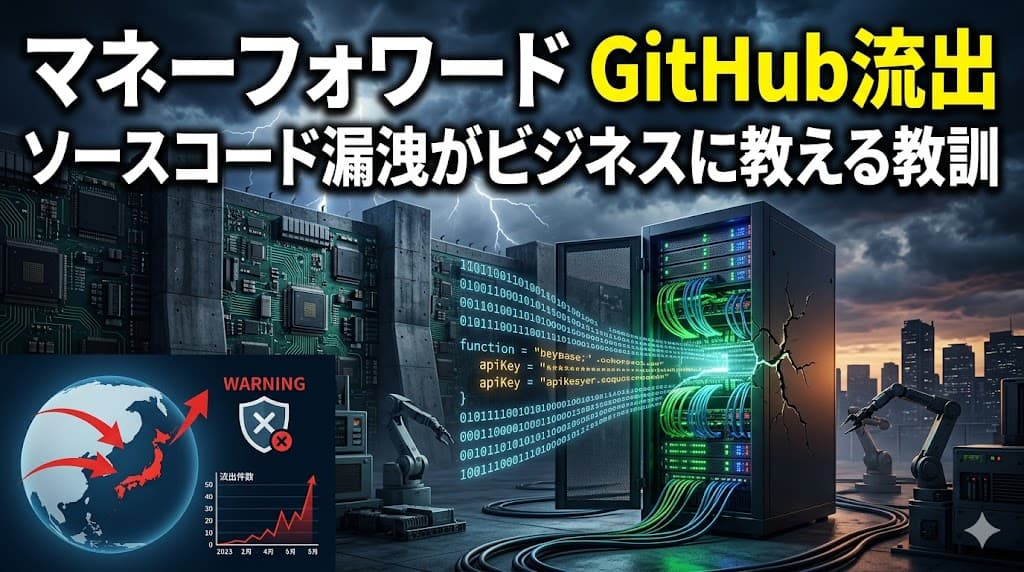
Money Forward GitHub Credential Leak — What a Source Code Breach Teaches Business Professionals
認証情報漏えい・リポジトリ流出という実際のインシデント事例から、外資系で通用する情報セキュリティ報告の英語表現を実践的に学べる教材です。
Part 1: 読む → 要約する
Step 1: Pre-Reading — ビジネスの文脈で考える (3 min)
あなたは外資系金融サービス企業の日本支社で、情報セキュリティ部門のマネージャーをしています。週次のチームミーティングで、海外本社のセキュリティ担当役員と日本のエンジニアリングチームに、日本国内で起きた情報漏えい事案について共有することになりました。技術的な内容を、ビジネスインパクトと結び付けて英語で説明する必要があります。
Q1. What kind of information should never be uploaded to a code repository like GitHub, even by mistake? ヒント:ソースコードに含めるべきでない情報を3つ挙げてみましょう(例:パスワード、APIキー、個人情報など)。
Q2. If your company's GitHub credentials were leaked, what would be the first three actions your security team should take? ヒント:「無効化(invalidate)」「再発行(reissue)」「遮断(block)」などの動詞を使って答えてみましょう。
Q3. Why might a fintech company decide to temporarily suspend API connections with partner banks after a security incident? ヒント:信頼関係、規制対応、二次被害の防止という観点から考えてみましょう。
Step 2: First Reading — 全体を把握する (10 min)
以下の英文は、ニュース記事の事実をもとに作成したビジネスシナリオ文書です。実際の職場でこのような文書を読む場面を想像しながら、英文を読み進めましょう。
INTERNAL BRIEFING MEMO
To: Regional Risk Committee, APAC From: Information Security Office, Tokyo Branch Date: May 9, 2026 Subject: Update on Money Forward GitHub Incident — Action Required for Vendor Review
1. Purpose
This memo summarizes the recent unauthorized access incident disclosed by Money Forward, Inc. on May 1, 2026, and outlines the steps our office recommends for our own vendor risk review. Although we are not a direct customer of the affected service, several of our partners use Money Forward solutions, and the case offers important lessons for our own development practices.
2. Summary of the Incident
Money Forward, Inc., a major Japanese financial services provider, reported that authentication credentials for its GitHub environment — used internally for software development and system management — were leaked. A third party then used those credentials to access the company's GitHub account, and one or more repositories were copied. According to the disclosure, parts of the source code and certain files stored within the repositories may have been exposed.
The company has confirmed that personal data was potentially included in those files. The data at risk relates to the "Money Forward Business Card" service, operated by Money Forward Kessai, Inc. Approximately 370 cardholders' names (in alphabetic form) and the last four digits of their card numbers may have been affected. Money Forward has stated that personal information is not normally stored in source code, but a file containing such data was placed on GitHub during a service update, outside of standard handling procedures.
3. Response Measures Taken by Money Forward
The company has invalidated the leaked credentials, blocked the relevant account, and reissued authentication keys and passwords contained in the source code. As a precaution, and in line with its responsibilities as a registered electronic payment intermediary under the Banking Act, Money Forward has also temporarily suspended API connections with all partner financial institutions. Affected customers are being contacted individually by email.
4. Recommended Actions for Our Office
a. Review our own GitHub access policies and confirm that no production credentials or personal data sit in any repository. b. Run a credential rotation exercise for all developer accounts by May 22, 2026. c. Request a written status update from each fintech vendor we rely on, including any indirect exposure to this incident.
Please reply by end of business Friday with any concerns or additional items for the agenda.
Data sourced from: ScanNetSecurity — "マネーフォワードが利用する「GitHub」の認証情報が漏えい、リポジトリがコピーされる" (May 8, 2026)
Note: The above is an original business scenario created for learning purposes using publicly available facts. Please read the original article at the link above for the full report.
Step 3: Comprehension Check — 内容確認 (5 min)
Q1. What was the root cause of the unauthorized access to Money Forward's GitHub account? ヒント:「leaked credentials」という言葉を使ってシンプルに答えましょう。
Q2. Approximately how many cardholders may have been affected, and what specific data was at risk? ヒント:人数と、漏えいの可能性があるデータの種類(2種類)を答えましょう。
Q3. Why did personal data end up in a GitHub repository, according to the company's explanation? ヒント:「standard procedure」から外れた、という点を意識して答えましょう。
Q4. What three immediate technical actions did Money Forward take in response? ヒント:「invalidate」「block」「reissue」を使って3つ挙げましょう。
Q5. Why did the company temporarily suspend API connections with partner banks, even though the service itself was reportedly safe? ヒント:銀行法上の責任と、提携金融機関への配慮という観点から答えましょう。
Step 4: 30-Second Briefing — 上司に30秒で説明する (10 min)
月曜の朝、エレベーターで外国人の上司にばったり会い、「Hey, I heard there was another GitHub leak in Japan last week. Can you give me the gist?」と聞かれました。30秒で要点を伝えてください。長々と説明するのではなく、Headline → Cause → Impact → Response の順で簡潔に話す練習です。
| Section | Template (英語) | Your input (記入欄) |
|---|---|---|
| Headline | "Money Forward, a major Japanese fintech company, reported a GitHub breach on May 1." | (そのまま使ってOK) |
| Cause | "The cause was leaked ____________ credentials, which let a third party copy ____________." | _________________ |
| Impact | "About ____________ cardholders' names and the last four digits of their card numbers may have been exposed." | _________________ |
| Response | "They've already invalidated the credentials, reissued keys, and ____________ API connections with partner banks." | _________________ |
| Takeaway | "It's a reminder for us to review our own ____________ practices." | _________________ |
Tip: 上司への口頭報告では、原文の表現をそのまま暗記するのではなく、自分の言葉で言い換える(paraphrase)ことが大切です。例えば "unauthorized access" を "someone got in without permission" と言い換えるだけで、自然な会話のトーンになります。難しい単語を使うより、短く・はっきり・正確に伝えることを意識しましょう。
Part 2: 語彙・表現・発音
1. credential (n.) — 認証情報、資格情報
- Example: Leaked GitHub credentials allowed a third party to access the company's repositories.
- 訳: 漏えいしたGitHubの認証情報により、第三者が同社のリポジトリにアクセスできてしまいました。
- 外資系シーン: セキュリティインシデント報告、IT監査、ベンダー評価の場面で頻出します。「credentials were rotated(認証情報を入れ替えた)」のように複数形で使われることがほとんどです。
2. invalidate (v.) — 無効化する
- Example: The first step after a breach is to invalidate all compromised credentials immediately.
- 訳: 情報漏えい発生後の最初のステップは、侵害された認証情報をすべて即座に無効化することです。
- 外資系シーン: インシデント対応の手順書(playbook)やポストモーテム会議で必ず登場する単語です。「disable」「revoke」と並んで覚えておくとよいでしょう。
3. repository (n.) — リポジトリ(ソースコードなどの保管場所)
- Example: The attacker copied several private repositories containing source code and configuration files.
- 訳: 攻撃者は、ソースコードや設定ファイルを含むいくつかのプライベートリポジトリをコピーしました。
- 外資系シーン: 開発チームとのミーティングで必須の単語です。略して "repo" と言うことも多く、"push to the repo" のようにカジュアルに使われます。
4. suspend (v.) — 一時停止する、保留する
- Example: Money Forward suspended API connections with all partner banks as a precaution.
- 訳: マネーフォワードは予防措置として、すべての提携銀行とのAPI連携を一時停止しました。
- 外資系シーン: サービス停止のアナウンス、契約交渉、人事の場面など幅広く使われます。「pause」よりフォーマルで、ビジネス文書に向いた表現です。
5. disclosure (n.) — 開示、公表
- Example: The company's prompt disclosure of the incident helped maintain trust with its partners.
- 訳: 同社がインシデントを迅速に開示したことで、パートナーとの信頼関係の維持につながりました。
- 外資系シーン: 上場企業のIR、コンプライアンス、PRの会議で頻出します。動詞形は "disclose"、形容詞形は "disclosed" です。
Fill-in-the-blank Exercise
次の文の空欄に、上記の語彙(credential / invalidate / repository / suspend / disclosure)から最も適切なものを選んで入れてください。必要に応じて活用形を変えてください。
Q1. All developer ____________ must be rotated every 90 days as part of our security policy.
Q2. We decided to ____________ the new product launch until the security audit is complete.
Q3. Timely ____________ of the incident is required under our regulatory obligations.
Q4. Please make sure no API keys are committed to the public ____________.
Part 3: 自分の意見を述べる
Discussion Topic A
Question: In your opinion, what is more dangerous: a leaked password, or source code containing hidden secrets like API keys? ヒント:それぞれの被害範囲(scope of damage)と、攻撃者にとっての価値の違いに注目して論じてみましょう。
Discussion Topic B
Question: Should companies be required by law to publicly disclose every security incident, even small ones? Why or why not? ヒント:透明性(transparency)と、過剰な開示による顧客の不安(alert fatigue)のバランスを意識しましょう。
Discussion Topic C
Question: If you were the CISO of Money Forward, what would you change in your development culture to prevent this kind of incident from happening again? ヒント:技術的対策(technical controls)と、人や文化の対策(people and process)の両面で考えてみましょう。
Useful Phrases
| English | Japanese |
|---|---|
| From a risk management perspective, ... | リスク管理の観点から見ると、… |
| I think the bigger issue here is ... | ここでより大きな問題は…だと思います |
| It's a matter of balancing speed and security. | スピードとセキュリティのバランスの問題です |
| What concerns me most is ... | 私が最も懸念しているのは…です |
| In the long run, this will likely ... | 長期的には、これはおそらく…でしょう |
Part 4: 面接対策 — 外資系で差をつける
Mock Interview Scenario A
Interviewer: "Tell me about a time you had to communicate a technical issue to a non-technical stakeholder. How did you make sure they understood the impact?" ヒント:STAR法(Situation / Task / Action / Result)を使い、「どう専門用語を避けたか」を具体的に語りましょう。
Mock Interview Scenario B
Interviewer: "We had a situation last quarter where a developer accidentally pushed a config file with credentials to a public repository. What would your response plan look like?" ヒント:①検知 ②封じ込め ③根本原因分析 ④再発防止 という順で、論理的に組み立てましょう。
Mock Interview Scenario C
Interviewer: "What's your view on the trade-off between developer productivity and strict security controls?" ヒント:「どちらかを犠牲にする」ではなく、「両立させる仕組み(automation, guardrails)」の話に持っていくと評価されます。
Common Mistakes (NG patterns)
NG 1 — 専門用語を多用しすぎる
- ❌ Bad: "We had a CVE on our CI/CD pipeline due to a misconfigured IAM policy on our IdP."
- ⭕ Good: "We found a security gap in how our deployment system handled login permissions, and we fixed it within 24 hours."
- 解説: 面接官が技術者でない可能性は常にあります。技術用語を1つ使ったら、必ず一般的な言葉で言い換える習慣をつけましょう。
NG 2 — 受け身すぎる表現
- ❌ Bad: "It was decided by the team that the credentials would be invalidated."
- ⭕ Good: "Our team decided to invalidate the credentials immediately, and I led the rotation process."
- 解説: 外資系の面接では、「自分が何をしたか(I / We did)」が明確に伝わる能動態が好まれます。受け身は責任の所在をぼかす印象を与えてしまいます。
NG 3 — 結論を最後に置きすぎる
- ❌ Bad: "So, after we checked the logs, and reviewed the access patterns, and consulted with the legal team, and... we decided to suspend the API."
- ⭕ Good: "We decided to suspend the API. Here's why: we saw unusual access patterns, and legal advised us that this was the safer option."
- 解説: 英語のビジネスコミュニケーションは結論先出し(PREP法)が基本です。「結論 → 理由」の順で話すと、聞き手の集中力を維持できます。
NG 4 — 反省だけで終わってしまう
- ❌ Bad: "It was a big mistake. We were really sorry. We should have been more careful."
- ⭕ Good: "It was a serious incident. We learned three things from it, and we've already implemented two of those changes."
- 解説: 謝罪や反省だけでは「で、次はどうするの?」という質問が必ず来ます。最初から「学び(learning)」と「次のアクション(next action)」をセットで語りましょう。
活用のコツ(3 Tips)
Tip 1: 自社のGitHub・クラウド設定を「他社事例」をきっかけに見直す習慣をつけましょう。 他社のインシデント記事を読んだその日のうちに、自分のチームのリポジトリ設定(プライベート/パブリック、シークレット管理、アクセス権限)をチェックリスト化して確認すると、知識が実務に直結します。
Tip 2: 英語のインシデント報告には「事実 → 影響 → 対応」の3層構造を意識しましょう。 このメモのように、What happened(何が起きたか)、What it means(どんな影響があるか)、What we're doing(何をしているか)の順に並べると、海外の上司や同僚にも一発で伝わる構造になります。日々の社内報告メールから練習すると効果的です。
Tip 3: セキュリティ用語は「日本語ニュース+英語メモ」のセットで覚えましょう。 日本語ニュースで概要を理解し、その後すぐに同じ事案を英語で要約する習慣をつけると、専門語彙がビジネス英語の文脈で定着します。「credential」「repository」「invalidate」のような用語は、単語帳で覚えるより、実例とセットで記憶するほうが圧倒的に長持ちします。
Bonus: プロナビレッスンでの活用法
レッスン前 (20min)
ご自身のペースで以下を進めておくと、レッスン時間を最大限活用できます。
- Step 1の Pre-Reading 質問(Q1〜Q3)に英語で答えをメモしておく
- Step 2のビジネスメモを音読し、知らない単語に印をつける
- Step 3の内容確認問題(Q1〜Q5)を解いておく
- Part 2の語彙5語を例文ごと音読する
レッスン中 (25min)
コーチと一緒に、以下の流れで進めていきます。
- Step 4の 30-Second Briefing を実際にコーチに向けて口頭で実施し、フィードバックを受ける
- Part 3の Discussion Topics の中から1つ選び、コーチと議論する(賛成・反対の役割を交代しながら)
- Part 4の Mock Interview Scenario の中から1つ選び、本番形式でロールプレイする
- 発音や言い換え(paraphrasing)について、その場で具体的なフィードバックをもらう
レッスン後 (15min)
レッスン中に指摘された点を定着させるため、以下を行います。
- レッスン中に録音した30秒ブリーフィングを聞き返し、改善版をもう一度録音する
- Part 4のNGパターンの中で自分が当てはまったものを書き出し、Goodバージョンを5回音読する
- 1週間以内に、自分の職場で実際に起きた(または起きうる)ITインシデントについて、同じ構造で英語メモを書いてみる
PronuNaviでは、こうしたニュース記事を素材にした実践的な英語コーチングを提供しています。ご興味のある方は、free consultation をお気軽にお申し込みください。
参考・出典
この記事を書いた人
サイト運営・日本語サポート担当 / AIエンジニア
- ●東京都出身・海外在住13年以上
- ●IT歴36年以上(開発・SEO・AI)
- ●IBM認定 生成AIエンジニア
- ●CEFR B1の英語学習者(今も学習中)
外資系の現場で「英語が話せず評価が伸びない」苦しさを経験し、海外移住後も印刷所で「copy」が通じないような発音の壁に何度もぶつかってきました。今もプロ講師の指導を受けながら学習を続ける一人として、AI時代でも英語で悩む日本人ビジネスパーソンに向けて、現場目線で記事を書いています。日本語でのご相談やお問い合わせも私が担当します。
関連記事
GMO在宅勤務「完全廃止」を英語で説明する|ニュースで学ぶビジネス英語教材
GMOの在宅勤務「完全廃止」ニュースを教材化。英文社内メモの読解、上司への30秒説明、頻出語彙、面接想定問答まで収録し、働き方トレンドを語れるビジネス英語力を鍛えます。無料の英語学習教材です。
2026/7/14
三菱UFJが時価総額首位に|40年ぶりの「金融復権」を英語で語るビジネス英語教材
三菱UFJが時価総額首位、1986年以来40年ぶりの金融復権。このニュースを教材に、市場・金利・株主還元を語るビジネス英語を学習。社内メモ読解、30秒要約、ディスカッション、外資系面接対策まで実践形式で身につく無料教材です。
2026/7/13
Apple対OpenAI訴訟で学ぶビジネス英語|営業秘密と情報管理を英語で語る実践教材
AppleによるOpenAI提訴のニュースを教材化。営業秘密・情報管理をテーマに、社内メモの読解、上司への30秒説明、重要単語、ディスカッション、面接対策まで実践的に学べるビジネス英語学習コンテンツ。外資系で働く日本人ビジネスパーソンの英語力を鍛えます。
2026/7/12
三菱自動車×東大発Highlandersのヒト型ロボット量産提携で学ぶビジネス英語教材
三菱自動車と東大発Highlandersのヒト型ロボット量産提携ニュースで学ぶビジネス英語教材。mass productionなど頻出語彙、30秒ブリーフィング、外資系面接対策まで実践的に学べる英語学習コンテンツです。
2026/7/11
OpenAI「ChatGPT Work」で学ぶビジネス英語|AIエージェント最新ニュース教材
OpenAIの「ChatGPT Work」とGPT-5.6を題材にしたビジネス英語学習教材。社内メモ読解や30秒ブリーフィング、面接対策を通じて、AI時代の職場で使える実践英語を身につけます。
2026/7/10
Grok 4.5で学ぶビジネス英語|AI最新ニュースで鍛える読解と要約力
話題のAIモデル「Grok 4.5」の英語ニュースを教材化。社内ブリーフィングメモの読解、要約、面接対策まで。最新テックニュースで実践的なビジネス英語を学びたい方へ。
2026/7/9