
世界初iPS細胞製品5530万円の衝撃|再生医療ニュースで学ぶビジネス英語
世界初のiPS細胞製品が5530万円で薬価決定。住友ファーマのパーキンソン病治療を題材に、製薬業界の最新動向を英語で読み解き、社内ブリーフィングや面接で使える表現を学ぶビジネス英語教材です。

AIエンジニア / IT歴36年以上・海外在住13年以上のCEFR B1英語学習者
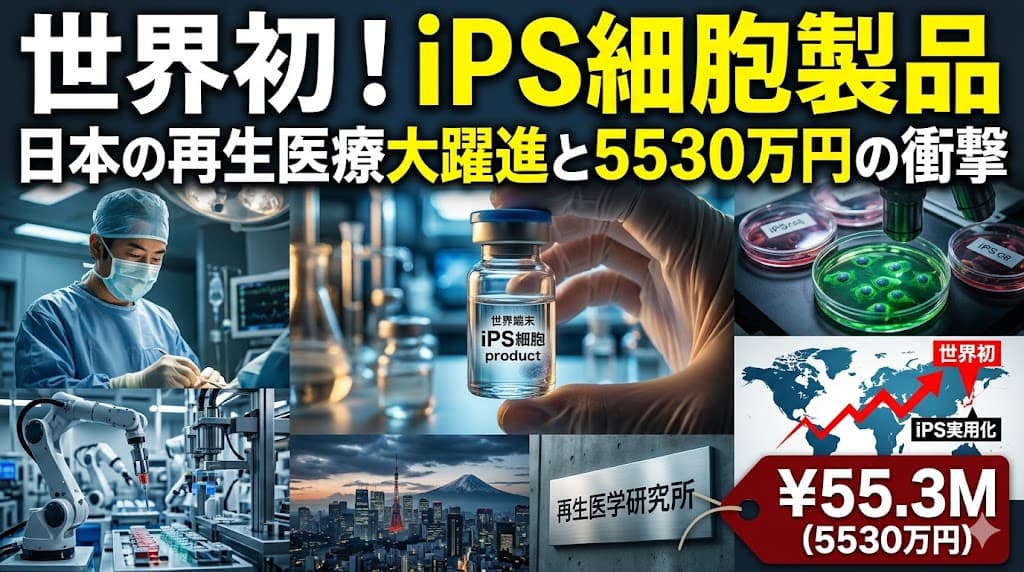
World-First iPS Cell Product Priced at ¥55.3M: Inside Japan's Regenerative Medicine Breakthrough
住友ファーマのiPS細胞製品「アムシェプリ」薬価決定のニュースを題材に、製薬・再生医療業界で使えるビジネス英語を実践的に学べる教材です。
Part 1: 読む → 要約する
Step 1: Pre-Reading — ビジネスの文脈で考える (3 min)
あなたは外資系製薬会社の日本法人で事業開発を担当しています。来週、本社のグローバル戦略チームとのオンラインミーティングで、日本の再生医療市場の最新動向について15分間のアップデートを求められています。日本発の世界初のiPS細胞製品の薬価決定は、グローバル本社の関心も高いトピックです。
Q1: Why do you think cell-based therapies tend to be significantly more expensive than traditional small-molecule drugs? ヒント:製造工程、品質管理、輸送、培養期間などの観点から考えてみましょう。
Q2: What strategic implications could a "world-first" approval in Japan have for global pharmaceutical companies and their R&D investment decisions? ヒント:規制環境、市場参入の優位性、技術ライセンスの可能性などを考慮してください。
Q3: If you were briefing your global headquarters on this news, what three pieces of information would you prioritize and why? ヒント:価格、患者数の見込み、開発スケジュール、競合状況など、本社の関心が高い情報を整理しましょう。
Step 2: First Reading — 全体を把握する (10 min)
以下の英文は、ニュース記事の事実をもとに作成したビジネスシナリオ文書です。実際の職場でこのような文書を読む場面を想像しながら、英文を読み進めましょう。
INTERNAL BRIEFING MEMO
To: Global Strategy Committee, Regenerative Medicine Division From: Tanaka Yuki, Director, Japan Market Intelligence Date: May 14, 2026 Subject: Reimbursement Pricing Confirmed for Japan's First iPS-Based Therapy — Strategic Implications for Q3 Planning
Executive Overview
This memo summarizes a significant regulatory milestone in Japan that requires our committee's attention ahead of next month's portfolio review. On May 13, Japan's Central Social Insurance Medical Council (Chuikyo) finalized the official reimbursement price for Sumitomo Pharma's "Amshepuri," the world's first iPS cell-based regenerative medicine product approved for Parkinson's disease treatment. The price was set at ¥55.3 million per treatment.
Key Facts for Your Reference
- The product received conditional and time-limited approval in March 2026.
- Treatment involves transplanting approximately 10 million neural progenitor cells, derived from donor iPS cells, into the patient's brain to generate dopamine.
- Sumitomo Pharma is targeting the first patient transplantation by the end of December 2026.
- Clinical evaluation will cover 35 patients (30 aged 65 or younger, 5 aged over 65) over two to three years.
- Total expected administration is 90 to 130 patients during the seven-year period ending March 2033.
Comparable Pricing Benchmarks
On the same day, SanBio's "Akuugo," a stem cell product for chronic motor paralysis caused by brain injury, was priced at ¥72 million. While not iPS-based, it represents the world's first approved stem cell therapy for this indication. For additional context, the spinal cord injury treatment "Stemirac" is priced at approximately ¥15 million, and CAR-T cell therapies exceed ¥30 million.
Why Pricing Runs This High
Cell-based products require highly complex manufacturing processes. Maintaining consistent quality while scaling production demands advanced technical expertise. iPS cells in particular need months of culturing, and guiding them into specific cell types is labor-intensive. As a historical reference point, the first iPS-derived retinal cells transplanted in 2014 reportedly cost ¥100 million per case.
Recommended Next Steps
- The licensing team should reassess our partnership options with domestic iPS technology holders by June 30.
- Market access should prepare a comparative pricing analysis against EU and US scenarios within two weeks.
- We propose scheduling a follow-up call with our Osaka office before the June portfolio review.
Please share any questions or concerns by Friday so we can incorporate them into the agenda.
Data sourced from: Asahi Shimbun — "世界初のiPS細胞製品なぜ高額に 「生もの」の難しさと期待も?" (May 14, 2026)
Note: The above is an original business scenario created for learning purposes using publicly available facts. Please read the original article at the link above for the full report.
Step 3: Comprehension Check — 内容確認 (5 min)
Q1: What is the official reimbursement price set for Sumitomo Pharma's Amshepuri, and what disease does it treat? ヒント:金額と対象疾患の両方を答えてください。
Q2: Approximately how many cells are transplanted per treatment, and what substance do they produce in the brain? ヒント:細胞数と生成される神経伝達物質を確認しましょう。
Q3: What is the timeline for Sumitomo Pharma's first patient transplantation and the total number of patients expected during the approval period? ヒント:初回移植の目標時期と、承認期間中の投与予定人数を整理してください。
Q4: How does Akuugo differ from Amshepuri, and what is its price? ヒント:使用する細胞の種類、対象疾患、薬価の3点を比較してみましょう。
Q5: According to the memo, what are the three main reasons cell-based products are priced so high? ヒント:製造工程、品質維持、培養期間に関する説明に注目してください。
Step 4: 30-Second Briefing — 上司に30秒で説明する (10 min)
エレベーターで部長に偶然会いました。「あの日本のiPS細胞の薬価のニュース、見た?うちのグローバル戦略にどう関係しそう?」と聞かれました。降りる階まで30秒。要点だけ伝えてください。
| Framework | Template (英語で埋めてください) |
|---|---|
| What (何が起きたか) | Japan has just set the reimbursement price for ___________ at ___________. |
| Who (誰が関係しているか) | The product is developed by ___________ and targets patients with ___________. |
| Why it matters (なぜ重要か) | This is significant because ___________ , which signals ___________ for the global market. |
| So what (次のアクション) | I think we should ___________ in order to ___________. |
Tip: 上司への報告では、記事の表現をそのまま使うのではなく、自分の言葉に置き換えて(paraphrase)伝えることが重要です。例えば "world-first" は "the first of its kind globally" や "an industry-first achievement" のように言い換えると、より洗練された印象を与えます。専門用語は最小限にし、ビジネスへのインパクトに焦点を当てましょう。
Part 2: 語彙・表現・発音
1. reimbursement (n.) — 保険償還、払い戻し
- Example: The reimbursement price for the new therapy was finalized after months of regulatory review.
- 訳: その新しい治療法の保険償還価格は、数か月にわたる規制当局の審査を経て確定しました。
- 外資系シーン: 製薬・医療機器業界で、保険適用や償還スキームを議論する際に頻出する単語です。Market Accessチームとのミーティングでは必須の語彙です。
2. milestone (n.) — 節目、重要な到達点
- Example: Securing regulatory approval in Japan represents a major milestone for our regenerative medicine division.
- 訳: 日本での規制当局の承認取得は、当社の再生医療部門にとって大きな節目となります。
- 外資系シーン: 四半期レビューやプロジェクトの進捗報告で、達成事項を強調する際によく使われます。"hit a milestone" や "reach a milestone" の形で覚えましょう。
3. scale (v.) — 規模を拡大する
- Example: Maintaining product quality while scaling production is one of the biggest challenges in cell therapy manufacturing.
- 訳: 製品品質を維持しながら生産規模を拡大することは、細胞治療製造における最大の課題の一つです。
- 外資系シーン: スタートアップから大企業まで、「scale up」「scale the business」など、事業拡大の文脈で頻繁に登場します。
4. indication (n.) — 適応症、効能
- Example: The company is exploring additional indications for its lead compound beyond Parkinson's disease.
- 訳: 同社は、主力化合物についてパーキンソン病以外の追加適応症を検討しています。
- 外資系シーン: 製薬・バイオ業界で「どの疾患に対して使えるか」を示す専門用語です。"label expansion"(適応拡大)とセットで覚えると便利です。
5. benchmark (n./v.) — 基準、ベンチマークとする
- Example: We benchmarked Amshepuri's pricing against other cell therapies in the global market.
- 訳: 私たちは、グローバル市場における他の細胞治療と比較してAmshepuriの価格をベンチマークしました。
- 外資系シーン: 戦略立案や価格設定の議論で「他社・他製品と比較する」際の定番表現です。"benchmark against ~" の形を押さえましょう。
Fill-in-the-blank Exercise
次の文の空欄に、上記の語彙から最も適切なものを選んで入れてください。(必要に応じて形を変えてください)
Q1: The approval of this novel therapy marks a critical __________ in the company's 20-year R&D journey.
Q2: Before launching in Asia, the team conducted a thorough pricing __________ analysis across five comparable products.
Q3: Our manufacturing team is currently working on how to __________ production from clinical batches to commercial volumes.
Q4: The drug was initially approved for one __________, but the company plans to seek approval for two more by 2028.
Part 3: 自分の意見を述べる
Discussion Topic A
Question: Do you think the ¥55.3 million price tag for iPS cell therapy is justified? Why or why not? ヒント:開発コスト、患者数の少なさ、社会的価値、保険財政への影響など、複数の視点から議論してみましょう。
Discussion Topic B
Question: What role should government regulators play in pricing innovative therapies — should they prioritize patient access or industry innovation? ヒント:価格を低く抑えれば多くの患者がアクセスできますが、企業の投資意欲が下がる可能性もあります。両方のバランスをどう取るべきか考えてみてください。
Discussion Topic C
Question: As a business professional in a global company, how would you communicate Japan's regulatory leadership in regenerative medicine to your overseas colleagues? ヒント:日本の規制環境の強み、課題、そしてグローバルなパートナーシップの可能性について整理してみましょう。
| English | Japanese |
|---|---|
| From my perspective, the key issue here is... | 私の視点から見ると、ここでの重要な問題は… |
| That's a valid point, but I'd like to add that... | それは妥当な指摘ですが、加えて申し上げたいのは… |
| If we look at it from a long-term standpoint... | 長期的な観点から見ると… |
| I'd argue the opposite — what really matters is... | 私はむしろ逆だと考えます。本当に重要なのは… |
| To put it another way... | 別の言い方をすると… |
Part 4: 面接対策 — 外資系で差をつける
Mock Interview Scenario A
Interviewer: "Tell me about a recent industry development in Japan that you found particularly significant, and explain why it matters from a global business perspective." ヒント:今回のiPS細胞製品の薬価決定を題材に、事実→なぜ重要か→グローバルへの示唆の順で1〜2分にまとめてみましょう。
Mock Interview Scenario B
Interviewer: "How do you stay informed about trends outside your immediate area of expertise, and can you give me a recent example?" ヒント:情報源(新聞、業界誌、ポッドキャストなど)と、その情報をどう仕事に活かしたかを具体的に話しましょう。
Mock Interview Scenario C
Interviewer: "Imagine you need to convince your global headquarters to invest more in the Japanese market. What argument would you make?" ヒント:規制環境、技術力、政府支援、人口動態などのデータを根拠に、説得力のあるストーリーを構築してください。
4 Common Mistakes (NG Patterns)
NG 1: 情報の羅列に終わってしまう
- ❌ Bad: "The price is 55.3 million yen. The company is Sumitomo Pharma. The disease is Parkinson's. The approval was in March."
- ✅ Good: "Sumitomo Pharma's Amshepuri, priced at ¥55.3 million, is significant because it's the world's first iPS-based therapy — signaling Japan's leadership in regenerative medicine."
- 解説: 事実を並べるだけでは「だから何?」が伝わりません。必ず「なぜ重要か」をセットで述べる癖をつけましょう。
NG 2: 専門用語を多用しすぎる
- ❌ Bad: "The neural progenitor cells differentiated from allogeneic iPSCs are intracerebrally transplanted to upregulate dopaminergic signaling."
- ✅ Good: "Cells made from donor iPS cells are transplanted into the brain to help produce dopamine, which improves Parkinson's symptoms."
- 解説: 面接官が必ずしも同じ専門分野とは限りません。誰にでも分かる平易な言葉で説明できることが、本当の理解の証です。
NG 3: 自分の意見がない
- ❌ Bad: "The article says the price is high. There are many reasons. Some people think it's necessary."
- ✅ Good: "I believe the high price is justified at this stage, given the complex manufacturing process — but pricing pressure will likely increase as the technology matures."
- 解説: 外資系の面接では「あなたはどう考えるか」が必ず問われます。事実+自分の見解をセットで述べる習慣をつけましょう。
NG 4: 結論を最後まで言わない
- ❌ Bad: "Well, there are many factors to consider, and it depends on various aspects, and we need to think carefully..."
- ✅ Good: "My short answer is yes — and here are three reasons why."
- 解説: 英語のビジネスコミュニケーションでは結論先出し(PREP法など)が基本です。前置きを長くせず、まず立場を明確にしましょう。
活用のコツ(3 Tips)
Tip 1: ニュース1本につき「3つのデータポイント」を必ず暗記する 記事を読んだら、企業名・金額・日付など最低3つの具体的な数字や固有名詞を覚えておきましょう。会議や雑談で「最近のニュースだと…」と話す時、具体的な数字が入るだけで一気に説得力が増します。
Tip 2: 「日本発のニュース」を英語で発信できるストックを作る 日本のビジネスニュースは、外資系の同僚にとって希少な情報源です。今回のiPS細胞のような「日本発・世界初」のトピックは、グローバル会議で発言機会を作る絶好の材料となります。週に1本、英語で説明できるネタを蓄積していきましょう。
Tip 3: 業界横断で「比較の引き出し」を増やしておく 今回の記事では、iPS細胞製品・幹細胞製品・CAR-T療法など、複数の価格が比較されています。普段から「自分の業界の数字」と「他業界の数字」を関連付けて記憶しておくと、本社への報告やプレゼンで一段深い分析ができるようになります。
Bonus: プロナビレッスンでの活用法
📚 レッスン前 (20 min)
- Part 1のPre-Reading質問(Q1〜Q3)に自分なりの答えを英語でメモしてみましょう
- Step 2のビジネスメモを2回通読し、わからない単語をリストアップしてください
- Part 2の語彙5つについて、自分なりの例文を1つずつ作っておきましょう
- 30-Second Briefingのテンプレートを使って、口頭で1回練習しておくとレッスンが格段に充実します
🎯 レッスン中 (25 min)
- コーチと一緒にStep 4の30秒ブリーフィングをロールプレイしましょう(コーチが上司役)
- Part 3のDiscussion Topicから1つ選び、3〜5分のディスカッションに挑戦してください
- Part 4のMock Interviewシナリオを1つ実施し、その場でフィードバックを受けましょう
- 発音が気になる単語(reimbursement, indication, milestoneなど)を集中的に練習します
🔄 レッスン後 (15 min)
- レッスン中に指摘された表現や発音のポイントを、自分の言葉でノートにまとめましょう
- 30-Second Briefingを録音し、1週間後に聞き直して改善点を確認してください
- 活用のコツTip 2に従い、次の1週間で別の「日本発ニュース」を1本選び、同じフレームワークで自分なりに整理してみましょう
参考・出典
この記事を書いた人
サイト運営・日本語サポート担当 / AIエンジニア
- ●東京都出身・海外在住13年以上
- ●IT歴36年以上(開発・SEO・AI)
- ●IBM認定 生成AIエンジニア
- ●CEFR B1の英語学習者(今も学習中)
外資系の現場で「英語が話せず評価が伸びない」苦しさを経験し、海外移住後も印刷所で「copy」が通じないような発音の壁に何度もぶつかってきました。今もプロ講師の指導を受けながら学習を続ける一人として、AI時代でも英語で悩む日本人ビジネスパーソンに向けて、現場目線で記事を書いています。日本語でのご相談やお問い合わせも私が担当します。
関連記事
GMO在宅勤務「完全廃止」を英語で説明する|ニュースで学ぶビジネス英語教材
GMOの在宅勤務「完全廃止」ニュースを教材化。英文社内メモの読解、上司への30秒説明、頻出語彙、面接想定問答まで収録し、働き方トレンドを語れるビジネス英語力を鍛えます。無料の英語学習教材です。
2026/7/14
三菱UFJが時価総額首位に|40年ぶりの「金融復権」を英語で語るビジネス英語教材
三菱UFJが時価総額首位、1986年以来40年ぶりの金融復権。このニュースを教材に、市場・金利・株主還元を語るビジネス英語を学習。社内メモ読解、30秒要約、ディスカッション、外資系面接対策まで実践形式で身につく無料教材です。
2026/7/13

Apple対OpenAI訴訟で学ぶビジネス英語|営業秘密と情報管理を英語で語る実践教材
AppleによるOpenAI提訴のニュースを教材化。営業秘密・情報管理をテーマに、社内メモの読解、上司への30秒説明、重要単語、ディスカッション、面接対策まで実践的に学べるビジネス英語学習コンテンツ。外資系で働く日本人ビジネスパーソンの英語力を鍛えます。
2026/7/12
三菱自動車×東大発Highlandersのヒト型ロボット量産提携で学ぶビジネス英語教材
三菱自動車と東大発Highlandersのヒト型ロボット量産提携ニュースで学ぶビジネス英語教材。mass productionなど頻出語彙、30秒ブリーフィング、外資系面接対策まで実践的に学べる英語学習コンテンツです。
2026/7/11
OpenAI「ChatGPT Work」で学ぶビジネス英語|AIエージェント最新ニュース教材
OpenAIの「ChatGPT Work」とGPT-5.6を題材にしたビジネス英語学習教材。社内メモ読解や30秒ブリーフィング、面接対策を通じて、AI時代の職場で使える実践英語を身につけます。
2026/7/10
Grok 4.5で学ぶビジネス英語|AI最新ニュースで鍛える読解と要約力
話題のAIモデル「Grok 4.5」の英語ニュースを教材化。社内ブリーフィングメモの読解、要約、面接対策まで。最新テックニュースで実践的なビジネス英語を学びたい方へ。
2026/7/9