
東京のタクシー運転士が年収1000万円超え?賃金40%上昇の背景を読むビジネス英語教材
東京のタクシー運転士の年収が急上昇している背景を英文ブリーフィングメモで学習。配車アプリ・インバウンド需要をテーマに、外資系で通用するビジネス英語と語彙・面接対策まで習得できる英語学習教材です。


AIエンジニア / IT歴36年以上・海外在住13年以上のCEFR B1英語学習者
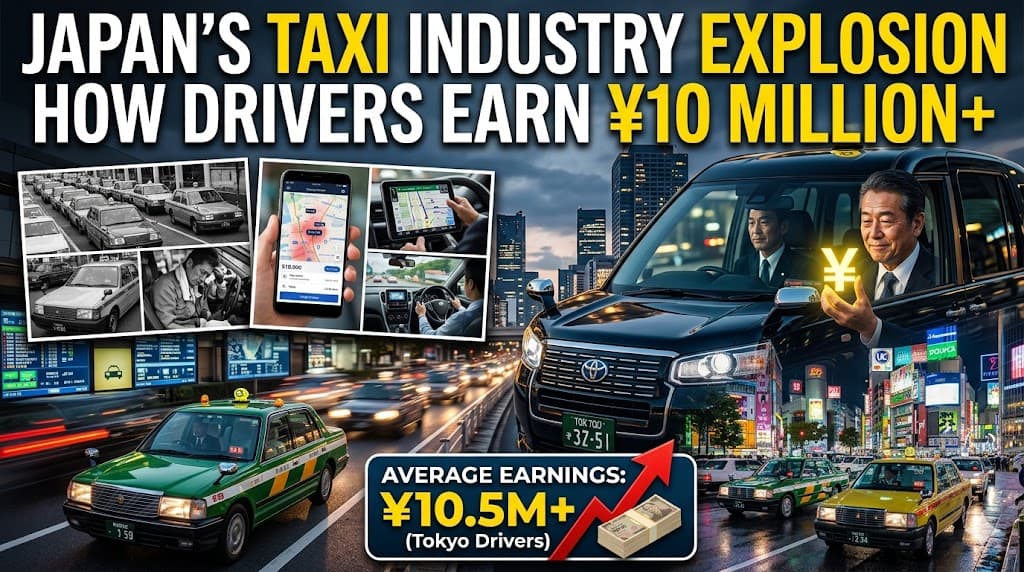
Japan's Taxi Industry Transformation — Why Drivers Now Earn Over ¥10 Million in Tokyo
4年で平均年収100万円アップ。配車アプリとインバウンドが変えた日本のタクシー業界を題材に、外資系で使える実践的なビジネス英語を学びましょう。
Part 1: 読む → 要約する
Step 1: Pre-Reading — ビジネスの文脈で考える (3 min)
外資系コンサルティングファームの月曜朝のチームミーティング。マネージャーが「日本の労働市場で面白い変化が起きている」と切り出し、タクシー業界の賃金上昇について意見を求めてきました。あなたはどう答えますか。
Q1: Why do you think taxi drivers' wages have increased significantly in recent years? (配車アプリ、インバウンド需要などの観点から考えてみましょう)
Q2: How is AI changing the balance between white-collar and blue-collar jobs? (ホワイトカラー業務の自動化について)
Q3: Would you consider a blue-collar job if it paid more than an office job? Why or why not? (キャリア観・安定性の視点から)
Step 2: First Reading — 全体を把握する (10 min)
以下の英文は、ニュース記事の事実をもとに作成したビジネスシナリオ文書です。実際の職場でこのような文書を読む場面を想像しながら、英文を読み進めましょう。
INTERNAL BRIEFING MEMO
To: Japan Market Strategy Team From: Labor Economics Research Unit Date: April 14, 2026 Subject: Wage Growth in Japan's Taxi Sector — Implications for Workforce Strategy — Action Required
1. Executive Summary This memo highlights a notable shift in Japan's taxi driver labor market that may inform our client advisory work on workforce trends. According to Japan's Ministry of Health, Labour and Welfare Basic Survey on Wage Structure, taxi driver wages rose approximately 40% in 2024 compared to 2020. The 2025 national average annual income for taxi drivers reached ¥4.14 million, an increase of over ¥1 million from 2020 levels.
2. Regional Highlights In the Tokyo 23 wards and the Musashino-Mitaka area — the largest taxi market in Japan — average annual earnings reached ¥5.02 million, exceeding the national average salary of ¥4.775 million across all industries. Industry observers suggest that drivers earning ¥10 million or more per year are no longer unusual in central Tokyo.
3. Drivers of Change Three factors appear to be driving this transformation. First, ride-hailing apps have unlocked latent demand and improved fleet efficiency. Second, record inbound tourism has expanded the customer base. Third, operators are joining major international ride-share platforms to capture foreign visitor traffic. However, digital tools alone do not guarantee higher income; drivers must strategically position themselves in high-demand zones at peak times.
4. Caveats Average figures should be interpreted with caution. Many older drivers intentionally cap their earnings to preserve pension benefits, and some operate part-time alongside other businesses. Therefore, full-time career drivers likely earn considerably more than the reported averages.
5. Broader Context A parallel trend is emerging in the United States, where highly educated young people are increasingly entering skilled blue-collar work as AI automates white-collar tasks.
6. Action Items
- Prepare a one-page client briefing by April 25.
- Coordinate with the HR Advisory team on implications for talent strategy.
Data sourced from: WEB CARTOP (Yahoo! News) — "東京なら1000万円プレイヤーも珍しくない! いまタクシー運転士が稼げる仕事になっていた" (April 11, 2026)
Note: The above is an original business scenario created for learning purposes using publicly available facts. Please read the original article at the link above for the full report.
Step 3: Comprehension Check — 内容確認 (5 min)
Q1: By what percentage did taxi driver wages rise between 2020 and 2024? (割合を答えましょう) Q2: What is the 2025 national average annual income for taxi drivers? (金額を答えましょう) Q3: Why should average figures be interpreted with caution? (高齢運転士の状況を説明しましょう) Q4: What three factors are driving higher earnings? (3つ挙げましょう) Q5: What parallel trend is mentioned in the United States? (若者の職業選択について)
Step 4: 30-Second Briefing — 上司に30秒で説明する (10 min)
エレベーターで外資系の上司に「あの日本のタクシー業界のメモ、要点は?」と聞かれました。30秒で答えましょう。
| Framework | Template |
|---|---|
| Topic | "Japan's taxi drivers are now ______." |
| Key data | "Wages rose % since 2020, with Tokyo averages at ¥." |
| Why | "Mainly due to ______, ______, and ______." |
| Implication | "This signals ______ for workforce strategy." |
Tip: 数字は自分の言葉で言い換えましょう。"40%" → "roughly four in ten" など、パラフレーズの練習が効果的です。
Part 2: 語彙・表現・発音
1. unlock (v.) — 引き出す・開放する
- Ride-hailing apps have unlocked latent demand in the taxi market.
- 配車アプリがタクシー市場の潜在需要を引き出しました。
- 外資系シーン:新規事業提案で "unlock new revenue streams" という形でよく使われます。
2. latent (adj.) — 潜在的な
- There is significant latent demand among inbound tourists.
- 訪日観光客には大きな潜在需要があります。
- 外資系シーン:マーケット分析で "latent demand/potential" と頻出します。
3. cap (v.) — 上限を設ける
- Older drivers cap their earnings to preserve pension benefits.
- 高齢の運転士は年金を維持するため収入に上限を設けています。
- 外資系シーン:予算会議で "cap spending at ¥5M" のように使います。
4. parallel (adj.) — 並行する・類似の
- A parallel trend is emerging in the United States.
- アメリカでも並行した動きが見られます。
- 外資系シーン:市場比較の際 "a parallel case" とよく用います。
5. interpret (v.) — 解釈する
- Average figures should be interpreted with caution.
- 平均値は慎重に解釈する必要があります。
- 外資系シーン:データレビューで "how do you interpret this?" と問われます。
Fill-in-the-blank
- The app helped us ______ hidden customer demand. (unlock)
- There is ______ potential in the regional market. (latent)
- We need to ______ marketing spend at ¥10M this quarter. (cap)
- How should we ______ these Q1 results? (interpret)
Part 3: 自分の意見を述べる
Topic A: Do you think ride-hailing apps will continue to transform traditional industries in Japan? (DX の影響を考えましょう) Topic B: Should highly educated young professionals consider blue-collar careers? (キャリア観を述べましょう) Topic C: How should companies respond to AI replacing white-collar tasks? (人材戦略の観点から)
| English | Japanese |
|---|---|
| From my perspective, ... | 私の視点では… |
| One key factor is ... | 重要な要素の一つは… |
| I'd like to push back on that. | その点には異議があります。 |
| That's a fair point, but ... | もっともですが… |
| In the long run, ... | 長期的には… |
Part 4: 面接対策 — 外資系で差をつける
Scenario A: "Tell me about a labor market trend you find interesting." Scenario B: "How would you advise a client facing driver shortages?" Scenario C: "How do you see AI reshaping career choices in Japan?"
Common Mistakes
- NG: "Taxi driver is good job now." → OK: "Taxi driving has become a financially attractive career." (主語・冠詞を正確に)
- NG: "Salary up 40 percent." → OK: "Wages have risen by approximately 40%." (完了形と前置詞)
- NG: "I think maybe probably it's good." → OK: "I believe this represents a meaningful shift." (曖昧表現の重複を避ける)
- NG: "Japan people like this job." → OK: "Japanese workers are increasingly drawn to this profession." (自然なコロケーション)
活用のコツ(4 Tips)
- 数字は必ず自分の言葉でパラフレーズする練習を。
- ブリーフィングは結論ファーストで組み立てましょう。
- ディスカッションでは反対意見にも触れると説得力が増します。
- 新出語彙は実際の業務メールで使ってみましょう。
Bonus: プロナビレッスンでの活用法
レッスン前 (20 min): Part 1 の英文を音読し、語彙を予習。30秒ブリーフィングを自分なりに準備しましょう。 レッスン中 (25 min): コーチの前で30秒ブリーフィングを実演し、Part 3 のディスカッションで意見交換。発音とロジックの両面でフィードバックを受けます。 レッスン後 (15 min): Part 4 の面接シナリオを録音し、自己添削。新出語彙を使った例文を3つ作成しましょう。
参考・出典
この記事を書いた人
サイト運営・日本語サポート担当 / AIエンジニア
- ●東京都出身・海外在住13年以上
- ●IT歴36年以上(開発・SEO・AI)
- ●IBM認定 生成AIエンジニア
- ●CEFR B1の英語学習者(今も学習中)
外資系の現場で「英語が話せず評価が伸びない」苦しさを経験し、海外移住後も印刷所で「copy」が通じないような発音の壁に何度もぶつかってきました。今もプロ講師の指導を受けながら学習を続ける一人として、AI時代でも英語で悩む日本人ビジネスパーソンに向けて、現場目線で記事を書いています。日本語でのご相談やお問い合わせも私が担当します。
関連記事

GMO在宅勤務「完全廃止」を英語で説明する|ニュースで学ぶビジネス英語教材
GMOの在宅勤務「完全廃止」ニュースを教材化。英文社内メモの読解、上司への30秒説明、頻出語彙、面接想定問答まで収録し、働き方トレンドを語れるビジネス英語力を鍛えます。無料の英語学習教材です。
2026/7/14

三菱UFJが時価総額首位に|40年ぶりの「金融復権」を英語で語るビジネス英語教材
三菱UFJが時価総額首位、1986年以来40年ぶりの金融復権。このニュースを教材に、市場・金利・株主還元を語るビジネス英語を学習。社内メモ読解、30秒要約、ディスカッション、外資系面接対策まで実践形式で身につく無料教材です。
2026/7/13

Apple対OpenAI訴訟で学ぶビジネス英語|営業秘密と情報管理を英語で語る実践教材
AppleによるOpenAI提訴のニュースを教材化。営業秘密・情報管理をテーマに、社内メモの読解、上司への30秒説明、重要単語、ディスカッション、面接対策まで実践的に学べるビジネス英語学習コンテンツ。外資系で働く日本人ビジネスパーソンの英語力を鍛えます。
2026/7/12
三菱自動車×東大発Highlandersのヒト型ロボット量産提携で学ぶビジネス英語教材
三菱自動車と東大発Highlandersのヒト型ロボット量産提携ニュースで学ぶビジネス英語教材。mass productionなど頻出語彙、30秒ブリーフィング、外資系面接対策まで実践的に学べる英語学習コンテンツです。
2026/7/11

OpenAI「ChatGPT Work」で学ぶビジネス英語|AIエージェント最新ニュース教材
OpenAIの「ChatGPT Work」とGPT-5.6を題材にしたビジネス英語学習教材。社内メモ読解や30秒ブリーフィング、面接対策を通じて、AI時代の職場で使える実践英語を身につけます。
2026/7/10

Grok 4.5で学ぶビジネス英語|AI最新ニュースで鍛える読解と要約力
話題のAIモデル「Grok 4.5」の英語ニュースを教材化。社内ブリーフィングメモの読解、要約、面接対策まで。最新テックニュースで実践的なビジネス英語を学びたい方へ。
2026/7/9