
ホルムズ海峡危機で学ぶ英語リスク管理メモ|外資系ビジネス英語教材
ホルムズ海峡危機と米イラン対立を題材にしたビジネス英語教材。社内リスク管理メモの読解、30秒ブリーフィング、外資系面接対策まで実践的に学べます。エネルギー・地政学リスクの英語表現を習得。


AIエンジニア / IT歴36年以上・海外在住13年以上のCEFR B1英語学習者
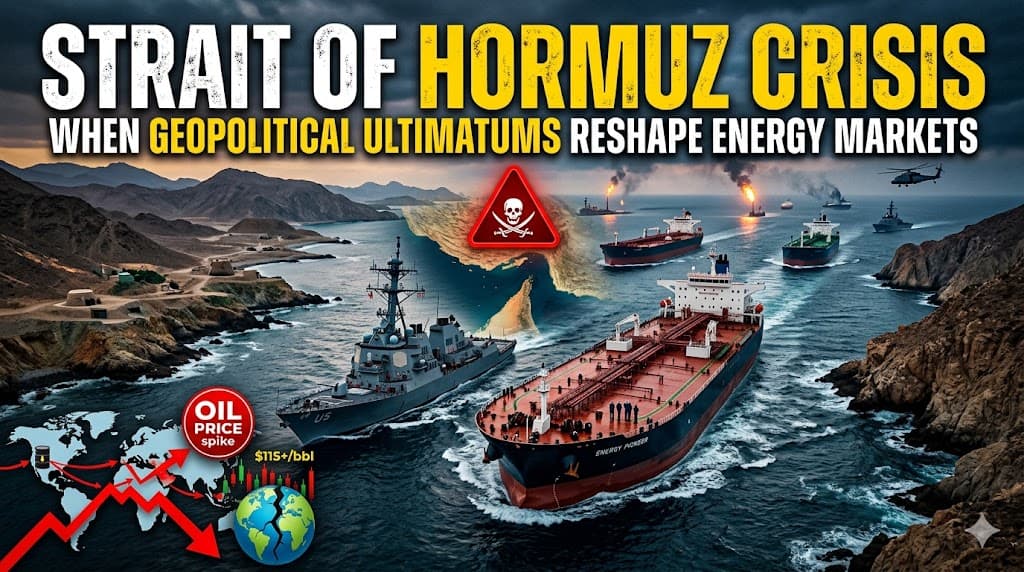
Strait of Hormuz Crisis: When Geopolitical Ultimatums Reshape Energy Markets
米イラン情勢の急展開を題材に、社内メモの読解・要約・ディスカッションを通じてビジネス英語力を鍛えましょう。エネルギー業界のリスク管理表現が身につきます。
Part 1: 読む → 要約する
Step 1: Pre-Reading — ビジネスの文脈で考える (3 min)
あなたは日本のエネルギー関連企業の海外事業部に所属しています。月曜朝のグローバルチームミーティングで、週末に急展開した中東情勢について英語でブリーフィングを求められました。チームメンバーはアメリカ、シンガポール、ドバイのオフィスから参加しています。
以下の質問について、まず自分の考えを英語で整理してみましょう。
Q1 What do you know about the Strait of Hormuz and its importance for global energy supply chains? ヒント:ホルムズ海峡は世界の原油輸送量の約何割を占めるか、考えてみましょう
Q2 How might a military conflict in the Middle East affect your company's operations or supply chain? ヒント:原油価格の変動、輸送ルートの遮断、取引先への影響など
Q3 If your CEO asked you to assess the business risk of this situation, what factors would you consider? ヒント:短期リスクと長期リスク、代替調達先、契約上の不可抗力条項など
Step 2: First Reading — 全体を把握する (10 min)
以下の英文は、ニュース記事の事実をもとに作成したビジネスシナリオ文書です。実際の職場でこのような文書を読む場面を想像しながら、英文を読み進めましょう。
MEMORANDUM
TO: Regional Directors — APAC Energy Division FROM: Kenji Takahashi, VP of Global Risk Management DATE: April 7, 2026 SUBJECT: Immediate Risk Assessment — Strait of Hormuz Closure and US-Iran Escalation PRIORITY: HIGH — Action Required by April 8, 2026
1. Purpose
This memo requests all regional directors to activate contingency protocols in response to the ongoing US-Iran military conflict and the continued closure of the Strait of Hormuz. Please review the situation below and submit your regional impact assessments by end of business tomorrow.
2. Situation Overview
Five weeks have passed since the United States and Israel launched military operations against Iran. Despite intensive diplomatic efforts, the crisis has deepened significantly over the weekend.
On April 5, President Trump issued an ultimatum demanding Iran reopen the Strait of Hormuz by April 7 at 8:00 PM Eastern Time (April 8, 0000 GMT). He warned of severe consequences if Iran failed to comply. However, Iran has rejected the US ceasefire proposal. According to official Iranian media, Tehran communicated its refusal through Pakistan, which has been serving as an intermediary.
A senior Iranian official stated that Tehran will not agree to reopen the strait under a short-term truce framework, nor will it negotiate under externally imposed timelines. The official also suggested that Washington lacks a credible framework for a lasting cessation of hostilities.
3. Diplomatic Developments
Pakistan's Army Chief of Staff, General Asim Munir, has been mediating between the parties. The proposed framework envisions a two-phase approach: an immediate halt to hostilities, followed by a 15-to-20-day window for comprehensive peace talks. General Munir has been central to this effort, engaging overnight with senior officials from both sides, including VP Vance, envoy Witkoff, and FM Araghchi.
However, a White House official clarified that the ceasefire proposal is only "one of several ideas" and that President Trump has not yet approved it. Military operations against Iran are continuing.
4. Military and Infrastructure Developments
Israeli Defense Minister Israel Katz announced plans to destroy Iranian infrastructure and to track down Iranian leadership. Iran reported attacks on two of its petrochemical complexes. Over the weekend, Iran struck petrochemical facilities in Kuwait, Bahrain, and the UAE, as well as ships linked to Israel, demonstrating its continued military capability.
On April 6, IRGC intelligence chief Majid Kademi was killed in a joint US-Israeli operation, according to both Israeli confirmation and Iranian state media reports.
5. Required Actions
Each regional director must complete the following by April 8:
- Review all active contracts with Middle Eastern suppliers and flag any force majeure exposure
- Confirm alternative crude oil sourcing arrangements with non-Gulf suppliers
- Update shipping route contingency plans to avoid the Strait of Hormuz
- Prepare a client communication template addressing potential supply delays
- Schedule an emergency call with your local legal team regarding sanctions compliance
Please direct any questions to my office. A follow-up briefing is scheduled for April 9 at 9:00 AM JST.
Data sourced from: ロイター — 「訂正 米、ホルムズ海峡再開で最後通牒 イランは停戦提案を拒否」 (2026年4月7日) Note: The above is an original business scenario created for learning purposes using publicly available facts. Please read the original article at the link above for the full report.
Step 3: Comprehension Check — 内容確認 (5 min)
以下の質問に英語で答えてみましょう。本文を見返しても構いません。
Q1 What is the deadline that President Trump set for Iran to reopen the Strait of Hormuz? ヒント:具体的な日時を確認しましょう
Q2 Which country has been acting as an intermediary between the US and Iran? ヒント:仲介国の名前と、具体的に誰が連絡を取り合っていたかを探しましょう
Q3 Why did Iran reject the US ceasefire proposal? ヒント:イランの高官が述べた理由を2つ挙げましょう
Q4 What military actions did Iran carry out over the weekend? ヒント:どの国の施設が攻撃されたかに注目しましょう
Q5 Name three of the five action items that regional directors must complete by April 8. ヒント:Required Actionsセクションを確認しましょう
Step 4: 30-Second Briefing — 上司に30秒で説明する (10 min)
エレベーターで上司(外国人マネージャー)に会いました。「I heard something about the Strait of Hormuz this morning. What's going on?」と聞かれました。30秒で要点を伝えましょう。
以下のフレームワークを使って、空欄を埋める練習をしましょう。
| フレームワーク | テンプレート |
|---|---|
| What happened | The US gave Iran an ultimatum to ________ by April 7, but Iran ________. |
| Why it matters | The Strait of Hormuz remains closed, which means ________ for global energy supply. |
| Current status | Pakistan is trying to ________, but the White House says the ceasefire plan ________. |
| What's next | We need to ________ and prepare for ________. |
Tip: ニュース記事の表現をそのまま使うのではなく、自分の言葉で言い換える(paraphrase)練習をしましょう。例えば「issued an ultimatum」は "gave a final warning" や "set a hard deadline" と言い換えられます。
Part 2: 語彙・表現・発音
1. ultimatum (n.) — 最後通牒
Example: The president issued an ultimatum demanding the strait be reopened within 48 hours. 日本語訳: 大統領は48時間以内に海峡を再開するよう求める最後通牒を突きつけた。 外資系シーン: 交渉や契約の場面で使います。例えば「If they don't respond by Friday, we'll send an ultimatum(金曜日までに返答がなければ最後通牒を送ります)」のように述べます。取引先との厳しい交渉でよく登場する表現です。
2. intermediary (n.) — 仲介者
Example: Pakistan served as an intermediary between the two countries during the negotiations. 日本語訳: パキスタンは交渉中、両国の仲介役を務めた。 外資系シーン: M&Aや紛争解決の場面で頻出します。「We should use a neutral intermediary to handle this dispute(この紛争には中立な仲介者を使うべきです)」のように使います。
3. comply (v.) — 従う、応じる
Example: Iran was warned of severe consequences if it failed to comply with the deadline. 日本語訳: イランは期限に応じなければ深刻な結果を招くと警告された。 外資系シーン: コンプライアンス(compliance)の動詞形です。「All subsidiaries must comply with the new regulations by Q3(全子会社はQ3までに新規制に従わなければなりません)」のように使います。
4. contingency (n.) — 不測の事態、緊急時対応策
Example: Regional directors were asked to activate contingency protocols immediately. 日本語訳: 各地域ディレクターは直ちに緊急時対応プロトコルを発動するよう求められた。 外資系シーン: リスクマネジメントの必須語彙です。「Do we have a contingency plan in case our main supplier can't deliver?(主要サプライヤーが納品できない場合の緊急対応策はありますか?)」のように使います。)」
5. force majeure (n.) — 不可抗力
Example: The legal team is reviewing all contracts for force majeure exposure related to the conflict. 日本語訳: 法務チームは紛争に関連する不可抗力条項のリスクについて全契約を精査している。 外資系シーン: 契約書で頻出するフランス語由来の法律用語です。「The supplier invoked force majeure due to the war(サプライヤーは戦争を理由に不可抗力条項を発動した)」のように使います。発音は「フォースマジュール」に近い形です。
Fill-in-the-Blank Exercise
以下の空欄に、上の語彙から適切な単語を入れましょう。
(1) The government issued an ________ : accept the terms or face sanctions.
(2) We need to activate our ________ plan before the situation gets worse.
(3) A neutral ________ was brought in to help resolve the contract dispute between the two firms.
(4) All overseas offices must ________ with the updated data security policy by the end of this month.
解答: (1) ultimatum (2) contingency (3) intermediary (4) comply
Part 3: 自分の意見を述べる
Discussion Topics
Topic A: Do you think economic pressure (such as threatening to destroy infrastructure) is an effective way to resolve international conflicts? Why or why not? ヒント:経済的圧力の短期的な効果と長期的な関係への影響を比較して考えてみましょう
Topic B: If you were advising a Japanese energy company, what steps would you recommend to reduce dependence on Middle Eastern oil in light of this crisis? ヒント:代替エネルギー、調達先の多様化、備蓄戦略などの観点から考えましょう
Topic C: The article mentions Pakistan acting as a mediator. What qualities make a country or organization an effective mediator in international disputes? ヒント:中立性、信頼関係、地理的な近さなどの要素を考えてみましょう
Useful Phrases
| English | Japanese |
|---|---|
| From a business continuity perspective, ... | 事業継続の観点から言えば、… |
| The immediate concern is ..., but in the long run, ... | 当面の懸念は…ですが、長期的には… |
| This situation underscores the importance of ... | この状況は…の重要性を浮き彫りにしています |
| We need to strike a balance between ... and ... | …と…のバランスを取る必要があります |
| One possible approach would be to ... | 一つの考えられるアプローチは…です |
Part 4: 面接対策 — 外資系で差をつける
Mock Interview Scenarios
以下は、外資系企業の面接で聞かれる可能性のある質問です。今回の記事のテーマに関連づけて回答を準備しましょう。
Scenario A: "Tell me about a time when you had to make a quick decision under pressure with incomplete information." ヒント:この記事のような急変する国際情勢の中で、情報が不完全でもビジネス判断を下さなければならない場面を想定しましょう。STAR法(Situation, Task, Action, Result)で答えを構成してください。
Scenario B: "How would you manage supply chain risk in a volatile geopolitical environment?" ヒント:具体的なリスク管理の手法(サプライヤーの多様化、在庫戦略、定期的なリスク評価など)を挙げて答えましょう。
Scenario C: "Describe a situation where negotiations broke down. How did you handle it?" ヒント:米・イランの交渉決裂のように、交渉が行き詰まった時のアプローチ(代替案の提示、第三者の仲介、冷却期間を置くなど)を具体例とともに述べましょう。
NG Patterns — よくある4つの失敗パターン
NG 1: 意見を述べずに事実だけを並べる
| NG | "The US gave Iran an ultimatum. Iran rejected it. Pakistan is mediating." |
|---|---|
| OK | "The breakdown in negotiations highlights a critical challenge: when one party sets rigid deadlines and the other refuses to accept external pressure, finding common ground becomes extremely difficult. In my experience, this kind of impasse requires a creative reframing of the discussion." |
| 解説 | 面接では事実の羅列ではなく、そこから何を読み取り、どう考えるかを示すことが重要です。 |
NG 2: 抽象的すぎる回答
| NG | "I think risk management is very important for companies." |
|---|---|
| OK | "In a situation like the Hormuz crisis, I would immediately review our top 20 suppliers by revenue exposure, identify which ones rely on Gulf shipping routes, and activate pre-negotiated backup agreements with alternative suppliers within 48 hours." |
| 解説 | 具体的な数字、時間軸、アクションを入れることで説得力が大幅に増します。 |
NG 3: 日本語の思考パターンをそのまま英語にする
| NG | "I think maybe it might be possible that we could perhaps consider looking into alternative options." |
|---|---|
| OK | "I recommend we diversify our supplier base immediately. Specifically, I would prioritize contracts with African and South American oil producers." |
| 解説 | 日本語の「〜かもしれない」「〜を検討する余地がある」を直訳すると、自信がないように聞こえます。外資系面接では、明確で直接的な表現が好まれます。 |
NG 4: 「正解」を探そうとする
| NG | "I think the correct answer is that diplomacy is the best solution." |
|---|---|
| OK | "There's no easy answer here. Diplomatic pressure can be effective in the short term, but as we've seen with Iran's rejection of the ceasefire, ultimatums can also harden the other side's position. I believe the most productive approach combines firm objectives with flexible timelines." |
| 解説 | 面接官が見ているのは「正解」ではなく、あなたの思考プロセスです。トレードオフを認識し、複数の視点を示すことが評価されます。 |
活用のコツ(4 Tips)
1. 音読は「2回ルール」で: Step 2のビジネス文書を音読します。1回目は意味を取りながらゆっくり読みます。2回目は上司に報告するつもりでスピードを上げましょう。
2. 「自分ごと化」する: 「もし自分の会社がこの状況に直面したら?」と常に考えながら読むことで、面接やミーティングで使える実践的な表現が身につきます。
3. パラフレーズ練習を毎回入れる: 記事のキーセンテンスを3通りの別の言い方で言い換える練習をしましょう。これは外資系で最も求められるスキルの一つです。
4. 録音→振り返りを習慣に: Step 4の30秒ブリーフィングやPart 3のディスカッションを録音し、後で聞き返しましょう。「えーと」「あのー」が減り、より流暢に話せるようになります。
Bonus: プロナビレッスンでの活用法
レッスンの進め方
| フェーズ | 時間 | 内容 |
|---|---|---|
| レッスン前 | 20分 | Step 1(Pre-Reading)とStep 2(First Reading)を予習。知らない単語をPart 2で確認し、Step 3の内容確認問題に答えておく |
| レッスン中 | 25分 | Step 4の30秒ブリーフィングを講師と練習 → Part 3のディスカッションで意見を述べる練習 → Part 4の模擬面接に挑戦 |
| レッスン後 | 15分 | レッスンで使えなかった表現をノートに整理。Step 4のブリーフィングを録音して聞き直し、改善点を確認する |
参考・出典
この記事を書いた人
サイト運営・日本語サポート担当 / AIエンジニア
- ●東京都出身・海外在住13年以上
- ●IT歴36年以上(開発・SEO・AI)
- ●IBM認定 生成AIエンジニア
- ●CEFR B1の英語学習者(今も学習中)
外資系の現場で「英語が話せず評価が伸びない」苦しさを経験し、海外移住後も印刷所で「copy」が通じないような発音の壁に何度もぶつかってきました。今もプロ講師の指導を受けながら学習を続ける一人として、AI時代でも英語で悩む日本人ビジネスパーソンに向けて、現場目線で記事を書いています。日本語でのご相談やお問い合わせも私が担当します。
関連記事
GMO在宅勤務「完全廃止」を英語で説明する|ニュースで学ぶビジネス英語教材
GMOの在宅勤務「完全廃止」ニュースを教材化。英文社内メモの読解、上司への30秒説明、頻出語彙、面接想定問答まで収録し、働き方トレンドを語れるビジネス英語力を鍛えます。無料の英語学習教材です。
2026/7/14
三菱UFJが時価総額首位に|40年ぶりの「金融復権」を英語で語るビジネス英語教材
三菱UFJが時価総額首位、1986年以来40年ぶりの金融復権。このニュースを教材に、市場・金利・株主還元を語るビジネス英語を学習。社内メモ読解、30秒要約、ディスカッション、外資系面接対策まで実践形式で身につく無料教材です。
2026/7/13
Apple対OpenAI訴訟で学ぶビジネス英語|営業秘密と情報管理を英語で語る実践教材
AppleによるOpenAI提訴のニュースを教材化。営業秘密・情報管理をテーマに、社内メモの読解、上司への30秒説明、重要単語、ディスカッション、面接対策まで実践的に学べるビジネス英語学習コンテンツ。外資系で働く日本人ビジネスパーソンの英語力を鍛えます。
2026/7/12
三菱自動車×東大発Highlandersのヒト型ロボット量産提携で学ぶビジネス英語教材
三菱自動車と東大発Highlandersのヒト型ロボット量産提携ニュースで学ぶビジネス英語教材。mass productionなど頻出語彙、30秒ブリーフィング、外資系面接対策まで実践的に学べる英語学習コンテンツです。
2026/7/11

OpenAI「ChatGPT Work」で学ぶビジネス英語|AIエージェント最新ニュース教材
OpenAIの「ChatGPT Work」とGPT-5.6を題材にしたビジネス英語学習教材。社内メモ読解や30秒ブリーフィング、面接対策を通じて、AI時代の職場で使える実践英語を身につけます。
2026/7/10
Grok 4.5で学ぶビジネス英語|AI最新ニュースで鍛える読解と要約力
話題のAIモデル「Grok 4.5」の英語ニュースを教材化。社内ブリーフィングメモの読解、要約、面接対策まで。最新テックニュースで実践的なビジネス英語を学びたい方へ。
2026/7/9