
欧州電力価格マイナス転落|熱波と再エネで学ぶビジネス英語
欧州を襲った記録的熱波で電力価格が一時マイナス圏に。太陽光発電の急増、原発の出力抑制リスクなど最新エネルギー市場ニュースで実践的なビジネス英語を学習できる教材です。


AIエンジニア / IT歴36年以上・海外在住13年以上のCEFR B1英語学習者
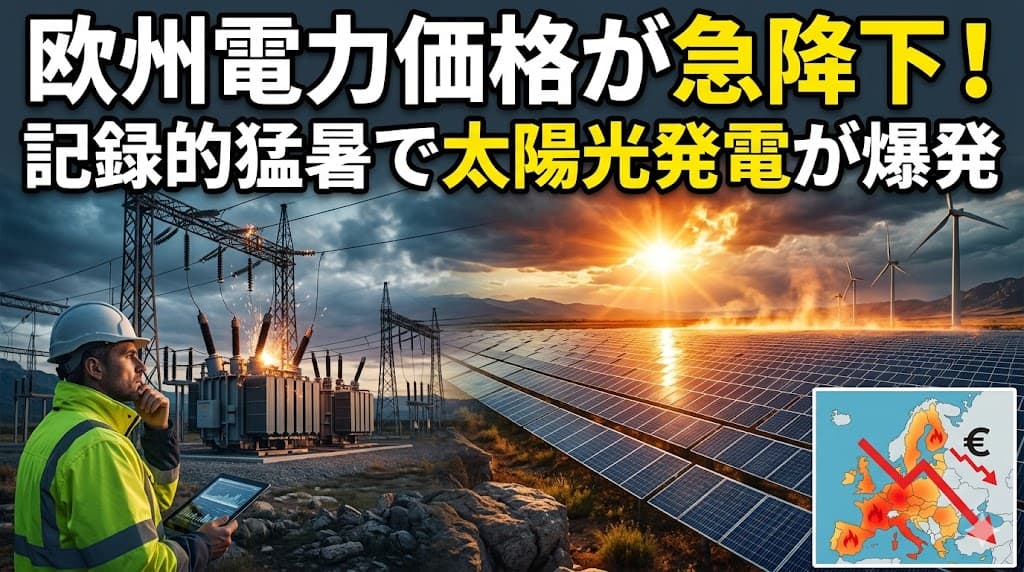
European Power Prices Turn Negative as Record Heatwave Boosts Solar Output
記録的熱波で欧州電力価格が一時マイナス圏に。エネルギー市場と気候リスクの実例から、外資系で使えるビジネス英語を学びます。
Part 1: 読む → 要約する
Step 1: Pre-Reading — ビジネスの文脈で考える (3 min)
あなたは外資系エネルギー商社の東京オフィスで働くアナリストです。月曜朝の欧州チームとの定例ミーティングで、週末に欧州で起きた異常気象と電力市場の動きについて、簡単な状況共有を求められています。
Q1. What happens to electricity prices when solar power supply suddenly exceeds demand? 電力市場の基本的な需給バランスについて考えてみましょう。
Q2. How might an extreme heatwave affect not only consumers but also businesses across different industries? エネルギー、農業、観光、保険など複数の業界への影響を想像してみましょう。
Q3. Why is "heatwave risk" becoming an important topic in corporate risk management? 気候リスクが経営にどう関わるかを考えてみましょう。
Step 2: First Reading — 全体を把握する (10 min)
以下の英文は、ニュース記事の事実をもとに作成したビジネスシナリオ文書です。実際の職場でこのような文書を読む場面を想像しながら、英文を読み進めましょう。
INTERNAL BRIEFING MEMO
To: European Markets Desk, Tokyo Office From: Sarah Lindgren, Head of Power & Renewables Research Date: May 27, 2026 Subject: Update on European Heatwave & Power Market Dislocation — Action Required by May 29
1. Purpose This memo provides an early-week briefing on the market impact of the first major European heatwave of the season, which began over the weekend. We need your team's input on client communications before Friday's regional call.
2. Key Facts A persistent high-pressure system, commonly described as a "heat dome," has pushed average temperatures across northwestern Europe 9 to 15 degrees Celsius above seasonal norms. On May 26, the UK Met Office confirmed that London reached 35°C, breaking the previous record for the month of May. France has also reported multiple heat-related fatalities, and the United Kingdom is facing growing water supply concerns.
3. Market Impact Wholesale electricity prices in several European markets briefly turned negative during peak solar generation hours on Tuesday. The surge in rooftop and utility-scale solar output coincided with weaker industrial demand, creating short-term oversupply. At the same time, analysts are watching two downside risks: reduced hydropower availability due to declining reservoir levels, and possible output curtailment at nuclear plants that rely on river water for cooling.
4. Client Implications Our institutional clients with exposure to European utilities, industrial energy buyers, and renewable asset portfolios will likely request guidance this week. Short-term solar-heavy generation profiles benefit from high midday output but suffer revenue compression during negative price windows. Conversely, nuclear and hydro operators may see margin pressure if the heatwave extends into June.
5. Action Items
- Tokyo desk to prepare a one-page Japan-language summary for Asian institutional clients by EOD May 28.
- Coordinate with the Frankfurt office on updated price forecasts for June delivery contracts.
- Flag any client inquiries regarding insurance, agriculture, or transport sector exposure to the cross-sector team.
Please reply by May 29 with your team's preliminary view. A follow-up call is scheduled for Friday at 16:00 JST.
Data sourced from: Bloomberg Japan — "欧州電力価格が一時マイナス圏に、記録的な熱波で太陽光発電が急増" (May 27, 2026)
Note: The above is an original business scenario created for learning purposes using publicly available facts. Please read the original article at the link above for the full report.
Step 3: Comprehension Check — 内容確認 (5 min)
Q1. What weather phenomenon caused the temperature rise in northwestern Europe? 気温上昇の原因となった現象の名前を答えましょう。
Q2. What temperature was recorded in London on May 26, and why was it significant? ロンドンの記録的な気温と、その意味について確認しましょう。
Q3. Why did European wholesale electricity prices briefly turn negative? 電力価格がマイナスになった理由を、需給の観点から説明してみましょう。
Q4. What two downside risks are analysts watching besides the solar oversupply? 太陽光以外の発電源に関連するリスクを2つ挙げましょう。
Q5. What is the Tokyo desk asked to deliver by EOD May 28? 東京デスクに依頼されているアクションアイテムを答えましょう。
Step 4: 30-Second Briefing — 上司に30秒で説明する (10 min)
エレベーターで上司にばったり会い、「週末の欧州の電力市場、何かあった?」と聞かれました。30秒で要点を伝えてください。
| 構成要素 | 英語テンプレート | 記入例 |
|---|---|---|
| 結論 (What) | "Briefly, European power prices ___ this week because ___." | (自分の言葉で) |
| 背景 (Why) | "A heatwave caused by a ___ pushed temperatures ___ degrees above normal." | (自分の言葉で) |
| 影響 (Impact) | "This led to a surge in ___ output, while ___ and ___ face risks." | (自分の言葉で) |
| 次のアクション (Next) | "We are preparing a ___ for ___ clients by ___." | (自分の言葉で) |
Tip: 元の英文をそのまま暗記するのではなく、自分の言葉でパラフレーズすることを意識しましょう。"turned negative" → "fell below zero"、"oversupply" → "too much electricity" のように、同じ意味を別の表現で言い換える練習が、実際のビジネス会話で役立ちます。
Part 2: 語彙・表現・発音
1. surge (n./v.) — 急増、急増する
- Example: The surge in solar output briefly pushed wholesale prices below zero.
- 訳: 太陽光発電の急増により、卸電力価格は一時的にゼロを下回りました。
- 外資系シーン: 売上、需要、株価、トラフィックなどの「急激な増加」を語る際の定番表現。"a surge in demand" / "prices surged" の形で四半期報告やマーケットコメントに頻出します。
2. curtailment (n.) — 出力抑制、削減
- Example: Nuclear plants may face output curtailment due to high river water temperatures.
- 訳: 高い河川水温により、原子力発電所は出力抑制に直面する可能性があります。
- 外資系シーン: エネルギー業界や製造業の生産調整に関する議論で使用。"cost curtailment" のように経費削減の文脈でも応用できます。
3. dislocation (n.) — 混乱、機能不全
- Example: The heatwave caused a short-term dislocation in the European power market.
- 訳: 熱波は欧州電力市場に短期的な混乱を引き起こしました。
- 外資系シーン: 金融・市場関連のレポートで「市場の歪み」「需給の崩れ」を表す格上げ語彙。"supply chain dislocation" の形でもよく使われます。
4. exposure (n.) — リスクへのさらされ具合、エクスポージャー
- Example: Our clients have significant exposure to European utility stocks.
- 訳: 当社のクライアントは欧州公益株に大きなエクスポージャーを持っています。
- 外資系シーン: 金融、保険、リスク管理の必須語彙。"FX exposure" / "credit exposure" / "climate risk exposure" などの形で日常的に登場します。
5. compression (n.) — 圧縮、(利益などの) 縮小
- Example: Solar-heavy operators face revenue compression during negative price hours.
- 訳: 太陽光発電中心の事業者は、マイナス価格の時間帯に収益が縮小します。
- 外資系シーン: "margin compression" (利益率の縮小) は決算分析の頻出表現。コスト上昇や価格下落で利益が圧迫される状況を端的に表せます。
Fill-in-the-Blank Exercise
次の文の空欄に、上記の語彙から最も適切なものを入れましょう。(必要に応じて語形変化させてください)
Q1. There was a sharp __________ in online orders during the holiday season.
Q2. The bank reviewed its __________ to emerging market debt before the policy change.
Q3. Rising input costs led to margin __________ across the manufacturing sector.
Q4. Grid operators announced output __________ for several wind farms during low-demand hours.
Part 3: 自分の意見を述べる
Discussion Topic A
Q. Should governments invest more in energy storage technology to handle the volatility caused by renewable energy? 再生可能エネルギーの不安定さに対応するため、蓄電技術への投資は政府が主導すべきか考えてみましょう。
Discussion Topic B
Q. How should your company prepare for the increasing frequency of extreme weather events in its business continuity plan? 自社のBCP(事業継続計画)に異常気象リスクをどう織り込むか、具体例を挙げて議論してみましょう。
Discussion Topic C
Q. Negative electricity prices can hurt renewable energy producers' revenue. Is this a sign that the energy transition is moving too fast, or just a temporary growing pain? マイナス価格は再エネ移行が早すぎる証拠か、それとも一時的な調整局面か、自分の立場で論じてみましょう。
| English | Japanese |
|---|---|
| "From a business perspective, ..." | ビジネスの観点から言えば... |
| "I would argue that ..." | ...と主張したいです |
| "On the other hand, we should consider ..." | 一方で、...も考慮すべきです |
| "The key question here is whether ..." | ここでの重要な問いは...かどうかです |
| "In the long run, this could ..." | 長期的には、これは...する可能性があります |
Part 4: 面接対策 — 外資系で差をつける
Mock Interview Scenario A
Interviewer: "Tell me about a time when you had to analyze a complex situation with multiple variables and present your findings to senior stakeholders." 複雑な分析を上層部に説明した経験を、STAR法 (Situation-Task-Action-Result) で構造的に語りましょう。
Mock Interview Scenario B
Interviewer: "How do you stay informed about market developments outside your immediate area of responsibility?" 担当外の市場動向もキャッチアップする習慣を、具体的な情報源とともに伝えましょう。
Mock Interview Scenario C
Interviewer: "Our industry is increasingly affected by climate-related risks. How would you approach communicating these risks to clients who may not be familiar with them?" 専門知識のないクライアントへの説明力を問う質問。専門用語を噛み砕く工夫を語りましょう。
Common Mistakes (NG Patterns)
NG 1: 抽象的すぎる回答
- Bad: "I am a hard worker and I like to learn new things."
- Good: "Last quarter, I led a project to analyze European power market data, which required learning advanced Excel modeling within two weeks."
- 解説: "hard worker" のような抽象的な自己評価は記憶に残りません。具体的なプロジェクト・期間・スキルを必ず添えましょう。
NG 2: 日本語直訳の表現
- Bad: "I want to challenge this new field."
- Good: "I am eager to take on new challenges in this field."
- 解説: "challenge" は他動詞では「挑む対象」を取り、日本語の「挑戦したい」とは構造が異なります。"take on a challenge" が自然です。
NG 3: 結論が最後に来る
- Bad: "Well, there was a project, and many things happened, and finally we succeeded."
- Good: "We successfully launched the project ahead of schedule. Here's how we did it: ..."
- 解説: 英語面接ではPREP法 (Point-Reason-Example-Point) で結論先出しが鉄則です。
NG 4: 受け身すぎる表現
- Bad: "I was told to do this task by my manager."
- Good: "I took ownership of this task after discussing priorities with my manager."
- 解説: 受動態は「主体性のなさ」を印象付けてしまいます。"take ownership" / "lead" / "drive" などの能動的動詞で自分の貢献を語りましょう。
活用のコツ(3 Tips)
Tip 1: 朝のニュースチェックを「英語アウトプット練習」に変える 通勤前の5分でこの記事のような海外ニュースを読み、その日のうちに英語で同僚や上司に一文で要約共有する習慣をつけると、インプットとアウトプットが直結し定着が加速します。
Tip 2: 業界外のニュースも「自社にどう関係するか」で読む 電力市場や気候リスクの話題でも、「自社のサプライチェーン、顧客、コスト構造にどう波及するか」という視点で読むと、英語学習が経営的思考の訓練にもなり、面接や社内会議での発言の質が変わります。
Tip 3: 専門用語は必ず「自分の言葉での言い換え」をストックする "curtailment" → "cutting back production"、"exposure" → "how much we could lose if..." のように、専門語彙ごとに平易な言い換えを1つ用意しておくと、相手のレベルに合わせた説明ができ、グローバル会議で重宝されます。
Bonus: プロナビレッスンでの活用法
レッスン前 (20min)
- Step 1の Pre-Reading 質問に英語で答える準備をしましょう。声に出して30秒ずつ話す練習をしておくと、レッスン本番で自然なテンポで話せます。
- Step 2のビジネスメモを音読し、知らない単語をリストアップしておきましょう。Part 2の語彙とあわせて、自分専用の単語ノートを作るのがおすすめです。
- Step 3の質問に対する答えを、フルセンテンスで書き出してみましょう。書くことで論理構成が整理されます。
レッスン中 (25min)
- Step 4の30秒ブリーフィングをコーチの前で実演し、フィードバックをもらいましょう。録音して後で聞き返すと改善点が明確になります。
- Part 3のDiscussion Topicから1つ選び、コーチと2-3分間のディベート形式で議論しましょう。反対意見への切り返しまで練習することが、実務での説得力につながります。
- Part 4の面接シナリオから1つ選び、STAR法での回答をロールプレイしましょう。NGパターンに陥っていないかコーチに確認してもらいます。
レッスン後 (15min)
- レッスン中の自分の発言を振り返り、より自然な表現に書き換えてみましょう。Part 2の語彙を意識的に使うのがコツです。
- Part 3で議論したテーマについて、150-200語の短いエッセイを書いてみましょう。次回のレッスンで添削してもらうと、ライティング力も並行して伸ばせます。
- 1週間以内に、この記事の内容を職場で誰か (英語が話せる同僚、または日本語でもOK) に共有してみましょう。学んだ内容を「使う」ことで記憶に定着します。
参考・出典
この記事を書いた人
サイト運営・日本語サポート担当 / AIエンジニア
- ●東京都出身・海外在住13年以上
- ●IT歴36年以上(開発・SEO・AI)
- ●IBM認定 生成AIエンジニア
- ●CEFR B1の英語学習者(今も学習中)
外資系の現場で「英語が話せず評価が伸びない」苦しさを経験し、海外移住後も印刷所で「copy」が通じないような発音の壁に何度もぶつかってきました。今もプロ講師の指導を受けながら学習を続ける一人として、AI時代でも英語で悩む日本人ビジネスパーソンに向けて、現場目線で記事を書いています。日本語でのご相談やお問い合わせも私が担当します。
関連記事
GMO在宅勤務「完全廃止」を英語で説明する|ニュースで学ぶビジネス英語教材
GMOの在宅勤務「完全廃止」ニュースを教材化。英文社内メモの読解、上司への30秒説明、頻出語彙、面接想定問答まで収録し、働き方トレンドを語れるビジネス英語力を鍛えます。無料の英語学習教材です。
2026/7/14
三菱UFJが時価総額首位に|40年ぶりの「金融復権」を英語で語るビジネス英語教材
三菱UFJが時価総額首位、1986年以来40年ぶりの金融復権。このニュースを教材に、市場・金利・株主還元を語るビジネス英語を学習。社内メモ読解、30秒要約、ディスカッション、外資系面接対策まで実践形式で身につく無料教材です。
2026/7/13

Apple対OpenAI訴訟で学ぶビジネス英語|営業秘密と情報管理を英語で語る実践教材
AppleによるOpenAI提訴のニュースを教材化。営業秘密・情報管理をテーマに、社内メモの読解、上司への30秒説明、重要単語、ディスカッション、面接対策まで実践的に学べるビジネス英語学習コンテンツ。外資系で働く日本人ビジネスパーソンの英語力を鍛えます。
2026/7/12
三菱自動車×東大発Highlandersのヒト型ロボット量産提携で学ぶビジネス英語教材
三菱自動車と東大発Highlandersのヒト型ロボット量産提携ニュースで学ぶビジネス英語教材。mass productionなど頻出語彙、30秒ブリーフィング、外資系面接対策まで実践的に学べる英語学習コンテンツです。
2026/7/11

OpenAI「ChatGPT Work」で学ぶビジネス英語|AIエージェント最新ニュース教材
OpenAIの「ChatGPT Work」とGPT-5.6を題材にしたビジネス英語学習教材。社内メモ読解や30秒ブリーフィング、面接対策を通じて、AI時代の職場で使える実践英語を身につけます。
2026/7/10
Grok 4.5で学ぶビジネス英語|AI最新ニュースで鍛える読解と要約力
話題のAIモデル「Grok 4.5」の英語ニュースを教材化。社内ブリーフィングメモの読解、要約、面接対策まで。最新テックニュースで実践的なビジネス英語を学びたい方へ。
2026/7/9