
巨人・阿部監督辞任に学ぶ危機対応の英語|外資系で使えるビジネス英語教材
巨人・阿部監督辞任と球団の即時謝罪対応を題材に、外資系企業で使える危機対応の英語表現を学習。リーディング・語彙・面接対策まで網羅したビジネス英語教材です。


AIエンジニア / IT歴36年以上・海外在住13年以上のCEFR B1英語学習者
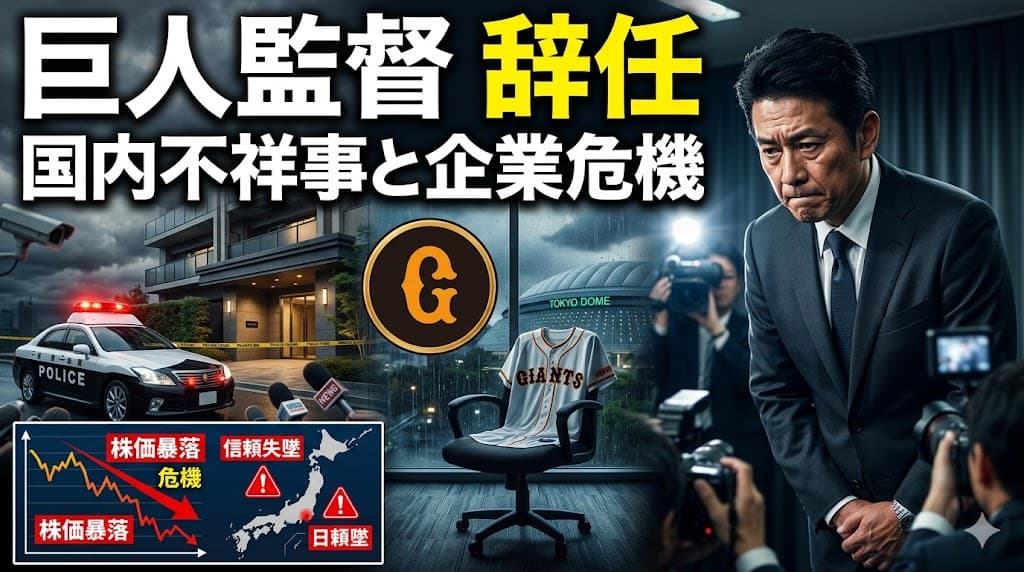
Yomiuri Giants Manager Resigns After Domestic Incident: A Case Study in Corporate Crisis Response
巨人軍監督の電撃辞任と球団の即時謝罪対応を題材に、危機管理コミュニケーションで使える実践的なビジネス英語を学べる教材です。
Part 1: 読む → 要約する
Step 1: Pre-Reading — ビジネスの文脈で考える (3 min)
外資系企業の月曜朝のチームミーティング。日本支社のマーケティング部長が「週末に日本のプロ野球で大きな事件があって、人気球団の監督が辞任したんだ。会社のブランド対応として参考になる事例だから、皆で議論したい」と切り出しました。あなたはチームメンバーとして英語で意見を求められます。
Q1. When a senior executive or public figure faces a personal scandal, should the organization immediately distance itself or defend the individual? Why? 組織のブランドを守ることと、個人を守ることのバランスについて考えてみましょう。
Q2. What are the risks for a company that delays its official response to a crisis involving a high-profile employee? 対応が遅れることで生じるリスク(メディア、株主、ファンへの影響など)を挙げてみましょう。
Q3. In your experience, how do Japanese companies typically handle crisis communication compared to Western firms? 日本企業と外資系企業の危機対応スタイルの違いを、自分の経験から話してみましょう。
Step 2: First Reading — 全体を把握する (10 min)
以下の英文は、ニュース記事の事実をもとに作成したビジネスシナリオ文書です。実際の職場でこのような文書を読む場面を想像しながら、英文を読み進めましょう。
INTERNAL BRIEFING MEMO
To: Crisis Communications Task Force From: Director of Corporate Affairs, Sports & Entertainment Practice Date: May 27, 2026 Subject: Yomiuri Giants Leadership Crisis — Lessons for Client Advisory — Action Required by Friday
1. Overview
On Monday evening, May 25, news broke across Japan that Shinnosuke Abe, manager of the Yomiuri Giants, had been arrested at the scene on suspicion of assaulting his daughter. The following day, May 26, Mr. Abe formally announced his resignation as manager. The incident occurred only days before the start of the annual interleague series, one of Nippon Professional Baseball's most commercially significant events.
2. Why This Case Matters for Our Clients
The Yomiuri Giants are among the most recognized brands in Japanese sports. What is notable from a corporate communications standpoint is the franchise's decision not to publicly defend the manager. Instead, the organization issued an immediate and unreserved apology to fans and stakeholders. This stands in contrast to the more common pattern in Japan, where employers tend to delay public statements until facts are confirmed.
3. Preliminary Analysis
Three factors likely drove the rapid response: (a) the timing relative to a major revenue event, (b) the seriousness of the alleged offense, and (c) heightened public sensitivity to domestic violence cases. Some commentators have pointed to Mr. Abe's reputation as a strict, old-school leader, but we should avoid drawing conclusions before the facts are clear. The underlying situation — whether a domestic dispute that escalated or a more serious family issue — remains unknown.
4. Recommended Action Items
- Prepare a one-page briefing for our Sports & Media clients summarizing the response timeline by Friday, May 29.
- Schedule a 45-minute workshop on "rapid apology versus measured response" for the Tokyo office next month.
- Review existing crisis playbooks for clients with high-profile executives and flag any gaps.
Please confirm receipt and assign owners for each action item by end of day Thursday.
Data sourced from: 東洋経済オンライン — "巨人・阿部監督「娘に暴行容疑で逮捕→電撃辞任」の衝撃…球団がかばわず即座に全面謝罪した"深い意味"" (2026年5月26日)
Note: The above is an original business scenario created for learning purposes using publicly available facts. Please read the original article at the link above for the full report.
関連: AI時代のビジネス英語実践|日本人ビジネスパーソンはAIと英語をどう使うべきか で詳しく解説しています。
Step 3: Comprehension Check — 内容確認 (5 min)
Q1. What position did Shinnosuke Abe hold, and what action did he take on May 26? 阿部氏の役職と、5月26日にとった行動を確認しましょう。
Q2. Why is the timing of this incident considered especially significant from a business perspective? ビジネス視点で、このタイミングがなぜ重要なのかを答えましょう。
Q3. How did the Yomiuri Giants organization respond, and how does this differ from the typical Japanese corporate pattern? 球団の対応と、一般的な日本企業の対応との違いを説明しましょう。
Q4. What three factors does the memo identify as drivers of the rapid response? メモが挙げている、迅速な対応につながった3つの要因を答えましょう。
Q5. What action items must be completed, and by when? アクションアイテムと締め切りを整理しましょう。
関連: 外資系で評価される英語・されない英語の違い|会議で伝わるビジネス英語コーチング で詳しく解説しています。
Step 4: 30-Second Briefing — 上司に30秒で説明する (10 min)
月曜の朝、エレベーターで外資系の上司に「週末ニュースで日本の野球チームの監督が辞任したらしいけど、何があったの?」と聞かれました。30秒で要点を伝えてみましょう。
| Framework | Template (英語で穴埋め) |
|---|---|
| ① 結論(What happened) | "The manager of the Yomiuri Giants, Shinnosuke Abe, ___________ after being arrested on suspicion of ___________." |
| ② 背景(Context) | "The incident took place just before ___________, one of NPB's biggest commercial events." |
| ③ ビジネス的論点(So what) | "What's notable for us is that the team ___________ the manager and ___________ immediately." |
| ④ 示唆(Implication) | "It's a useful case study on ___________ in Japan, especially when ___________." |
Tip: 元記事の表現をそのまま使うのではなく、自分の言葉で言い換える(paraphrase)練習をしましょう。"arrested at the scene" → "taken into custody on the spot"、"immediate apology" → "swift public statement" など、同じ意味を別の表現で言えるようにしておくと、上司との会話で自然に応用できます。
Part 2: 語彙・表現・発音
1. resignation (n.) — 辞任、辞職
- Example: The CEO announced his resignation effective immediately following the board's investigation.
- 訳: 取締役会の調査を受けて、CEOは即日付の辞任を発表しました。
- 外資系シーン: 役員交代やリーダーシップ変更を社内外に伝える場面で頻出します。"submit/tender one's resignation"(辞表を提出する)という表現も覚えておきましょう。
2. allegation (n.) — 申し立て、疑惑
- Example: The company is investigating the allegations against the senior manager carefully before making any statement.
- 訳: 同社はコメントを出す前に、その上級管理職への疑惑を慎重に調査しています。
- 外資系シーン: コンプライアンス案件や人事トラブルの議論で頻出する単語です。"face allegations of misconduct"(不正行為の疑いをかけられる)はセットで覚えておくと便利です。
3. distance (v.) — 距離を置く、関係を切る
- Example: The sponsor decided to distance itself from the brand ambassador after the scandal broke.
- 訳: スポンサー企業は、スキャンダルが発覚した後、そのブランド大使と距離を置くことを決めました。
- 外資系シーン: 危機管理やPR会議で「組織として個人と切り離す」判断を表す動詞として頻繁に使われます。"distance the brand from..." の形が定番です。
4. unreserved (adj.) — 無条件の、率直な
- Example: The airline issued an unreserved apology to passengers affected by the delay.
- 訳: 航空会社は、遅延の影響を受けた乗客に対して全面的な謝罪を行いました。
- 外資系シーン: 公式声明や顧客向けレターで "unreserved apology"(全面謝罪)として使われます。"sincere apology" よりも責任の重さを強調するニュアンスがあります。
5. stakeholder (n.) — 利害関係者
- Example: Our crisis response must address the concerns of all stakeholders, including employees, investors, and fans.
- 訳: 当社の危機対応は、従業員、投資家、ファンを含むすべての利害関係者の懸念に応える必要があります。
- 外資系シーン: 経営会議で頻出する基本ワードです。"engage stakeholders"(利害関係者と対話する)、"key stakeholders"(主要関係者)など、コロケーションも押さえておきましょう。
Fill-in-the-blank Exercise
次の文の空欄に、上記の語彙から最も適切なものを選んで入れましょう(必要に応じて語形変化させてください)。
Q1. The manager submitted his ___________ the day after the incident was reported.
Q2. Several ___________ have been made against the executive, but the investigation is still ongoing.
Q3. Following the scandal, the parent company quickly moved to ___________ itself from the local affiliate.
Q4. The board emphasized that they must communicate with all ___________ transparently throughout the crisis.
Part 3: 自分の意見を述べる
Discussion Topic A
English: Was the Yomiuri Giants' decision to immediately apologize and not defend the manager the right approach, or should they have waited for the facts to be confirmed first? 即座の謝罪と「かばわない姿勢」は正解だったのか、それとも事実確認を待つべきだったのか、自分の意見を述べましょう。
Discussion Topic B
English: In your industry, how would your company likely respond if a senior leader faced a similar personal allegation? Compare Japanese and Western practices. 自分の業界・会社で同様の事態が起きたらどう対応するか、日本企業と外資系の対応スタイルを比較しながら話しましょう。
Discussion Topic C
English: Should personal conduct outside the workplace ever be grounds for losing one's professional position? Where should the line be drawn? 職場外の個人的な行為が解任理由になり得るか、線引きをどこに置くべきかを議論しましょう。
Useful phrases
| English | Japanese |
|---|---|
| From a brand protection standpoint, ... | ブランド保護の観点から見ると、… |
| It's a difficult call, but I'd argue that ... | 難しい判断ですが、私は…と考えます |
| On the one hand ..., on the other hand ... | 一方では…、他方では… |
| I think the timing matters more than the content of the statement. | 声明の内容よりタイミングの方が重要だと思います。 |
| We should be careful not to jump to conclusions before the facts are clear. | 事実が明らかになる前に結論を急ぐべきではありません。 |
Part 4: 面接対策 — 外資系で差をつける
Mock Interview Scenario A
Interviewer: "Tell me about a time when your organization faced a sudden reputational crisis. How was it handled, and what would you have done differently?" 自社や前職での危機対応経験を、STAR法(Situation–Task–Action–Result)で簡潔に語る練習をしましょう。
Mock Interview Scenario B
Interviewer: "Imagine you are the head of communications at a sports franchise and a senior figure is arrested the night before a major event. Walk me through the first three actions you would take." 仮想シナリオで、優先順位をつけて行動計画を説明できるかが問われます。"First... Second... Third..." と構造化して答えましょう。
Mock Interview Scenario C
Interviewer: "How do you balance loyalty to a colleague with your responsibility to the organization when serious allegations arise?" 個人への配慮と組織への責任という、答えにくい倫理的ジレンマへの対応力を見られています。
Common Mistakes (NG Patterns)
NG 1:
- Bad: "I think Japanese company is slow always to respond."
- Good: "In my experience, Japanese organizations tend to take more time before issuing a public response."
- 解説: 冠詞の脱落と過度な一般化はネガティブに響きます。"tend to" や "in my experience" でやわらげましょう。
NG 2:
- Bad: "The manager is bad person so he should resign."
- Good: "Given the seriousness of the allegations, stepping down was likely the appropriate decision."
- 解説: 個人を断罪する表現は面接では避けるべきです。事実と判断を分けて述べる姿勢が評価されます。
NG 3:
- Bad: "Our company never had this kind problem."
- Good: "I haven't personally encountered this exact situation, but I can draw on a related experience..."
- 解説: 経験がない時に話を打ち切らず、関連する経験につなげる柔軟性が外資系では好まれます。
NG 4:
- Bad: "It is difficult question, I cannot answer."
- Good: "That's a thought-provoking question. Let me think about it from two angles..."
- 解説: 「答えられない」と断言するのではなく、考えるプロセスを声に出して見せることで、思考力をアピールできます。
活用のコツ(3 Tips)
Tip 1: ニュースの「事実」と「解釈」を切り分けて読む習慣をつけましょう。 今回の記事のように、事件そのもの(fact)と球団の対応への評価(interpretation)を分けて整理すると、英語で説明する際に論理が明確になり、上司や同僚との議論でも説得力が増します。
Tip 2: 危機対応の英語表現を「自分の業界版」に翻訳して練習しましょう。 "immediate apology"、"distance itself from"、"stakeholder communication" などの表現を、自社の製品リコールや人事案件などの架空シナリオに当てはめて声に出して練習すると、いざという時にスラスラ出てきます。
Tip 3: 30秒ブリーフィングのフォーマットを社内ニュース共有に活用しましょう。 「結論→背景→ビジネス的論点→示唆」の順で話す型は、英語ミーティングでの発言全般に応用できます。週次定例で日本のニュースを英語で30秒共有する習慣をつけると、即興力が劇的に伸びます。
Bonus: プロナビレッスンでの活用法
レッスン前(20min)
記事原文(日本語)に目を通し、Part 1のPre-Reading質問(Q1〜Q3)に対する自分の意見を日本語でメモしておきましょう。次にStep 2の英文ビジネスシナリオを音読し、知らない単語に印をつけ、Part 2の語彙5つの例文を声に出して2回ずつ読んでおきます。最後にPart 4の面接質問3つに対して、頭の中で英語の答えを組み立てておくと、レッスン本番で時間を有効に使えます。
レッスン中(25min)
コーチと一緒にPart 1のStep 4「30秒ブリーフィング」を実演し、フィードバックをもらいましょう。次にPart 3のディスカッショントピックA・B・Cから1つ選び、Useful phrases表の表現を意識的に使いながら3分間スピーキング練習をします。最後にPart 4のMock Interview Scenarioを1つロールプレイし、NG Patternsで指摘される傾向が自分にもないか、コーチに客観的にチェックしてもらいましょう。
レッスン後(15min)
レッスンで指摘された表現の弱点を、Part 2の語彙とPart 3のUseful phrases表から3〜5フレーズ選んで音読練習しましょう。次に、今日学んだ危機対応の英語表現を使って、自社で起きうる仮想シナリオ(製品トラブル、人事案件など)について100語程度の英文メモを書きます。最後に、活用のコツのTip 3に従って、今週中に職場で日本のニュースを英語で30秒共有する機会を1回作ることを自分にコミットしましょう。
無料カウンセリングでは、こうした学習の進め方や、あなたの業界・職種に合わせた英語学習プランをご提案します。お気軽にお問い合わせください。
参考・出典
この記事を書いた人
サイト運営・日本語サポート担当 / AIエンジニア
- ●東京都出身・海外在住13年以上
- ●IT歴36年以上(開発・SEO・AI)
- ●IBM認定 生成AIエンジニア
- ●CEFR B1の英語学習者(今も学習中)
外資系の現場で「英語が話せず評価が伸びない」苦しさを経験し、海外移住後も印刷所で「copy」が通じないような発音の壁に何度もぶつかってきました。今もプロ講師の指導を受けながら学習を続ける一人として、AI時代でも英語で悩む日本人ビジネスパーソンに向けて、現場目線で記事を書いています。日本語でのご相談やお問い合わせも私が担当します。
関連記事
GMO在宅勤務「完全廃止」を英語で説明する|ニュースで学ぶビジネス英語教材
GMOの在宅勤務「完全廃止」ニュースを教材化。英文社内メモの読解、上司への30秒説明、頻出語彙、面接想定問答まで収録し、働き方トレンドを語れるビジネス英語力を鍛えます。無料の英語学習教材です。
2026/7/14
三菱UFJが時価総額首位に|40年ぶりの「金融復権」を英語で語るビジネス英語教材
三菱UFJが時価総額首位、1986年以来40年ぶりの金融復権。このニュースを教材に、市場・金利・株主還元を語るビジネス英語を学習。社内メモ読解、30秒要約、ディスカッション、外資系面接対策まで実践形式で身につく無料教材です。
2026/7/13

Apple対OpenAI訴訟で学ぶビジネス英語|営業秘密と情報管理を英語で語る実践教材
AppleによるOpenAI提訴のニュースを教材化。営業秘密・情報管理をテーマに、社内メモの読解、上司への30秒説明、重要単語、ディスカッション、面接対策まで実践的に学べるビジネス英語学習コンテンツ。外資系で働く日本人ビジネスパーソンの英語力を鍛えます。
2026/7/12
三菱自動車×東大発Highlandersのヒト型ロボット量産提携で学ぶビジネス英語教材
三菱自動車と東大発Highlandersのヒト型ロボット量産提携ニュースで学ぶビジネス英語教材。mass productionなど頻出語彙、30秒ブリーフィング、外資系面接対策まで実践的に学べる英語学習コンテンツです。
2026/7/11
OpenAI「ChatGPT Work」で学ぶビジネス英語|AIエージェント最新ニュース教材
OpenAIの「ChatGPT Work」とGPT-5.6を題材にしたビジネス英語学習教材。社内メモ読解や30秒ブリーフィング、面接対策を通じて、AI時代の職場で使える実践英語を身につけます。
2026/7/10
Grok 4.5で学ぶビジネス英語|AI最新ニュースで鍛える読解と要約力
話題のAIモデル「Grok 4.5」の英語ニュースを教材化。社内ブリーフィングメモの読解、要約、面接対策まで。最新テックニュースで実践的なビジネス英語を学びたい方へ。
2026/7/9