
子ども・子育て支援金制度を英語で説明|外資系で使えるビジネス英語教材
2026年4月開始の子ども・子育て支援金制度を題材にしたビジネス英語教材。社内メモの読解、語彙、30秒ブリーフィング、面接対策まで実践的に学べる英語学習コンテンツです。


AIエンジニア / IT歴36年以上・海外在住13年以上のCEFR B1英語学習者
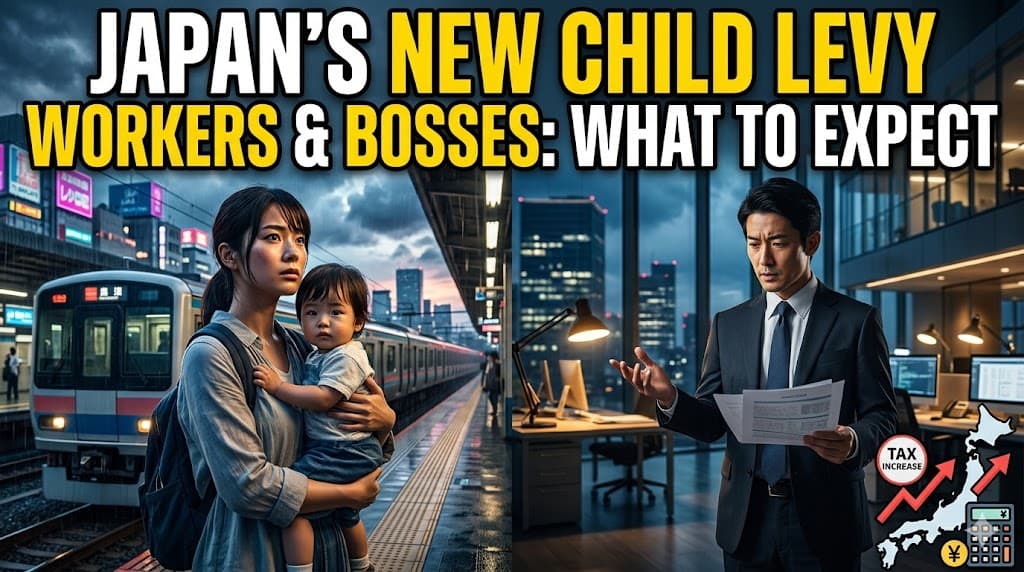
Japan's New Child and Childcare Support Levy: What Employees and Employers Need to Know
2026年4月から始まる子ども・子育て支援金制度を題材に、制度概要を英語で説明する力を鍛える実践型ビジネス英語学習教材です。
Part 1: 読む → 要約する
Step 1: Pre-Reading — ビジネスの文脈で考える (3 min)
あなたは外資系企業の日本支社で人事(HR)部門に所属しています。来週のグローバルチームミーティングで、日本政府が導入する新しい子育て支援金制度について、海外の同僚に英語で説明することになりました。制度の概要と従業員・企業への影響を共有する必要があります。
Q1: What do you know about Japan's declining birthrate and government responses to it? (日本の少子化問題と、それに対する政府の対応について知っていることを話してみましょう)
Q2: In your company, how are social insurance premiums currently handled between employees and employers? (あなたの会社では、社会保険料は従業員と雇用者の間でどのように分担されていますか)
Q3: If a new payroll deduction were introduced, what questions would your foreign colleagues most likely ask? (新しい給与天引きが導入されたら、海外の同僚はどのような質問をすると思いますか)
Step 2: First Reading — 全体を把握する (10 min)
以下の英文は、ニュース記事の事実をもとに作成したビジネスシナリオ文書です。実際の職場でこのような文書を読む場面を想像しながら、英文を読み進めましょう。
INTERNAL BRIEFING MEMO
To: All Department Heads, Japan Office From: Yuki Tanaka, Head of Human Resources Date: April 9, 2026 Subject: Implementation of the Child and Childcare Support Levy — Action Required by April 30
Purpose This memo outlines a new statutory contribution that will affect payroll processing and employee communications starting next month. Department heads are asked to review the key points below and prepare to answer questions from their team members.
Background The Children and Families Agency (Kodomo Katei Cho) has launched the Child and Childcare Support Levy, a new contribution scheme designed to fund the expansion of childcare policies under the national "Acceleration Plan." The scheme is not classified as a tax. Instead, it is collected through the existing medical insurance framework as a form of social insurance.
Key Facts for Employees Enrolled in Employees' Health Insurance For fiscal year 2026, the government has set a uniform contribution rate of 0.23% of the standard monthly remuneration. Approximately half of this amount will be covered by the employer, meaning the actual deduction from an employee's paycheck will be the remaining half. Contributions will begin with the April 2026 premium, which will first appear on the May 2026 payslip as a payroll deduction.
Impact on Our Organization As the employer contribution is mandatory, the Finance team has already incorporated the additional cost into the FY2026 labor budget. The HR team will update all employee onboarding materials and FAQ documents by the end of April. Managers should be prepared to explain that the levy is separate from income tax and is collected under the health insurance system.
Action Items
- Department heads: forward this memo to all team members by April 15.
- Direct any detailed questions to the government hotline at 0120-303-272 (9:00–18:00, closed Sundays and holidays).
- Attend the HR briefing session scheduled for April 22.
Please contact the HR team if you need supporting materials in English for non-Japanese-speaking staff.
Data sourced from: Children and Families Agency — "子ども・子育て支援金制度について" (Last updated: December 26, 2025)
Note: The above is an original business scenario created for learning purposes using publicly available facts. Please read the original article at the link above for the full report.
Step 3: Comprehension Check — 内容確認 (5 min)
Q1: Who is the sender of this memo, and who is the intended audience? (このメモの送信者と受信者は誰でしょうか)
Q2: What is the uniform contribution rate set by the government for fiscal year 2026? (政府が令和8年度に設定した一律の支援金率は何%ですか)
Q3: When will the deduction first appear on employees' payslips? (従業員の給与明細に最初に支援金が反映されるのはいつですか)
Q4: Why is the levy collected through the medical insurance system rather than as a tax? (なぜこの支援金は税金ではなく医療保険制度を通じて徴収されるのですか)
Q5: What three action items are listed for department heads? (部門長に求められている3つのアクションアイテムは何ですか)
Step 4: 30-Second Briefing — 上司に30秒で説明する (10 min)
エレベーターで外国人上司に会いました。「I heard Japan is introducing some new childcare support payment. What's it about?」と聞かれました。30秒で要点を説明しましょう。
| 構成 | テンプレート |
|---|---|
| What (何が) | Japan is introducing a new ____________ called the Child and Childcare Support Levy, starting in ____________. |
| Who (誰が) | It applies to ____________ enrolled in public health insurance, and ____________ will cover about half of the contribution. |
| How much (いくら) | For employees' health insurance, the rate is ____________ of the standard monthly remuneration. |
| Why (なぜ) | The goal is to fund ____________ under the government's "Acceleration Plan." |
| So what (だから何) | Our Finance and HR teams are already preparing for the change, so employees should ____________. |
💡 Tip: 元の文書の表現をそのまま繰り返すのではなく、自分の言葉で言い換えましょう。たとえば "statutory contribution" を "mandatory payment" と言い換えます。シンプルな表現を使うことで、より自然で説得力のあるブリーフィングになります。
Part 2: 語彙・表現・発音
1. levy (n.) — 賦課金、徴収金
Example: The government introduced a new levy to fund childcare programs. 政府は子育て支援プログラムの財源として新しい賦課金を導入しました。
外資系シーン: 税金以外の法定負担金を説明する際によく使われます。"tax" との違いを明確にしたいときに便利な単語です。
2. statutory (adj.) — 法定の、法律で定められた
Example: Employers must comply with statutory contributions under the new scheme. 雇用主は新制度の下で法定負担金を支払う義務があります。
外資系シーン: HR やコンプライアンス部門のミーティングで、"statutory requirement"(法定要件)という形で頻出します。
3. remuneration (n.) — 報酬、給与
Example: The contribution rate is calculated based on the standard monthly remuneration. 支援金率は標準報酬月額に基づいて計算されます。
外資系シーン: "salary" よりもフォーマルな表現で、総報酬(基本給+手当+賞与)を指すときに使われます。人事・報酬制度の議論で重要です。
4. deduction (n.) — 控除、天引き
Example: The new payroll deduction will appear on the May payslip. 新しい給与天引きは5月の給与明細に反映されます。
外資系シーン: 給与明細に関する説明で必須の単語。"pre-tax deduction" や "payroll deduction" といった組み合わせで使われます。
5. implementation (n.) — 実施、導入
Example: The implementation of the new scheme requires coordination across departments. 新制度の実施には部門間の連携が必要です。
外資系シーン: プロジェクト管理や制度導入の文脈で頻繁に登場します。"rollout" とほぼ同義ですが、よりフォーマルな響きがあります。
穴埋め練習
次の空欄に上記の語彙を適切な形で入れてください。語彙は levy / statutory / remuneration / deduction / implementation です。
Q1: All employers are required to meet their __________ obligations regarding social insurance.
Q2: The __________ of the new policy has been delayed by three months.
Q3: Your total __________ package includes base salary, bonus, and benefits.
Q4: A new __________ on employees' health insurance will take effect in April 2026.
Part 3: 自分の意見を述べる
Discussion A: Do you think using the medical insurance system to collect funds for childcare support is a good idea? Why or why not? (医療保険制度を使って子育て支援の財源を集めることは良いアイデアだと思いますか。その理由は)
Discussion B: How might this new levy affect employer decisions about hiring and labor costs in Japan? (この新しい支援金は、日本における企業の採用判断や人件費にどのような影響を与えるでしょうか)
Discussion C: Should single employees without children have to contribute to childcare support? Share your view. (子供のいない独身の従業員も子育て支援金を負担すべきでしょうか。あなたの意見を聞かせてください)
| English | Japanese |
|---|---|
| In my view, the main advantage is... | 私の考えでは、主な利点は… |
| I can see both sides of this issue. | この問題には両面あると思います。 |
| That said, we shouldn't overlook... | とはいえ、…を見過ごすべきではありません。 |
| From a business perspective,... | ビジネスの観点から言うと… |
| It largely depends on how it's implemented. | それは実施方法に大きく左右されます。 |
Part 4: 面接対策 — 外資系で差をつける
Scenario A: (Interview for an HR Manager role at a foreign-affiliated company) Interviewer: "Japan has introduced a new Child and Childcare Support Levy. As an HR leader, how would you communicate this change to non-Japanese-speaking employees?"
Scenario B: (Interview for a Finance Controller position) Interviewer: "How would you incorporate a new 0.23% statutory contribution into your company's labor cost forecast and budget planning?"
Scenario C: (Interview for a Strategy Consultant role) Interviewer: "Some critics call this levy a 'hidden tax.' How would you advise a client company to respond to employee concerns about it?"
よくある NG パターン
NG 1: 結論を最後に置く
- ❌ Bad: "Well, in Japan there is declining birthrate, and the government is trying many things, and recently they made this new system, and I think it's okay."
- ✅ Good: "I support the initiative overall, mainly because it addresses Japan's urgent demographic challenge through an existing framework."
- 解説: 外資系面接では結論ファースト(PREP法)が基本です。最初に自分の立場を明確にしましょう。
NG 2: 曖昧な数字の使用
- ❌ Bad: "The contribution is, um, very small, maybe less than one percent."
- ✅ Good: "The uniform contribution rate for FY2026 is 0.23% of standard monthly remuneration."
- 解説: 具体的な数字を正確に述べることで、準備力と専門性をアピールできます。
NG 3: 一方的な意見の押し付け
- ❌ Bad: "This is absolutely a bad policy because it's just another tax."
- ✅ Good: "While I understand the concerns about added costs, the policy does aim to address a critical long-term issue."
- 解説: バランスの取れた見方を示すことで、批判的思考力をアピールできます。
NG 4: 直訳調の不自然な英語
- ❌ Bad: "The company must bear half of the money by law obligation."
- ✅ Good: "Employers are legally required to cover approximately half of the contribution."
- 解説: 日本語から直訳するのではなく、英語として自然なコロケーションを使いましょう。
活用のコツ(4 Tips)
- 音読を 3 回繰り返す — ビジネス文書は最低 3 回音読しましょう。1 回目は意味理解、2 回目はリズム、3 回目はスピード感を意識します。
- 自分の会社に置き換える — 「もし自分の会社でこのメモを受け取ったら、どう部下に説明するか」を考えながら読むと、実践的な英語力が身につきます。
- 数字を英語で即答できるように — "0.23%", "April 2026", "half of the contribution" などの重要データがあります。見ずに言えるまで練習しましょう。
- 反対意見も準備する — Part 3 のディスカッションでは、自分の意見と反対の立場からも 1 つ論点を用意しておきます。面接や会議で強みになります。
Bonus: プロナビレッスンでの活用法
レッスン前 (20 min)
Part 1 の Step 1〜3 を自習で完了させましょう。特にビジネス文書を音読し、わからない単語は Part 2 の語彙リストで確認します。Step 3 の内容確認問題は、英語で答えを書き出しておくと効果的です。
レッスン中 (25 min)
コーチと一緒に Step 4 の 30 秒ブリーフィングを実際に練習します。最初はテンプレートを使い、慣れてきたら自分の言葉で言い換える練習をしましょう。その後、Part 3 のディスカッショントピックから 1 つを選び、コーチと意見交換します。Part 4 の面接シナリオから 1 つをロールプレイすると、さらに実践的です。
レッスン後 (15 min)
レッスンで指摘された発音や表現をメモにまとめ、Part 2 の穴埋め練習を解き直します。Part 3 の Discussion B または C について、自分の意見を 150 語程度の英文にまとめてください。次回のレッスンに持参すると、ライティング力も同時に伸ばせます。
参考・出典
この記事を書いた人
サイト運営・日本語サポート担当 / AIエンジニア
- ●東京都出身・海外在住13年以上
- ●IT歴36年以上(開発・SEO・AI)
- ●IBM認定 生成AIエンジニア
- ●CEFR B1の英語学習者(今も学習中)
外資系の現場で「英語が話せず評価が伸びない」苦しさを経験し、海外移住後も印刷所で「copy」が通じないような発音の壁に何度もぶつかってきました。今もプロ講師の指導を受けながら学習を続ける一人として、AI時代でも英語で悩む日本人ビジネスパーソンに向けて、現場目線で記事を書いています。日本語でのご相談やお問い合わせも私が担当します。
関連記事

GMO在宅勤務「完全廃止」を英語で説明する|ニュースで学ぶビジネス英語教材
GMOの在宅勤務「完全廃止」ニュースを教材化。英文社内メモの読解、上司への30秒説明、頻出語彙、面接想定問答まで収録し、働き方トレンドを語れるビジネス英語力を鍛えます。無料の英語学習教材です。
2026/7/14

三菱UFJが時価総額首位に|40年ぶりの「金融復権」を英語で語るビジネス英語教材
三菱UFJが時価総額首位、1986年以来40年ぶりの金融復権。このニュースを教材に、市場・金利・株主還元を語るビジネス英語を学習。社内メモ読解、30秒要約、ディスカッション、外資系面接対策まで実践形式で身につく無料教材です。
2026/7/13

Apple対OpenAI訴訟で学ぶビジネス英語|営業秘密と情報管理を英語で語る実践教材
AppleによるOpenAI提訴のニュースを教材化。営業秘密・情報管理をテーマに、社内メモの読解、上司への30秒説明、重要単語、ディスカッション、面接対策まで実践的に学べるビジネス英語学習コンテンツ。外資系で働く日本人ビジネスパーソンの英語力を鍛えます。
2026/7/12
三菱自動車×東大発Highlandersのヒト型ロボット量産提携で学ぶビジネス英語教材
三菱自動車と東大発Highlandersのヒト型ロボット量産提携ニュースで学ぶビジネス英語教材。mass productionなど頻出語彙、30秒ブリーフィング、外資系面接対策まで実践的に学べる英語学習コンテンツです。
2026/7/11

OpenAI「ChatGPT Work」で学ぶビジネス英語|AIエージェント最新ニュース教材
OpenAIの「ChatGPT Work」とGPT-5.6を題材にしたビジネス英語学習教材。社内メモ読解や30秒ブリーフィング、面接対策を通じて、AI時代の職場で使える実践英語を身につけます。
2026/7/10
Grok 4.5で学ぶビジネス英語|AI最新ニュースで鍛える読解と要約力
話題のAIモデル「Grok 4.5」の英語ニュースを教材化。社内ブリーフィングメモの読解、要約、面接対策まで。最新テックニュースで実践的なビジネス英語を学びたい方へ。
2026/7/9