
AIは本当に雇用を奪うのか?最新ニュースで学ぶビジネス英語教材
AIによる雇用崩壊論の修正という最新ニュースを題材に、英文メモの読解・30秒要約・面接対策まで実践できるビジネス英語学習教材。外資系で働く日本人プロフェッショナル向けに、英語学習と時事理解を両立します。


AIエンジニア / IT歴36年以上・海外在住13年以上のCEFR B1英語学習者
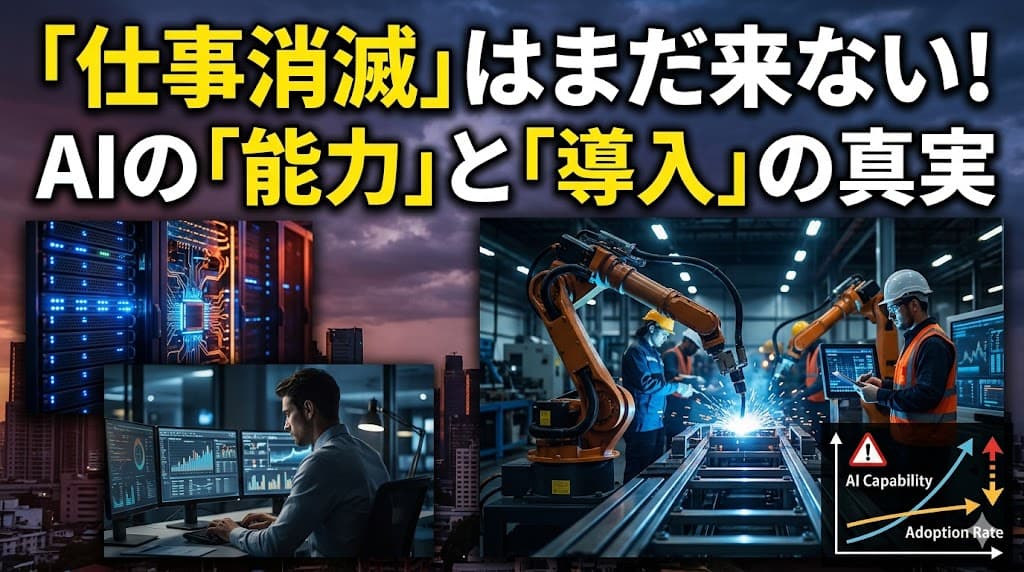
AI and Jobs: Why the "Collapse" Hasn't Arrived — It's About Adoption, Not Capability
AltmanとAmodei両CEOの「雇用崩壊論」修正を題材に、AIと雇用をめぐる英文メモを読み解きながら、要約・意見表明・面接で使える実践的なビジネス英語を学びます。
Part 1: 読む → 要約する
Step 1: Pre-Reading — ビジネスの文脈で考える (3 min)
あなたは外資系企業の日本支社で働いています。今朝のチームミーティングで、ロンドン本社のマネージャーが「AIは本当にホワイトカラーの仕事を奪うのか?」という話題を切り出しました。あなたは自分の意見と、最近のニュースで知った事実を英語で共有することになりそうです。
読む前に、次の3つの問いについて考えてみましょう。
Q1. In your own workplace, which tasks do you think AI could realistically take over within the next two years? (あなたの職場で、今後2年以内にAIが現実的に担えそうな業務は何でしょうか。具体的な作業を思い浮かべてください。)
Q2. Many companies say they "use AI," but few report real changes in headcount or productivity. Why might there be such a gap? (多くの企業が「AIを使っている」と言いますが、人員や生産性の変化を報告する企業は少ないです。なぜこのギャップが生まれるのでしょうか。)
Q3. If AI handles routine first drafts, how should companies still train junior employees? (AIが定型的な初稿作成を担うようになった場合、企業は若手社員をどう育成すべきでしょうか。)
Step 2: First Reading — 全体を把握する (10 min)
以下の英文は、ニュース記事の事実をもとに作成したビジネスシナリオ文書です。実際の職場でこのような文書を読む場面を想像しながら、英文を読み進めましょう。
MEMORANDUM
TO: Regional Leadership Team, APAC FROM: Head of People Strategy & Workforce Analytics DATE: May 28, 2026 RE: Recalibrating Our 2026–2027 AI Workforce Plan — Decision Needed by June 12
Purpose Last quarter we built our hiring plan on the assumption that AI would shrink entry-level demand quickly. I am now asking the team to revisit that assumption. Below I set out where we stand, what the latest evidence says, and three actions tied to it.
Our current position Our draft plan still includes a 15% reduction in graduate hiring, justified by an expected wave of automation. Before we lock that in, we should test it against the data we have collected since.
What the external evidence says The strongest external check is independent labor research. The Yale Budget Lab reported in both April and May 2026 that it sees no clear acceleration in job displacement or wage effects so far. A separate survey of roughly 6,000 executives across the US, UK, Germany, and Australia points the same way: about 70% of firms actively use AI, yet close to 90% reported no measurable change in employment or productivity over three years. In other words, the tools are everywhere, but the workforce numbers have barely moved — so for now we should treat this data as a planning input, not a trigger for cuts.
What the vendors now say Notably, the loudest earlier voices have grown quieter. At a Commonwealth Bank of Australia event in Sydney on May 26, OpenAI's CEO Sam Altman said entry-level white-collar roles have not disappeared as fast as he once expected. Anthropic's CEO Dario Amodei has shifted further: his 2025 warning — that automation might remove about half of entry-level white-collar jobs and lift unemployment to 10–20% — has given way by May 2026 to a view in which automation handles most tasks while the remaining human work expands and raises productivity.
Recommended actions
- Pause the planned 15% cut in graduate hiring — the data above does not yet support it.
- Redesign entry-level roles so junior staff still gain core experience, even where AI handles first drafts; this protects our future talent pipeline regardless of how the forecasts land.
- Track AI's effect on our own teams every quarter, not once a year, so we react to our numbers rather than to headlines.
A note of caution A quiet signal today is no guarantee about next year; our stance should be readiness, not complacency. Even the optimists are hedging — the OpenAI Foundation announced a $250 million commitment on May 27 to study labor-market effects and support affected workers and regions.
Please send your feedback before our June 12 review.
Data sourced from: XenoSpectrum — "OpenAI、Anthropicの両CEOがAI雇用崩壊論を修正:見えてきたのは「失職ゼロ」ではなく導入の遅さ" (2026年5月28日)
Note: The above is an original business scenario created for learning purposes using publicly available facts. Please read the original article at the link above for the full report.
関連: 2030年のグローバルリーダーに必要なスキルは「発音力」|外資系で評価される英語の鍛え方 で詳しく解説しています。
Step 3: Comprehension Check — 内容確認 (5 min)
次の5つの問いに、英文の内容に基づいて答えましょう。
Q1. What decision is the leadership team being asked to make, and by when? (リーダーシップチームは何を、いつまでに決めるよう求められていますか。)
Q2. How did Dario Amodei's view change between 2025 and May 2026? (Dario Amodei氏の見解は、2025年から2026年5月にかけてどう変わりましたか。)
Q3. According to the survey, what is the gap between how many firms use AI and how many report real impact? (調査によると、AIを使う企業の割合と、実際の影響を報告する企業の割合の間には、どのようなギャップがありますか。)
Q4. Why does the memo recommend pausing the planned cut in graduate hiring? (このメモは、なぜ新卒採用の削減計画を一時停止するよう勧めているのですか。)
Q5. In the closing note, what does "readiness, not complacency" mean for how the company should act now? (最後の注意書きにある「readiness, not complacency(油断ではなく備え)」は、会社が今どう行動すべきという意味でしょうか。)
関連: AI時代のビジネス英語実践|日本人ビジネスパーソンはAIと英語をどう使うべきか で詳しく解説しています。
Step 4: 30-Second Briefing — 上司に30秒で説明する (10 min)
エレベーターで上司にばったり会いました。「さっきの memo、要点だけ30秒で教えてくれる?」と聞かれました。あなたは英語で、結論から手短に説明する必要があります。
下のフレームワークの空欄を埋めて、自分の30秒ブリーフィングを組み立てましょう。
| 構成 | テンプレート | 記入例(参考) |
|---|---|---|
| 結論(1文) | "The main point is that ______." | "...AI adoption is high, but the impact on jobs is still slow." |
| 根拠(数字) | "Surveys show that ______, while ______." | "...about 70% of firms use AI, while about 90% report no real change." |
| 専門家の動き | "Both ______ and ______ have ______." | "...Altman and Amodei have softened their earlier predictions." |
| 提案・行動 | "So I recommend that we ______." | "...keep graduate hiring stable and review it quarterly." |
| 締め(注意点) | "But we should remember that ______." | "...readiness matters more than relaxing — we'll review the numbers quarterly." |
Tip: 上司への説明では、英文をそのまま暗唱しないことが大切です。元の文の単語を別の言い方に置き換える(paraphrase する)と、自分の言葉として自然に聞こえます。例えば "walk back their predictions" は "soften" や "revise" と言い換えられます。数字は丸めて "around" や "roughly" を添えると、記憶にも頼りやすくなります。
Part 2: 語彙・表現・発音
1. adoption (n.) — 導入・採用
- Example: AI adoption across the company has been fast, but real results have been slow to appear.
- 訳: 社内でのAI導入は速かったが、実際の成果が現れるのは遅かった。
- 外資系シーン: 新しいツールやシステムの「社内浸透度」を語るときに頻出します。"adoption rate"(導入率)や "slow adoption"(導入の遅れ)という形で、経営会議やレポートでよく使われます。
2. entry-level (adj.) — 初級の・新人向けの
- Example: Many leaders worry that automation could reduce entry-level positions for new graduates.
- 訳: 多くのリーダーは、自動化によって新卒向けの初級ポジションが減るのではと懸念している。
- 外資系シーン: 採用や人事の議論で必須の語です。"entry-level role"(初級職)、"entry-level salary"(初任給)のように、キャリアの「入口」を指して使われます。
3. automation (n.) — 自動化
- Example: Even if automation handles most routine tasks, skilled human judgment is still needed.
- 訳: 自動化が定型業務の大半を担っても、熟練した人間の判断はなお必要だ。
- 外資系シーン: 業務改善やコスト削減の文脈で中心となる語です。"process automation"(業務自動化)として、効率化プロジェクトの提案でよく登場します。
4. productivity (n.) — 生産性
- Example: The goal is not just to cut costs, but to raise productivity across the whole team.
- 訳: 目標は単なるコスト削減ではなく、チーム全体の生産性を高めることだ。
- 外資系シーン: 業績評価や戦略会議の定番語です。"productivity gains"(生産性の向上)が雇用増につながるか、人員削減につながるかは、AI時代の重要な論点です。
5. walk back (phrasal v.) — (発言・予測を)撤回する・後退させる
- Example: The CEO walked back his earlier prediction after the data did not match it.
- 訳: そのCEOは、データが一致しなかったため、以前の予測を後退させた。
- 外資系シーン: ニュースやビジネスの議論で、誰かが「前言を修正する」場面を表します。"soften" や "revise" より少し口語的で、報道でよく使われる表現です。
Fill-in-the-blank — 空欄補充 (4 questions)
次の文の空欄に、上の語彙から最も適切なものを入れましょう(必要に応じて形を変えてください)。
- The survey showed high AI ____________, but few firms reported real change. (導入)
- Companies are redesigning ____________ jobs so juniors still gain experience. (初級の)
- If ____________ frees up time, we should use it to grow demand, not only to cut staff. (自動化)
- After the new data appeared, both CEOs began to ____________ their bold forecasts. (撤回する・後退させる)
Part 3: 自分の意見を述べる
次の3つのトピックについて、自分の考えを英語で述べる練習をしましょう。
Topic A. Some experts say AI will not eliminate whole jobs, but will change the tasks inside each job. Do you agree? Why? (AIは職種そのものをなくすのではなく、各職種の中身を変えるという見方があります。あなたは賛成ですか。理由も述べましょう。)
Topic B. About 70% of firms use AI, but about 90% see no clear impact yet. What do you think are the biggest barriers to real results? (約70%の企業がAIを使う一方、約90%は明確な影響を感じていません。成果を阻む最大の壁は何だと思いますか。)
Topic C. If AI takes over the tasks usually given to junior staff, how should your company train the next generation of professionals? (AIが若手に任されてきた業務を引き受けるようになった場合、あなたの会社は次世代の人材をどう育てるべきでしょうか。)
Useful phrases — 意見を述べるための表現
| English | Japanese |
|---|---|
| From my point of view, ... | 私の見方では、... |
| The data suggests that ... | データが示すのは...ということです |
| One barrier I often see is ... | 私がよく目にする壁の一つは...です |
| Rather than X, I would focus on Y. | XよりむしろYに注力します |
| It's too early to say, but ... | まだ判断するには早いですが、... |
Part 4: 面接対策 — 外資系で差をつける
Mock Interview Scenarios
Scenario A — Awareness of industry trends Interviewer: "AI leaders have recently softened their predictions about job losses. How do you interpret that shift, and what does it mean for our industry?" (業界の最新動向を、自分の言葉で要約し解釈できるかが問われています。事実と自分の見解を分けて話しましょう。)
Scenario B — Practical judgment Interviewer: "Our firm already uses AI tools, but we don't see clear productivity gains. If you joined, where would you start to close that gap?" (「導入」と「成果」のギャップを埋める具体策を問う質問です。優先順位を一つ挙げて理由を述べると説得力が増します。)
Scenario C — People and ethics Interviewer: "If automation reduces junior tasks, how would you make sure young employees still develop their skills?" (効率化と人材育成のバランスをどう取るかを見ています。短期の効率だけでなく、長期の人づくりに触れましょう。)
Common Mistakes — 避けたいNGパターン
NG 1: 事実をそのまま暗唱してしまう
- ❌ "The article says about 70% of firms use AI and 90% see no impact, and Altman said..."
- ⭕ "Adoption is high, but impact is low. To me, that means the real challenge is execution, not technology."
- 記事の引用を並べるだけでは、自分の考えが伝わりません。事実は短くまとめ、必ず「自分の解釈」を添えましょう。
NG 2: あいまいで結論のない回答
- ❌ "It depends... maybe AI is good, maybe not. It's difficult to say."
- ⭕ "It's too early to say for certain, but I would prioritize redesigning workflows first."
- 慎重さは大切ですが、立場を一つに絞らないと優柔不断に聞こえます。「まだ不確実だが、私なら〜する」と続けましょう。
NG 3: 専門用語を誤用する
- ❌ "We need more automations to increase the productivities." (可算・不可算の誤り)
- ⭕ "We need more automation to increase productivity."
- automation と productivity は通常、不可算名詞です。複数形にしないよう注意しましょう。
NG 4: 数字の根拠を示さない誇張
- ❌ "AI will destroy half of all jobs very soon, everyone knows that."
- ⭕ "One 2025 forecast suggested up to half of entry-level white-collar roles could be affected, but recent data has not confirmed that yet."
- 根拠のない断定は信頼を下げます。出典や時期を添え、断定と推測を区別して話しましょう。
活用のコツ(3 Tips)
1. 「導入率」ではなく「成果」で語る習慣をつけましょう。 自社で「AIを使っているか」ではなく「AIで何が変わったか」を四半期ごとに記録すると、経営層への報告が一段と説得力を持ちます。
2. 若手に残すべき経験を、いまのうちに棚卸ししましょう。 AIに初稿や下調べを任せる前に、若手が成長に必要とする業務を見極めておけば、効率化と人材育成を両立できます。
3. 専門家の予測は「方向」ではなく「前提」を読みましょう。 予測が楽観・悲観どちらに振れても、その根拠となる前提(導入の速度・需要の伸び)を確認する癖をつけると、業界ニュースを自分の意思決定に活かせます。
Bonus: プロナビレッスンでの活用法
レッスン前 (20min) Step 1のPre-Reading(3問)に目を通し、自分の職場に当てはめて答えをメモしておきましょう。続いてStep 2の英文メモを音読し、Part 2の語彙5語の意味と例文を確認します。分からない単語には印をつけ、レッスンで質問できるように準備しておくと効果的です。
レッスン中 (25min) コーチと一緒に、Step 4の30秒ブリーフィングを実演します。テンプレートを見ながら一度、見ずにもう一度話し、言い換え(paraphrase)のフィードバックを受けましょう。その後、Part 4の模擬面接Scenario A〜Cをロールプレイし、NGパターンに陥っていないかをその場で修正します。
レッスン後 (15min) Part 3のDiscussion Topicから一つ選び、自分の意見を3〜4文の英語で書き出して提出しましょう。Useful phrasesを最低2つ使うことを目標にします。さらに「活用のコツ」の3点のうち一つを、翌週までに実際の業務で試してみてください。
参考・出典
- XenoSpectrum — "OpenAI、Anthropicの両CEOがAI雇用崩壊論を修正:見えてきたのは「失職ゼロ」ではなく導入の遅さ" (2026年5月28日)
- Axios — "Behind the curtain: A white-collar bloodbath" (2025年5月28日)
- Fortune — "Sam Altman and Dario Amodei are walking back their AI jobs apocalypse prophecies" (2026年5月26日)
- Commonwealth Bank of Australia — "Sam Altman on closing the AI gap" (2026年5月)
この記事を書いた人
サイト運営・日本語サポート担当 / AIエンジニア
- ●東京都出身・海外在住13年以上
- ●IT歴36年以上(開発・SEO・AI)
- ●IBM認定 生成AIエンジニア
- ●CEFR B1の英語学習者(今も学習中)
外資系の現場で「英語が話せず評価が伸びない」苦しさを経験し、海外移住後も印刷所で「copy」が通じないような発音の壁に何度もぶつかってきました。今もプロ講師の指導を受けながら学習を続ける一人として、AI時代でも英語で悩む日本人ビジネスパーソンに向けて、現場目線で記事を書いています。日本語でのご相談やお問い合わせも私が担当します。
関連記事

GMO在宅勤務「完全廃止」を英語で説明する|ニュースで学ぶビジネス英語教材
GMOの在宅勤務「完全廃止」ニュースを教材化。英文社内メモの読解、上司への30秒説明、頻出語彙、面接想定問答まで収録し、働き方トレンドを語れるビジネス英語力を鍛えます。無料の英語学習教材です。
2026/7/14

三菱UFJが時価総額首位に|40年ぶりの「金融復権」を英語で語るビジネス英語教材
三菱UFJが時価総額首位、1986年以来40年ぶりの金融復権。このニュースを教材に、市場・金利・株主還元を語るビジネス英語を学習。社内メモ読解、30秒要約、ディスカッション、外資系面接対策まで実践形式で身につく無料教材です。
2026/7/13

Apple対OpenAI訴訟で学ぶビジネス英語|営業秘密と情報管理を英語で語る実践教材
AppleによるOpenAI提訴のニュースを教材化。営業秘密・情報管理をテーマに、社内メモの読解、上司への30秒説明、重要単語、ディスカッション、面接対策まで実践的に学べるビジネス英語学習コンテンツ。外資系で働く日本人ビジネスパーソンの英語力を鍛えます。
2026/7/12
三菱自動車×東大発Highlandersのヒト型ロボット量産提携で学ぶビジネス英語教材
三菱自動車と東大発Highlandersのヒト型ロボット量産提携ニュースで学ぶビジネス英語教材。mass productionなど頻出語彙、30秒ブリーフィング、外資系面接対策まで実践的に学べる英語学習コンテンツです。
2026/7/11
OpenAI「ChatGPT Work」で学ぶビジネス英語|AIエージェント最新ニュース教材
OpenAIの「ChatGPT Work」とGPT-5.6を題材にしたビジネス英語学習教材。社内メモ読解や30秒ブリーフィング、面接対策を通じて、AI時代の職場で使える実践英語を身につけます。
2026/7/10
Grok 4.5で学ぶビジネス英語|AI最新ニュースで鍛える読解と要約力
話題のAIモデル「Grok 4.5」の英語ニュースを教材化。社内ブリーフィングメモの読解、要約、面接対策まで。最新テックニュースで実践的なビジネス英語を学びたい方へ。
2026/7/9