
AIが奪う新卒の仕事|「即戦力時代」を生き抜くビジネス英語教材
AIによるエントリーレベル職消滅の最新動向を題材にしたビジネス英語学習教材。人事・採用戦略の語彙、30秒ブリーフィング、面接対策まで実践的に学べます。


AIエンジニア / IT歴36年以上・海外在住13年以上のCEFR B1英語学習者
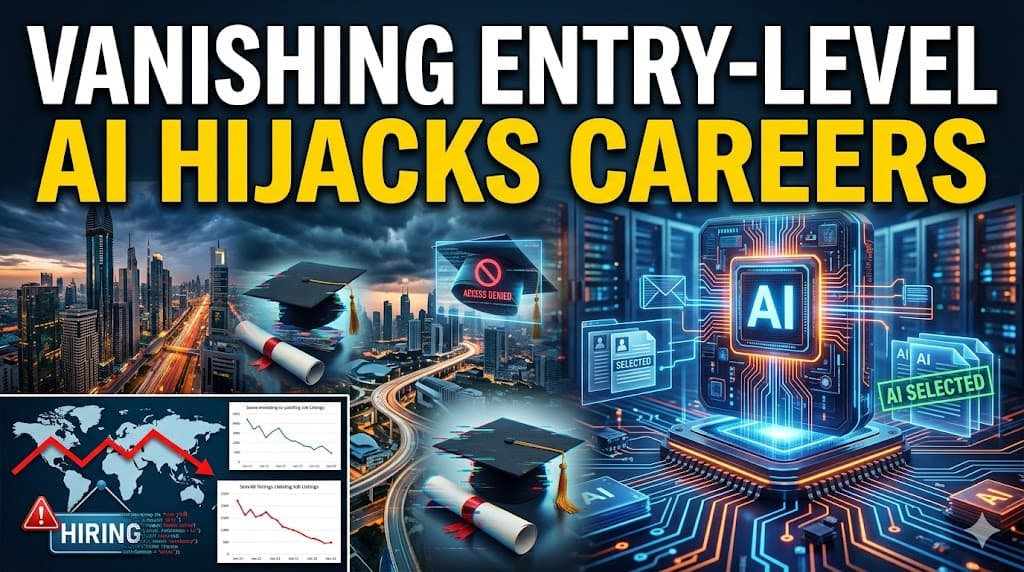
The Vanishing Entry-Level Job: How AI Is Reshaping Early-Career Hiring
Anthropic・ServiceNowのCEOが警鐘を鳴らすAI時代の新卒採用。人事・キャリアの最前線をビジネス英語で学び、外資系で通用する表現力を身につけましょう。
Part 1: 読む → 要約する
Step 1: Pre-Reading — ビジネスの文脈で考える (3 min)
シーン設定: あなたは外資系企業の人事部に所属しています。来週のグローバルチームミーティングで、「AI時代の新卒採用戦略」について意見を求められました。事前に考えをまとめておきましょう。
Q1: How has AI changed the kind of tasks junior employees used to handle in your industry? ヒント: リサーチ、議事録作成、資料作成などの業務を思い浮かべてみましょう。
Q2: Do you think companies should still invest in training inexperienced new graduates? Why or why not? ヒント: 育成コストと即戦力のバランスについて考えてみましょう。
Q3: What skills would you recommend a new graduate develop to stay competitive? ヒント: ポートフォリオ、AI活用経験、実績などの観点から。
Step 2: First Reading — 全体を把握する (10 min)
以下の英文は、ニュース記事の事実をもとに作成したビジネスシナリオ文書です。実際の職場でこのような文書を読む場面を想像しながら、英文を読み進めましょう。
INTERNAL BRIEFING MEMO
To: Global HR Leadership Team From: Talent Strategy Office, APAC Region Date: April 10, 2026 Subject: Update on Entry-Level Hiring Risks — Action Required
1. Purpose This memo summarizes emerging risks to our early-career hiring pipeline and proposes immediate discussion points for the April 20 leadership call.
2. Background Recent labor market analysis from LinkedIn indicates a clear shift in employer requirements, moving away from "potential" toward "job-ready skills and experience." This trend is narrowing the space available for inexperienced candidates across white-collar sectors.
Two notable statements from industry leaders have intensified concern. Dario Amodei, CEO of the AI company Anthropic, has warned that more than 50% of white-collar tasks could be automated by AI, with junior-level work facing the greatest impact. Bill McDermott, CEO of ServiceNow, has gone further, predicting that unemployment among Generation Z could reach as high as 30% in the coming years due to AI-driven automation.
3. Observed Internal Impact Within several of our U.S. offices, tasks previously assigned to junior hires — including research support, meeting minutes, and first drafts of client materials — are now routinely delegated to AI tools. Human contribution is increasingly concentrated in the final evaluation and decision-making stage.
4. Strategic Implication The traditional "hire and train" model is under pressure. Business units report that placing one senior professional equipped with AI tools delivers stronger output than onboarding multiple junior staff. As a result, the career ladder is shifting from a gradual climb to a model that rewards candidates who can already demonstrate measurable accomplishments.
5. Recommended Action Items (a) Review current graduate hiring targets for FY2026. (b) Redesign onboarding to focus on AI-augmented workflows. (c) Evaluate candidates based on portfolios (e.g., GitHub projects, AI-driven initiatives) rather than academic credentials alone. (d) Prepare a communication plan to address internal concerns about junior career development.
Please come prepared to discuss items (a) and (c) at the April 20 meeting.
Data sourced from: 日刊SPA! — "Z世代の失業率が最大30%になる予測も…アメリカで進む「AIによる新人仕事の消滅」が日本にも来る" (April 8, 2026)
Note: The above is an original business scenario created for learning purposes using publicly available facts. Please read the original article at the link above for the full report.
Step 3: Comprehension Check — 内容確認 (5 min)
Q1: According to LinkedIn's analysis, how have employer requirements shifted? ヒント: 「ポテンシャル」から何へ変化したでしょうか。
Q2: What percentage of white-collar tasks did Dario Amodei warn could be automated? ヒント: Anthropic CEOの発言を確認しましょう。
Q3: What unemployment rate did Bill McDermott predict for Gen Z? ヒント: ServiceNow CEOの具体的な数字です。
Q4: Which junior-level tasks are now being delegated to AI in U.S. offices? ヒント: 3つのタスクが挙げられています。
Q5: What should candidates now demonstrate instead of relying on academic credentials? ヒント: ポートフォリオの例を思い出しましょう。
Step 4: 30-Second Briefing — 上司に30秒で説明する (10 min)
シーン設定: エレベーターで上司に「あのAIと新卒採用の記事、読んだ?要点を教えて」と聞かれました。30秒で簡潔に説明しましょう。
| Framework | Template |
|---|---|
| Topic | "The article is about how AI is eliminating ___." |
| Key Data | "Anthropic's CEO says ___% of white-collar tasks could be ___, and ServiceNow's CEO predicts Gen Z unemployment could reach ___%." |
| Impact | "Companies now prefer ___ over ___." |
| Takeaway | "For us, this means we should focus on ___." |
💡 Tip: 元記事の表現をそのまま使わず、自分の言葉で言い換えましょう。"entry-level jobs are disappearing" → "junior roles are shrinking" のように。
Part 2: 語彙・表現・発音
1. automate (v.) — 自動化する
- Example: AI can automate repetitive administrative tasks.
- 訳: AIは反復的な事務作業を自動化できます。
- 外資系シーン: 業務効率化の会議で頻出する動詞です。
2. entry-level (adj.) — 新人レベルの、未経験者向けの
- Example: Entry-level positions are becoming harder to find.
- 訳: 新人向けのポジションは見つけにくくなっています。
- 外資系シーン: 採用・キャリア関連の議論で必須の表現です。
3. job-ready (adj.) — 即戦力の
- Example: Employers increasingly demand job-ready candidates.
- 訳: 雇用主はますます即戦力の候補者を求めています。
- 外資系シーン: 人事・採用戦略のミーティングで使われます。
4. portfolio (n.) — 実績集、ポートフォリオ
- Example: A strong portfolio matters more than a degree.
- 訳: 強力なポートフォリオは学位より重要です。
- 外資系シーン: キャリア開発の面談で語られます。
5. pipeline (n.) — (人材などの)供給経路
- Example: We need to rethink our talent pipeline.
- 訳: 人材パイプラインを見直す必要があります。
- 外資系シーン: HR戦略会議で頻出します。
Fill-in-the-Blank Exercise
- AI tools will ______ most of the routine reporting work.
- Our ______ hiring has dropped by 40% this year.
- Clients expect ______ consultants from day one.
- Please update your GitHub ______ before the interview.
答え: 1. automate / 2. entry-level / 3. job-ready / 4. portfolio
Part 3: 自分の意見を述べる
Topic A: Should companies still hire new graduates even if AI can do their initial tasks? ヒント: 長期的な人材育成の観点から論じましょう。
Topic B: How can Japanese companies adapt to the "jump" career model instead of the traditional "ladder"? ヒント: 日本の終身雇用との比較が有効です。
Topic C: What responsibility do senior employees have in mentoring juniors in the AI era? ヒント: 知識継承の重要性について考えましょう。
| English | Japanese |
|---|---|
| In my view, ... | 私の見方では… |
| That said, we should also consider ... | とはいえ…も考慮すべきです |
| From a long-term perspective, ... | 長期的な視点では… |
| I'd push back on that because ... | それには反論したいです、なぜなら… |
| Let me give you a concrete example. | 具体例を挙げさせてください。 |
Part 4: 面接対策 — 外資系で差をつける
Scenario A: "How do you see AI changing your role in the next three years?"
Scenario B: "Tell me about a time you used AI to improve a work process."
Scenario C: "If we hired only senior staff, how would you contribute as a junior?"
Common Mistakes (NG Patterns)
-
漠然とした回答
- ❌ "AI is important."
- ⭕ "I've used AI to cut report drafting time by 50%."
- 具体的な数字と成果を示しましょう。
-
受け身の姿勢
- ❌ "I will learn whatever the company needs."
- ⭕ "I'm already building AI workflows on my own."
- 自発性をアピールすることが重要です。
-
元記事の丸暗記
- ❌ "Dario Amodei said 50% of tasks..."
- ⭕ "Industry leaders warn that half of white-collar tasks may be automated."
- 自分の言葉で語りましょう。
-
悲観論だけで終わる
- ❌ "Junior jobs are disappearing, it's hopeless."
- ⭕ "The rules changed, so I adapted by building a portfolio."
- 前向きな解決策を示しましょう。
活用のコツ(4 Tips)
- ビジネスメモを3回音読し、自然な発音リズムを身につけましょう。
- 30秒ブリーフィングはタイマーを使って練習しましょう。
- ディスカッションでは必ず具体例を1つ含めましょう。
- 学んだ語彙を翌日の実務メールで最低1つ使ってみましょう。
Bonus: プロナビレッスンでの活用法
レッスン前 (20 min): Part 1のStep 1〜3を予習。ビジネスメモを音読し、語彙をチェック。 レッスン中 (25 min): コーチと30-Second Briefingを実演。Part 3のディスカッションで意見交換。 レッスン後 (15 min): Part 4の面接質問に自分の回答を録音して振り返り。
参考・出典
この記事を書いた人
サイト運営・日本語サポート担当 / AIエンジニア
- ●東京都出身・海外在住13年以上
- ●IT歴36年以上(開発・SEO・AI)
- ●IBM認定 生成AIエンジニア
- ●CEFR B1の英語学習者(今も学習中)
外資系の現場で「英語が話せず評価が伸びない」苦しさを経験し、海外移住後も印刷所で「copy」が通じないような発音の壁に何度もぶつかってきました。今もプロ講師の指導を受けながら学習を続ける一人として、AI時代でも英語で悩む日本人ビジネスパーソンに向けて、現場目線で記事を書いています。日本語でのご相談やお問い合わせも私が担当します。
関連記事
GMO在宅勤務「完全廃止」を英語で説明する|ニュースで学ぶビジネス英語教材
GMOの在宅勤務「完全廃止」ニュースを教材化。英文社内メモの読解、上司への30秒説明、頻出語彙、面接想定問答まで収録し、働き方トレンドを語れるビジネス英語力を鍛えます。無料の英語学習教材です。
2026/7/14
三菱UFJが時価総額首位に|40年ぶりの「金融復権」を英語で語るビジネス英語教材
三菱UFJが時価総額首位、1986年以来40年ぶりの金融復権。このニュースを教材に、市場・金利・株主還元を語るビジネス英語を学習。社内メモ読解、30秒要約、ディスカッション、外資系面接対策まで実践形式で身につく無料教材です。
2026/7/13
Apple対OpenAI訴訟で学ぶビジネス英語|営業秘密と情報管理を英語で語る実践教材
AppleによるOpenAI提訴のニュースを教材化。営業秘密・情報管理をテーマに、社内メモの読解、上司への30秒説明、重要単語、ディスカッション、面接対策まで実践的に学べるビジネス英語学習コンテンツ。外資系で働く日本人ビジネスパーソンの英語力を鍛えます。
2026/7/12
三菱自動車×東大発Highlandersのヒト型ロボット量産提携で学ぶビジネス英語教材
三菱自動車と東大発Highlandersのヒト型ロボット量産提携ニュースで学ぶビジネス英語教材。mass productionなど頻出語彙、30秒ブリーフィング、外資系面接対策まで実践的に学べる英語学習コンテンツです。
2026/7/11
OpenAI「ChatGPT Work」で学ぶビジネス英語|AIエージェント最新ニュース教材
OpenAIの「ChatGPT Work」とGPT-5.6を題材にしたビジネス英語学習教材。社内メモ読解や30秒ブリーフィング、面接対策を通じて、AI時代の職場で使える実践英語を身につけます。
2026/7/10
Grok 4.5で学ぶビジネス英語|AI最新ニュースで鍛える読解と要約力
話題のAIモデル「Grok 4.5」の英語ニュースを教材化。社内ブリーフィングメモの読解、要約、面接対策まで。最新テックニュースで実践的なビジネス英語を学びたい方へ。
2026/7/9