
Appleが値上げ不可避?メモリー高騰で学ぶビジネス英語ニュース教材
Appleの値上げとメモリー高騰の最新ニュースで学ぶビジネス英語教材。社内メモの読解、30秒ブリーフィング、面接対策まで網羅し、外資系で通用する英語力を実践的に鍛える英語学習コンテンツです。


AIエンジニア / IT歴36年以上・海外在住13年以上のCEFR B1英語学習者
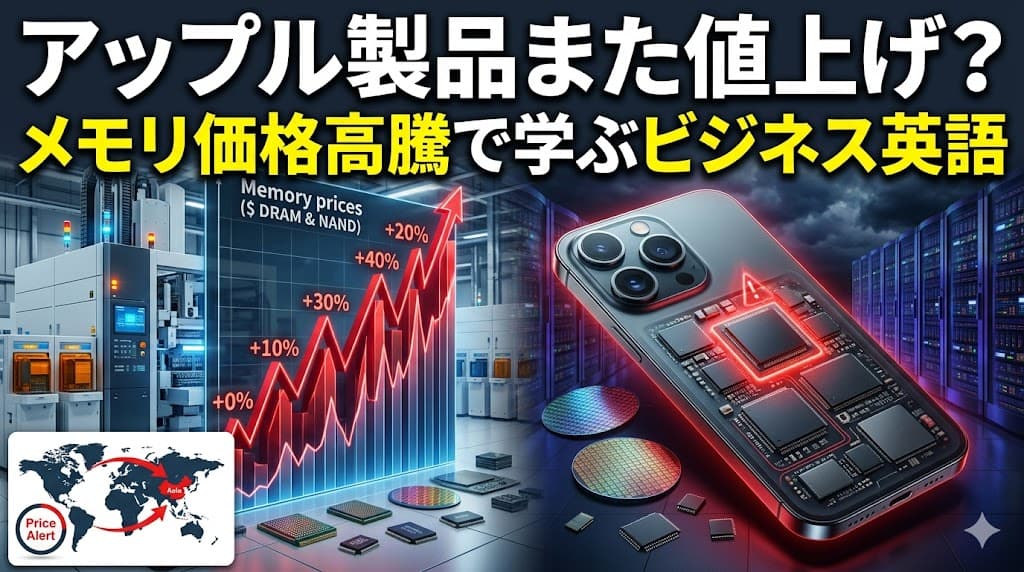
Apple Signals "Unavoidable" Price Increases Amid the Memory-Cost Surge
Apple値上げとメモリー高騰のニュースを題材に、外資系で使える調達・経営戦略の英語表現を実践的に学べます。社内メモやブリーフィングの英語力を磨きましょう。
Part 1: 読む → 要約する
Step 1: Pre-Reading — ビジネスの文脈で考える (3 min)
あなたは外資系メーカーの調達・経営企画部門で働いています。週次のチームミーティングで、上司から「Appleが値上げを検討しているらしい。うちのサプライチェーンにも関係しそうだから、ざっくり共有して」と振られました。記事を読む前に、まず自分の言葉で論点を整理してみましょう。
Q1. Why might a company like Apple, which sells many premium products, still struggle to absorb rising component costs? ヒント:高価格帯の製品が多くても「吸収しきれない」のはなぜでしょうか。利益率(margin)の観点から考えてみましょう。
Q2. What could be driving the recent surge in memory chip prices? ヒント:AI・データセンター需要と部品供給の関係を想像してみましょう。
Q3. If your own suppliers raised their prices, what options would management have besides passing the cost on to customers? ヒント:コスト吸収、仕様変更、調達先の見直しなど、選択肢を複数挙げてみましょう。
Step 2: First Reading — 全体を把握する (10 min)
以下の英文は、ニュース記事の事実をもとに作成したビジネスシナリオ文書です。実際の職場でこのような文書を読む場面を想像しながら、英文を読み進めましょう。
INTERNAL BRIEFING MEMO
To: Procurement & Strategy Team From: Kenji Sato, Senior Manager, Supply Chain Planning Date: June 18, 2026 Subject: Update on Memory-Cost Pressure and the Apple Price Signal — Action Required
Team,
I want to flag a development that may affect our component sourcing plan for the second half of this year.
Yesterday, the Wall Street Journal reported that Apple is preparing to raise prices on its products. In an interview, CEO Tim Cook said that price increases have become "unavoidable" because the cost of memory and storage chips has climbed sharply. Apple has not yet disclosed which products will be affected or when the new prices will take effect. What matters for us is the reason behind the move: even a company that sells mostly premium, high-margin devices can no longer absorb these costs on its own.
The root cause is demand, not a one-time disruption. The rapid build-out of AI data centers has pulled a large share of global memory production toward high-value chips, leaving less supply for everyday consumer electronics. As a result, memory now accounts for a meaningful portion of the total cost of a finished device, and that share is rising. If the largest buyer in the industry is signaling price increases, smaller manufacturers like us should expect even less room to negotiate.
Recommended next steps:
- Re-forecast Q3–Q4 component costs. Finance and I will model a 15–20% cost-increase scenario for memory by June 30.
- Review supplier contracts. Procurement to confirm which agreements lock in our current pricing and which expire this quarter — please share a summary by June 25.
- Prepare options beyond price hikes. Product and Engineering to assess whether spec adjustments could reduce our memory dependency without hurting the roadmap.
I will set up a short alignment call early next week. Please come prepared with your department's exposure and one realistic mitigation idea.
This is a fast-moving situation, so quick, fact-based input is more useful than a perfect analysis. Thank you for your help.
Best regards, Kenji Sato
Data sourced from: Nikkei — "AppleのCEO、メモリー高騰で「製品値上げは不可避」 WSJ報道" (June 18, 2026)
Note: The above is an original business scenario created for learning purposes using publicly available facts. Please read the original article at the link above for the full report.
Step 3: Comprehension Check — 内容確認 (5 min)
Q1. According to the memo, what did the Wall Street Journal report about Apple? ヒント:Appleが「何をしようとしている」と報じられたかを答えましょう。
Q2. How did Tim Cook describe the price increases, and why? ヒント:彼が使った一語(形容詞)と、その理由を結びつけて説明しましょう。
Q3. What information did Apple decline to share? ヒント:「どの製品」「いつ」に関する部分です。
Q4. According to the memo, what is the underlying cause of the memory-cost pressure? ヒント:需要側の要因(AI・データセンター)に注目しましょう。
Q5. Why does the memo argue that a smaller manufacturer should be concerned? ヒント:業界最大の買い手が値上げを示唆していることの意味を考えましょう。
Step 4: 30-Second Briefing — 上司に30秒で説明する (10 min)
オフィスのエレベーターで、別部署の上司にばったり会いました。「さっきのAppleの話、結局どういうこと?30秒で教えて」と聞かれました。専門用語を並べるのではなく、要点を一息で伝えましょう。
| 要素 | 英語テンプレート | 記入例(自分の言葉で埋めましょう) |
|---|---|---|
| 結論(What) | "In short, Apple is going to ___." | "In short, Apple is going to raise its prices." |
| 理由(Why) | "This is because ___." | "This is because memory and storage costs have surged." |
| 背景(Context) | "The bigger picture is that ___." | "The bigger picture is that AI demand is pulling memory supply away from consumer devices." |
| 自社への影響(So what) | "For us, this means ___." | "For us, this means we should re-check our component costs." |
| 次の一手(Next) | "My suggestion is to ___." | "My suggestion is to review our supplier contracts this month." |
Tip: 記事の英文をそのまま暗記するのではなく、自分の言葉に「言い換える(paraphrase)」練習をしましょう。例えば "unavoidable" を "we have no choice but to ..." と言い換えられると、丸暗記ではなく理解していることが相手に伝わります。
Part 2: 語彙・表現・発音
1. unavoidable (adj.) — 避けられない、不可避の
| 項目 | 内容 |
|---|---|
| 例文 | The cost increase was unavoidable, so we adjusted our prices accordingly. |
| 訳 | コスト上昇は避けられなかったため、それに合わせて価格を調整しました。 |
| 発音メモ | 4音節で、3つ目の "void" の部分を一番強く読みます。 |
外資系シーン: 値上げや遅延など、避けられない悪い知らせを伝えるときに、感情的にならず事実として説明する語です。"Unfortunately, ... is unavoidable." の形で前置きとともに使うと丁寧です。
2. absorb (v.) — (コストなどを)吸収する、自社で負担する
| 項目 | 内容 |
|---|---|
| 例文 | For a while, we were able to absorb the higher costs, but that is no longer possible. |
| 訳 | しばらくは高くなったコストを自社で吸収できていましたが、もはやそれは不可能です。 |
| 発音メモ | 2音節で、2つ目の "sorb" を強く読みます。 |
外資系シーン: 「価格に転嫁せず社内で負担する」という意味でよく使われます。"absorb the cost / the impact" の組み合わせで覚えましょう。
3. surge (n. / v.) — 高騰、急増/急騰する
| 項目 | 内容 |
|---|---|
| 例文 | A sharp surge in memory prices is putting pressure on the whole industry. |
| 訳 | メモリー価格の急激な高騰が、業界全体に圧力をかけています。 |
| 発音メモ | 1音節。最後の "ge" は「ジ」と濁る音です。 |
外資系シーン: 需要・価格・コストが「急に大きく上がる」ときの定番語です。"a surge in demand / prices / costs" として使います。穏やかな上昇は increase、急激な上昇は surge と使い分けると説得力が増します。
4. offset (v.) — 相殺する、埋め合わせる
| 項目 | 内容 |
|---|---|
| 例文 | We raised prices to offset the rising cost of components. |
| 訳 | 部品コストの上昇を相殺するために、私たちは値上げをしました。 |
| 発音メモ | 動詞として使うときは、2つ目の "set" を強めに読みます。 |
外資系シーン: 「Aの損失・コストをBで埋め合わせる」と説明するときに使います。"offset A by B" / "offset A with B" の形が便利です。
5. mitigate (v.) — 緩和する、軽減する
| 項目 | 内容 |
|---|---|
| 例文 | We are doing our best to mitigate the impact on our customers. |
| 訳 | お客様への影響をできる限り緩和するよう、最善を尽くしています。 |
| 発音メモ | 3音節で、最初の "mi" を強く読みます。 |
外資系シーン: リスクや悪影響を「ゼロにはできないが小さくする」というニュアンスです。"mitigate the risk / the impact" でセットにすると、リスク管理の会話で即戦力になります。
Fill-in-the-blank Exercise
次の英文の空欄に、上の語彙から最も適切なものを選んで入れましょう(必要に応じて形を変えてください)。
- Given the global shortage, the price increase is essentially ___ .
- Our margins are thin, so we can no longer ___ the extra cost ourselves.
- The company raised fees to ___ the higher logistics expenses.
- We introduced a backup supplier to ___ the risk of future shortages.
(解答例:1. unavoidable / 2. absorb / 3. offset / 4. mitigate)
Part 3: 自分の意見を述べる
Topic A. Do you think it is fair for companies to pass component cost increases on to consumers? Why or why not? ヒント:「企業の利益確保」と「消費者の負担」のバランスについて、自分の立場を一つ決めて理由を述べましょう。
Topic B. AI demand is pulling memory supply away from everyday products. How should manufacturers respond to this kind of structural shift? ヒント:短期的な対応(在庫確保・値上げ)と長期的な対応(仕様変更・調達先分散)を分けて考えると話しやすくなります。
Topic C. If you were a manager and had to announce a price increase to your customers, how would you communicate it? ヒント:「正直に伝える」「影響緩和の努力を示す」「代替案を提示する」などの工夫を盛り込みましょう。
| English | 日本語 |
|---|---|
| In my view, the key issue here is ... | 私の見方では、ここでの重要な論点は…です |
| There are two sides to this. On one hand ... | これには二つの面があります。一方では… |
| I'd argue that ... | …だと私は主張したいです |
| It really depends on ... | それは…次第だと思います |
| To be transparent with you, ... | 率直にお伝えすると、… |
Part 4: 面接対策 — 外資系で差をつける
Scenario A — Strategic thinking Interviewer: "Suppose a key supplier suddenly raised prices by 20%. Walk me through how you would respond." ヒント:感情ではなく手順(状況把握 → 選択肢の比較 → 推奨)で答えると、論理的な印象を与えられます。
Scenario B — Communicating bad news Interviewer: "Tell me about a time you had to deliver unwelcome news to a stakeholder. How did you handle it?" ヒント:STAR(Situation・Task・Action・Result)で構成し、相手への配慮(mitigate the impact)を必ず入れましょう。
Scenario C — Industry awareness Interviewer: "What recent business or tech news has caught your attention, and why does it matter?" ヒント:今回の記事を題材に、「事実 → 背景 → 自分の業務への示唆」の三段で説明すると好印象です。
よくあるNGパターン
NG 1:結論を後回しにする
- Bad: "Well, there are many factors, and the situation is complex, and... maybe prices will go up."
- Good: "In short, prices are likely to rise. The main reason is the memory shortage."
- 日本語の「起承転結」のクセで結論を最後に置くと、英語では要点が伝わりにくくなります。まず結論を述べましょう。
NG 2:丸暗記した文をそのまま言う
- Bad: "Price increases are unavoidable." (記事の引用をそのまま繰り返す)
- Good: "Apple basically said it has no choice but to raise prices."
- 自分の言葉に言い換えると、理解していることが伝わります。
NG 3:曖昧な数値表現に逃げる
- Bad: "Costs went up a lot, like, very much."
- Good: "Memory costs rose sharply — by a significant margin."
- "a lot" の連発は避け、sharply / significantly など程度を示す副詞を使いましょう。
NG 4:影響緩和の努力を語らない
- Bad: "We just raised the price. That's it."
- Good: "We raised the price, but only after trying to absorb and mitigate the impact first."
- 外資系では「何をしたか」だけでなく「どんな配慮・工夫をしたか」を示すと評価が上がります。
活用のコツ(3 Tips)
ニュースの「事実」と「示唆」を分けて読む習慣をつけましょう。 記事から固有名詞・数字・出来事だけを抜き出し、それが自分の業務にどう関係するかを一文で書き留めると、情報を「使える知識」に変えられます。
気になった英語表現を3つだけ選び、翌日に実際の会話やメールで一度使ってみましょう。 一度に多くを覚えようとせず、surge や mitigate のような「使い回しの効く語」に絞ることで、定着率が大きく上がります。
重要ニュースは「30秒で説明する練習」の題材として再利用しましょう。 結論・理由・自社への影響の三点を口頭で言い切る訓練を繰り返すと、会議や面接で求められる即答力が自然と身につきます。
Bonus: プロナビレッスンでの活用法
レッスン前(20min) 記事の英文(Step 2)を音読し、Part 2の語彙5つの意味と発音メモを確認しておきましょう。Step 1のPre-Reading質問に、自分なりの答えを英語でメモしておくと、レッスン本番でスムーズに発言できます。
レッスン中(25min) コーチと一緒に、Step 4の「30秒ブリーフィング」を実演します。テンプレートを見ながら一度、見ずにもう一度。さらにPart 3のディスカッションで自分の意見を述べ、論理構成や語彙の使い方についてその場でフィードバックを受けましょう。
レッスン後(15min) Part 4の面接シナリオから一つを選び、自分の回答を録音して聞き返します。NGパターンに当てはまっていないかを自己チェックし、気になった点を次回のレッスンで質問できるようメモにまとめましょう。
発音や話の組み立て方に不安がある方は、ぜひ一度プロナビの無料カウンセリングでご相談ください(feel free to reach out)。
参考・出典
この記事を書いた人
サイト運営・日本語サポート担当 / AIエンジニア
- ●東京都出身・海外在住13年以上
- ●IT歴36年以上(開発・SEO・AI)
- ●IBM認定 生成AIエンジニア
- ●CEFR B1の英語学習者(今も学習中)
外資系の現場で「英語が話せず評価が伸びない」苦しさを経験し、海外移住後も印刷所で「copy」が通じないような発音の壁に何度もぶつかってきました。今もプロ講師の指導を受けながら学習を続ける一人として、AI時代でも英語で悩む日本人ビジネスパーソンに向けて、現場目線で記事を書いています。日本語でのご相談やお問い合わせも私が担当します。
関連記事
AI輸出規制で学ぶビジネス英語|米国のAI規制と国家安全保障を読む
米国のAI輸出規制とAnthropicのモデル提供停止を題材にしたビジネス英語学習教材。輸出規制・国家安全保障の英語表現を、社内メモの読解や30秒説明の練習を通じて実践的に習得できます。
2026/6/19
SpaceX時価総額475兆円の衝撃で学ぶビジネス英語|投機相場を英語で読み解く
SpaceXが一時時価総額475兆円でMicrosoft超えしたニュースでビジネス英語を学習。投機・時価総額・IPOを英語で説明する表現や30秒ブリーフィング術、面接対策まで実践的に習得できます。
2026/6/17
【ビジネス英語】レアアース脱中国依存で学ぶ、サプライチェーンリスクの英語表現
レアアースの脱中国依存とリサイクルの課題を題材にしたビジネス英語学習教材。社内メモの読解から30秒ブリーフィング、面接対策まで、サプライチェーンを語る英語表現を実務で使える形で習得できます。
2026/6/16
年収3200万円「FDE」に学ぶビジネス英語|AI時代の新職種を題材にした英語学習教材
米で年収3200万円の新職種「FDE(Forward Deployed Engineer)」を題材にしたビジネス英語の学習教材。社内メモ読解・要約・面接対策で、AI時代に通用する英語力を実践的に鍛えます。
2026/6/15
AI検索時代のブランド戦略を学ぶビジネス英語|最新ニュースで読む・話す力を磨く
AI検索でブランドが推薦される仕組みを題材にしたビジネス英語教材。約4万件の分析データを使い、読む・要約する・話すを実践的に学習。外資系で使える表現や面接対策も収録した英語学習コンテンツです。
2026/6/14

アンソロピックの新AI「Claude Fable 5」で学ぶビジネス英語|ニュースで実践
アンソロピックの新AI「Claude Fable 5」一般提供のニュースで学ぶビジネス英語学習教材。従量課金やサイバー攻撃拒否を題材に、要約・語彙・面接対策まで実践的に英語力を鍛えられます。
2026/6/11